Mercedes-Benz GLC Electric Overview: Features, Facts, Detail & Complete Guide
The Mercedes-Benz GLC Electric is the all-electric version of Mercedes-Benz's popular midsize GLC family and represents a major step in the brand's next generation of electric vehicles.
Unlike an electrified version created by simply replacing a combustion engine with an electric motor, the new GLC with EQ Technology was developed as a dedicated battery-electric vehicle. Mercedes-Benz says it combines an 800-volt electrical architecture, a 94 kWh usable battery, dual-motor all-wheel drive and a new digital platform built around MB.OS.
The first model introduced is the GLC 400 4MATIC with EQ Technology, with a provisional WLTP range of up to about 715 km, 360 kW of system output and a claimed 0–100 km/h time of 4.3 seconds.
For India, Mercedes-Benz has listed the all-new electric GLC among its upcoming models. Recent reporting indicates that bookings are scheduled to begin in October 2026, with an India launch planned toward the end of 2026. The India-specification model is expected to be locally assembled.
Mercedes-Benz GLC Electric at a Glance
| Feature | GLC 400 4MATIC with EQ Technology |
|---|---|
| Powertrain | Dual electric motors |
| Drive | AWD / 4MATIC |
| Maximum system output | 360 kW / 489 hp |
| Maximum torque | 800 Nm |
| Battery | 94 kWh usable |
| Architecture | 800-volt |
| WLTP range | Up to 715 km |
| 0–100 km/h | 4.3 seconds |
| Top speed | 210 km/h |
| DC charging | Up to 330 kW |
| Charging capability | Up to 303 km WLTP range in 10 minutes |
| Transmission | Two-speed transmission on rear axle |
| India status | Upcoming |
| India booking timing | October 2026 |
| India launch | Planned for late 2026 |
The figures above include manufacturer specifications and, where applicable, provisional values. Final India-specific specifications can vary by configuration and homologation.
What Makes the GLC Electric Different?
The new GLC Electric is based on a dedicated battery-electric architecture rather than being a conventional GLC with an electric powertrain substituted into the same vehicle structure.
Mercedes-Benz describes it as the first model in a new family of vehicles built around MB.OS, its software architecture designed to connect vehicle functions, infotainment, navigation and digital experiences.
This approach affects several parts of the vehicle:
- Exterior proportions
- Battery packaging
- Electric motors
- Charging system
- Interior space
- Software architecture
- Driver assistance
- Digital displays
- Energy management
Exterior Design
The GLC Electric introduces a new interpretation of Mercedes-Benz's design language.
One of the most noticeable elements is the large illuminated grille featuring a pattern of Mercedes stars. The grille acts as a major visual identifier for the electric model rather than simply imitating a traditional engine grille.
The overall design remains recognizable as a GLC while adopting smoother surfaces and aerodynamic detailing.
Key exterior elements include:
- Illuminated grille
- Star-pattern lighting elements
- LED lighting
- Aerodynamically optimized body
- Flush-style exterior details
- Panoramic glass roof
- Electrically controlled aerodynamic elements
- Available AMG Line styling
- Wheels extending up to 21 inches in some configurations
Aerodynamic efficiency is particularly important for an EV because reducing air resistance can help improve energy consumption and driving range.
Dimensions and Space
The electric GLC has been developed to provide additional interior and luggage space compared with the previous combustion-powered GLC generation.
The standard-wheelbase electric GLC has a wheelbase of approximately 2,972 mm, while the vehicle is around 4.85 metres long.
Mercedes-Benz has also developed a long-wheelbase GLC Electric for China, but recent information regarding the Indian model indicates that India is expected to receive the standard-wheelbase version rather than the longer Chinese configuration.
Battery Technology
The GLC 400 4MATIC uses a lithium-ion high-voltage battery with approximately 94 kWh of usable energy.
The battery forms the structural and energy foundation of the vehicle and works with the 800-volt electrical architecture to enable high charging performance.
Mercedes-Benz has also highlighted improvements in battery production and materials. The company says the new battery generation achieves a substantial reduction in carbon footprint per cell compared with earlier technology.
800-Volt Electrical Architecture
One of the major technical features of the GLC Electric is its 800-volt architecture.
A higher-voltage system can allow high electrical power to be transferred with lower current for a given power level. This can support high-power charging while helping manage cable and electrical-system requirements.
For the GLC Electric, the architecture supports DC charging of up to 330 kW under compatible conditions.
Driving Range
Mercedes-Benz quotes a WLTP range of up to approximately 715 km for the GLC 400 4MATIC with EQ Technology.
Earlier technical information has given a range window depending on configuration, with Mercedes-Benz documentation showing figures extending from around 568 km to 715 km under WLTP conditions.
The maximum figure should not be interpreted as a guaranteed real-world distance.
Actual range can vary according to:
- Driving speed
- Traffic
- Temperature
- Air-conditioning use
- Tyres
- Wheel size
- Vehicle load
- Road gradient
- Driving style
- Battery condition
Mercedes-Benz specifically notes that real-world range can differ from WLTP results because of driving and environmental conditions.
Electric Performance
The launch version, GLC 400 4MATIC with EQ Technology, uses two electric motors.
The combined system output is rated at 360 kW, equivalent to approximately 489 hp, while maximum torque is listed at 800 Nm.
Mercedes-Benz quotes:
- 0–100 km/h: 4.3 seconds
- Top speed: 210 km/h
- Drive: 4MATIC all-wheel drive
The high torque availability of electric motors gives the GLC Electric strong low-speed and mid-range response.
Two-Speed Rear-Axle Transmission
An unusual feature of the GLC Electric's drivetrain is a two-speed transmission on the primary rear axle drive unit.
Many electric vehicles use a single-speed reduction gear. Mercedes-Benz has chosen a two-speed arrangement for the main rear drive unit to balance different operating requirements.
This can help the vehicle combine:
- Strong acceleration
- Highway efficiency
- High-speed performance
- Energy efficiency
The front drive unit uses a separate arrangement, while the rear axle incorporates the two-speed transmission.
4MATIC All-Wheel Drive
The GLC 400 4MATIC uses a dual-motor all-wheel-drive system.
One electric drive unit works at the front and another at the rear, allowing the vehicle to electronically manage torque distribution between the axles.
This can support:
- Improved traction
- Strong acceleration
- Stability on slippery surfaces
- Controlled cornering
- Better power delivery in changing road conditions
For the Indian model, Mercedes-Benz has confirmed the 4MATIC configuration through recent launch information.
Rear-Wheel Steering
Rear-wheel steering is another notable feature expected for the India-specification GLC Electric.
At lower speeds, rear-wheel steering can turn the rear wheels in the opposite direction to the front wheels, reducing the effective turning circle.
At higher speeds, the rear wheels can turn in the same direction as the front wheels to support stability during directional changes.
Recent India-specific reporting indicates that rear-wheel steering will be standard on the Indian GLC Electric.
Charging Technology
The GLC Electric is designed around high-speed charging.
Its 800-volt architecture allows the vehicle to accept up to 330 kW of DC charging power where compatible infrastructure is available. Mercedes-Benz states that up to 303 km of WLTP range can be added in around 10 minutes under suitable charging conditions.
Charging performance depends on several factors:
- Charger output
- Battery temperature
- Battery state of charge
- Charging curve
- Ambient temperature
- Vehicle configuration
- Charger compatibility
Therefore, the maximum charging power should not be treated as a constant throughout an entire charging session.
Bidirectional Charging
The GLC Electric is also designed with bidirectional charging capability.
Mercedes-Benz has described the vehicle as equipped for bidirectional charging, opening possibilities such as:
- Vehicle-to-home applications
- Vehicle-to-grid applications
- Energy management
- Future smart-charging applications
Actual availability and functionality can depend on market regulations, compatible charging hardware and software activation.
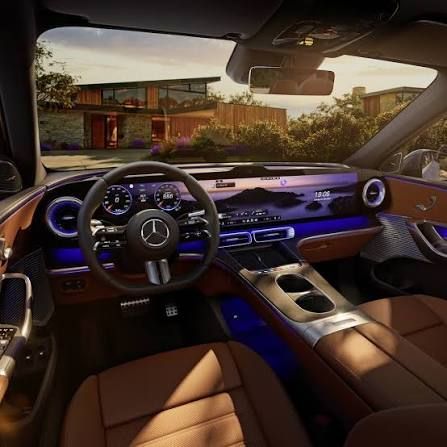
MBUX Hyperscreen
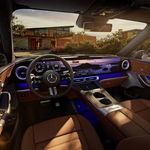
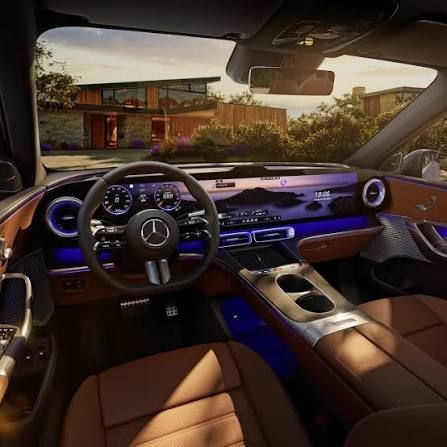
One of the most visible interior technologies is the 39.1-inch MBUX Hyperscreen.
The display stretches across much of the dashboard and combines multiple digital functions into one continuous visual surface.
The system integrates:
- Driver information
- Central infotainment
- Passenger display
- Navigation
- Vehicle controls
- Media
- Connected functions
Recent India-specific reports identify the 39.1-inch MBUX Hyperscreen as a major feature of the upcoming Indian model.
Mercedes-Benz Operating System: MB.OS
The GLC Electric is one of the first Mercedes-Benz vehicles built around the company's new MB.OS software architecture.
MB.OS is designed to integrate major vehicle domains through a common software platform.
It can coordinate areas such as:
- Infotainment
- Navigation
- Driver assistance
- Comfort
- Energy management
- Vehicle functions
- Digital connectivity
Mercedes-Benz describes MB.OS as the software "superbrain" behind its new generation of vehicles.
Artificial Intelligence and Digital Assistance
The new software architecture also supports more advanced digital assistance.
The GLC's MBUX environment incorporates AI-based capabilities, allowing conversational interactions and more natural digital assistance compared with older voice-control systems.
The broader MB.OS strategy is designed to make software more deeply integrated into the vehicle rather than treating infotainment as a separate system.
Panoramic Glass Roof
The GLC Electric features a large panoramic roof, contributing to the open feeling of the cabin.
India-specific reports have also highlighted Mercedes-Benz's Sky Control panoramic roof technology for the upcoming model.
Depending on configuration, the roof can contribute to:
- More natural light
- A larger perceived cabin
- Premium interior ambience
- Greater visibility for passengers
Interior Comfort
The electric GLC has been designed around a combination of digital technology and conventional luxury-car comfort.
Mercedes-Benz describes the cabin as more spacious and emphasizes high-quality materials, seating comfort and digital interaction.
Expected comfort and convenience features for the Indian model include:
- Multi-zone climate control
- Electrically adjustable seats
- Wireless smartphone charging
- Ambient lighting
- Premium audio options
- Digital displays
- Panoramic roof
- Advanced seat-comfort functions
Exact equipment can vary according to market and final India specification.
Vegan Interior Option
Mercedes-Benz has highlighted the availability of a certified vegan interior package for the new electric GLC.
The company says the package was independently assessed and certified by The Vegan Society. Recycled materials are also used in various cabin components.
This is part of Mercedes-Benz's broader effort to increase the use of recycled and alternative materials in vehicle production.
Luggage and Storage
The electric architecture also provides opportunities for additional storage.
The GLC Electric has a conventional rear luggage compartment, while additional front storage space is available in some configurations.
The rear boot is reported at around 570 litres, while the front storage compartment provides additional usable space.
This can make the electric GLC practical for:
- Family travel
- Airport luggage
- Weekend journeys
- Everyday urban use
- Long-distance road trips
Safety Technology
The GLC Electric incorporates a broad set of active and passive safety systems.
Mercedes-Benz has highlighted technologies including:
- Centre airbag
- PRE-SAFE
- High-voltage protection
- Driver-assistance functions
- Advanced braking systems
- Parking assistance
- Camera-based monitoring
- Stability control
The exact safety package can vary by market and equipment level.
Mercedes-Benz specifically identifies the centre airbag and PRE-SAFE as standard technologies in the new electric GLC platform.
Level 2 Driver Assistance
The India-specification GLC Electric is expected to include a Level 2 driver-assistance package.
Level 2 systems can combine functions such as:
- Adaptive cruise control
- Lane-centering assistance
- Automated braking assistance
- Lane-change assistance in applicable systems
- Traffic monitoring
These technologies support the driver but do not turn the vehicle into a fully autonomous car.
Recent India-specific reporting identifies Level 2 ADAS among the features planned for the Indian GLC Electric.
Lighting Technology
The GLC Electric adopts a new lighting design that contributes to both its identity and visibility.
The vehicle features LED lighting elements and star-inspired design details.
The illuminated grille and front lighting signature make the electric GLC visually distinct from traditional Mercedes-Benz SUVs.
Energy Efficiency
The GLC Electric has been engineered with efficiency as a major development objective.
Mercedes-Benz reports combined energy consumption figures in the approximate range of 14.9–18.9 kWh/100 km, depending on the applicable specification and test configuration.
Aerodynamics, drivetrain efficiency, regenerative braking, battery management and software-controlled energy use all contribute to overall efficiency.
Regenerative Braking
Like other modern EVs, the GLC Electric can recover part of the vehicle's kinetic energy during deceleration.
Instead of converting all braking energy into heat through conventional friction brakes, the electric motors can operate as generators during suitable deceleration conditions.
The recovered energy is then returned to the battery.
Regeneration can help:
- Improve energy efficiency
- Reduce friction-brake usage
- Support smoother urban driving
- Extend usable range in suitable conditions
Driving Modes and Energy Management
The GLC Electric uses software to coordinate its electric powertrain, battery, thermal systems and driving characteristics.
Energy management can consider:
- Current battery level
- Navigation route
- Traffic
- Driving conditions
- Temperature
- Charging availability
Intelligent navigation and charging functions are part of the vehicle's broader digital ecosystem. Mercedes-Benz also highlights green-charging functions and charging-station planning.
Sustainability Features
Mercedes-Benz has placed significant emphasis on the environmental footprint of the new electric GLC.
The company's independently verified lifecycle assessment reports a two-thirds reduction in lifecycle carbon footprint compared with the current combustion-powered GLC.
Mercedes-Benz attributes the reduction to several factors, including:
- Lower-carbon aluminium
- Reduced battery-cell carbon footprint
- Recycled materials
- Renewable raw materials
- More recycled thermoplastics
- Lower-emission production processes
These figures describe lifecycle analysis conducted by Mercedes-Benz and independently verified, rather than simply tailpipe emissions.
Production and India Assembly
The electric GLC is produced at Mercedes-Benz's Bremen plant in Germany, where it is built alongside other GLC powertrain versions and the EQE.
Mercedes-Benz says the Bremen plant began production ramp-up of the all-new electric GLC in 2026.
For India, recent reporting states that the GLC Electric will be locally assembled, allowing Mercedes-Benz to bring the model to the Indian market relatively soon after its global introduction.
Mercedes-Benz GLC Electric in India
As of September 2026, Mercedes-Benz India's official website lists the all-new electric GLC as an upcoming model.
Recent Indian automotive reports indicate:
- Bookings: expected from the first week of October 2026
- Launch: planned for late 2026
- India configuration: GLC 400 4MATIC
- Battery: 94 kWh
- Claimed WLTP range: up to 715 km
- Power: about 490 hp
- Torque: 800 Nm
- Drive: AWD
- Rear-wheel steering: expected as standard
- Assembly: local
- Wheelbase: approximately 2,972 mm
These India-specific details should be treated as current reported information until Mercedes-Benz India publishes the final homologated specification and equipment list.
India Price Expectations
Mercedes-Benz has not yet published the final India launch price in the official information currently available.
Some Indian automotive publications currently estimate an ex-showroom figure in the region of ₹80–90 lakh, but these are estimates rather than an official Mercedes-Benz India price.
The final figure can depend on:
- Local assembly economics
- Import duties on components
- Equipment specification
- Variant structure
- Taxes
- Mercedes-Benz India pricing strategy
Therefore, an estimated figure should not be treated as the confirmed launch price.
GLC Electric vs Conventional GLC
The electric and combustion-powered GLC share the GLC name and general premium-SUV positioning, but the electric version is based on a distinct battery-electric architecture.
| Area | GLC Electric | Conventional GLC |
|---|---|---|
| Power source | Battery-electric | Combustion/electrified powertrain |
| Energy storage | High-voltage battery | Fuel tank and/or hybrid battery |
| Tailpipe emissions | Zero during driving | Depends on powertrain |
| Charging | DC/AC charging | Fuel refuelling |
| Electric drive | Dual-motor AWD in launch model | Depends on variant |
| Software | New MB.OS architecture | Existing-generation software architecture |
| Front storage | EV packaging advantage | Conventional engine-bay layout |
| Regenerative braking | Yes | Depends on hybrid system |
| Exhaust system | None | Required for combustion variants |
Important Facts to Remember
The most significant facts about the Mercedes-Benz GLC Electric include:
- It is a dedicated battery-electric GLC.
- The first model is the GLC 400 4MATIC with EQ Technology.
- It uses dual electric motors.
- Maximum system output is 360 kW.
- Maximum torque is 800 Nm.
- The usable battery capacity is approximately 94 kWh.
- The electrical system uses 800-volt architecture.
- WLTP range is up to about 715 km.
- DC charging can reach up to 330 kW.
- Around 303 km of WLTP range can be added in approximately 10 minutes under suitable conditions.
- 0–100 km/h takes a claimed 4.3 seconds.
- Top speed is 210 km/h.
- The launch model uses 4MATIC all-wheel drive.
- Rear-wheel steering is planned for the Indian model.
- The cabin features a 39.1-inch MBUX Hyperscreen.
- MB.OS forms the basis of the new software architecture.
- India is expected to receive the standard-wheelbase version.
- India bookings are planned for October 2026, with launch targeted for late 2026.
- The India-specification model is expected to be locally assembled.
Tools and Resources
For accurate information about the GLC Electric, useful resources include:
Mercedes-Benz India: The official India website provides market-specific information and upcoming-model announcements.
Mercedes-Benz Group: Global technical and technology announcements provide detailed information about the electric GLC platform.
WLTP Information: WLTP figures provide standardized range and energy-consumption measurements, but actual driving range can vary.
Charging Calculators: EV charging calculators can help estimate charging times based on battery state, charger output and vehicle charging characteristics.
Route Planners: EV route-planning tools can estimate charging requirements for longer journeys.
FAQs
What is the Mercedes-Benz GLC Electric?
The GLC Electric is a dedicated battery-electric midsize SUV from Mercedes-Benz. The first model is the GLC 400 4MATIC with EQ Technology.
What is the range of the Mercedes-Benz GLC Electric?
The GLC 400 4MATIC with EQ Technology has a manufacturer-stated WLTP range of up to approximately 715 km. Actual range varies according to driving conditions, temperature, vehicle configuration and other factors.
How powerful is the GLC 400 4MATIC Electric?
The launch model produces up to 360 kW, or approximately 489 hp, with 800 Nm of torque.
How fast can the Mercedes-Benz GLC Electric charge?
The GLC Electric can accept up to 330 kW of DC charging power under suitable conditions. Mercedes-Benz states that around 303 km of WLTP range can be added in 10 minutes.
When will the Mercedes-Benz GLC Electric launch in India?
Mercedes-Benz India currently lists the electric GLC as an upcoming model. Recent reports indicate that bookings are planned for October 2026 and the market launch is targeted for late 2026.
Will the GLC Electric have all-wheel drive?
Yes. The GLC 400 4MATIC uses a dual-motor all-wheel-drive system, and the India-specification model is expected to use the same 4MATIC configuration.
Is the India price confirmed?
No. Mercedes-Benz has not yet published the final India launch price in the official information currently available. Current media estimates should therefore be treated as indicative rather than confirmed.
Conclusion
The Mercedes-Benz GLC Electric combines the familiar GLC concept with a completely new electric architecture. Its 94 kWh usable battery, 800-volt electrical system, dual-motor 4MATIC drivetrain, 360 kW output, up to 715 km WLTP range and 330 kW DC charging capability make the GLC 400 4MATIC a technically advanced entry in the premium electric SUV segment.
Technology extends beyond the powertrain. The 39.1-inch MBUX Hyperscreen, MB.OS software architecture, rear-wheel steering, advanced driver assistance, intelligent charging functions and connected cabin systems make the vehicle as much a digital platform as an electric SUV.
For India, the model is particularly significant because Mercedes-Benz plans to locally assemble it, with bookings expected to begin in October 2026 and the launch targeted for late 2026. Final India-specific equipment, pricing and homologated specifications should be confirmed by Mercedes-Benz India closer to the launch.
Disclaimer
This article is provided for general informational and educational purposes only. Specifications, range figures, features, equipment, pricing and launch schedules may vary by market, variant and final homologation. Some India-specific details are based on current manufacturer information and recent automotive reports and may change before launch. This article is not intended as brand promotion, sales material or an endorsement. Always verify final specifications and availability through official Mercedes-Benz India information before making any vehicle-related decision.