Premium Massage Chair Safety Features: Sensors, Controls & Anti-Pinch Systems
Premium massage chairs combine motors, rollers, airbags, reclining mechanisms, heating elements and electronic controls. Because several mechanical systems can move simultaneously, safety technology is an important part of modern massage-chair design.
Advanced models can include body-position sensors, obstruction detection, anti-pinch mechanisms, emergency stop controls, motor protection, temperature controls and automatic shutdown systems.
These features are designed to reduce the possibility of mechanical interference and help the chair operate within its intended conditions. However, safety technology does not eliminate the need for correct installation and responsible use.
Why Safety Features Matter in Massage Chairs
A massage chair contains several moving components.
Depending on the design, these can include:
- Back rollers
- Leg and foot mechanisms
- Reclining motors
- Air-compression chambers
- Moving armrests
- Heating elements
- Footrest extensions
- Automated positioning systems
A modern chair may coordinate many of these components at the same time.
Safety systems therefore have two broad purposes:
- Detect potentially unsafe conditions
- Stop or modify movement when necessary
The exact technologies vary between manufacturers and models, so specifications should always be checked against the particular chair.
What Are Massage Chair Safety Sensors?
Sensors allow the chair's control system to monitor its operating environment.
Depending on the design, sensors may detect:
- User position
- Body height
- Obstructions
- Motor position
- Reclining position
- Footrest position
- Temperature
- Mechanical resistance
- Air pressure
Sensor information can then be used by the control system to modify operation or stop a particular mechanism.
Body-Position Sensors
Body-position sensing is often associated with automatic body scanning.
The system can identify reference points such as shoulder location and body position, allowing the roller mechanism to begin at an appropriate location.
This technology primarily improves personalization, but it can also help the chair maintain more controlled mechanical movement.
Obstruction Detection
Obstruction detection is an important safety concept for motorized furniture.
A chair may encounter an object when:
- Reclining
- Returning to its upright position
- Extending the footrest
- Moving the leg section
- Operating close to a wall
- Being used in a confined space
A sensor or control system may detect unusual resistance and stop or reverse movement, depending on the design.
Not every chair has the same type of obstruction detection, so users should not assume that a premium model automatically detects every possible obstruction.
What Is an Anti-Pinch System?
An anti-pinch system is designed to reduce the possibility of body parts, clothing or objects becoming trapped between moving components.
Potential pinch zones can occur around:
- Reclining joints
- Armrest mechanisms
- Footrest sections
- Moving frame components
- Gaps between cushions
- Mechanical covers
Anti-pinch protection may use a combination of:
- Physical guards
- Safety gaps
- Sensors
- Pressure detection
- Motor resistance monitoring
- Automatic stopping mechanisms
The exact implementation depends on the chair's construction.
Why Physical Design Still Matters
Electronic sensors are only one part of anti-pinch protection.
Good mechanical design can reduce risks by limiting access to moving components in the first place.
Therefore, a strong safety system combines:
Mechanical protection + sensors + control software + user instructions
rather than relying on one feature.
Emergency Stop Controls
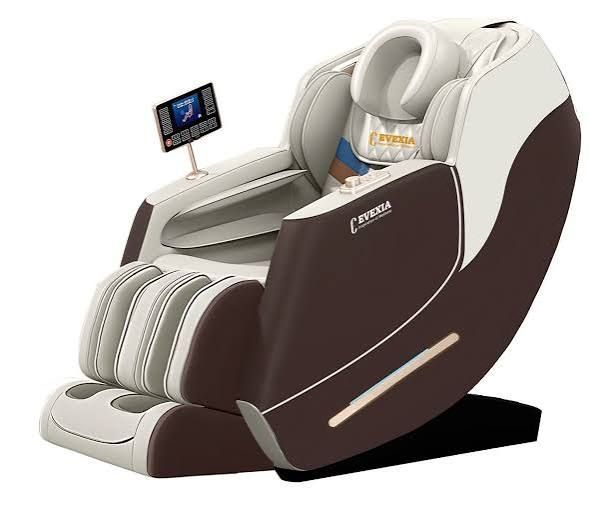
Some massage chairs include an emergency stop button or dedicated stop control.
Its purpose is straightforward: quickly interrupt chair operation when necessary.
An emergency control can be particularly useful if:
- A user feels uncomfortable
- An unexpected movement occurs
- An object becomes trapped
- A mechanical issue is suspected
- A caregiver needs to stop the chair quickly
Users should know where the emergency control is located before starting an intensive program.
Remote and Controller Safety
The primary controller is another part of the safety system.
Modern controllers may include dedicated buttons for:
- Stop
- Start
- Recline
- Upright position
- Massage intensity
- Air pressure
- Heat
- Program selection
A clearly identifiable stop function is particularly important.
Touchscreen interfaces can provide many settings, but a physical emergency control can be easier to operate quickly than navigating a digital menu.
Automatic Shutdown
Some massage chairs include automatic session timers or shutdown functions.
These systems can prevent the chair from operating indefinitely.
Automatic shutdown may occur because of:
- Session duration
- Overheating
- Motor protection
- Electrical abnormalities
- System errors
The exact conditions vary by model.
Automatic shutdown should be viewed as an additional protection layer rather than a replacement for supervision and correct use.
Motor Overload Protection
Massage chairs use electric motors to move rollers, recline the backrest and operate other mechanisms.
A motor can experience increased resistance if:
- An obstruction is present
- The mechanism reaches its operating limit
- Excessive force is applied
- A component encounters abnormal resistance
Overload protection can help prevent damage by reducing or stopping motor operation when an abnormal condition is detected.
This may also protect other electronic components connected to the motor system.
Thermal Protection
Heating elements are common in advanced massage chairs.
Because heat is generated electrically, temperature management is an important consideration.
Potential protective features can include:
- Temperature sensors
- Maximum-temperature limits
- Timed heating
- Automatic heat shutdown
- Independent heating controls
Users should follow the manufacturer's recommended heat settings and session duration.
Heat should not be treated as harmless simply because it is integrated into a wellness device.
Airbag Pressure Controls
Air-compression systems use pumps, valves and inflatable chambers.
Safety-related controls can monitor or regulate:
- Air pressure
- Inflation duration
- Deflation cycles
- Pump operation
- Program intensity
If an airbag system develops abnormal pressure or fails to operate correctly, the control system may stop the relevant function depending on its design.
Users should avoid modifying or obstructing airbag components.
Roller Position and Movement Monitoring
The primary massage rollers move along a mechanical track.
Advanced chairs may use sensors to determine the roller carriage's position.
Position monitoring can help the system:
- Establish a starting position
- Control movement limits
- Return rollers to a designated position
- Coordinate movement with the reclining system
- Detect certain mechanical abnormalities
This technology is particularly useful in automated massage programs where multiple movements occur in sequence.
Reclining Safety
The reclining mechanism can be one of the most important mechanical safety areas.
A motorized backrest can move significant components of the chair while the user is seated.
Potential safety considerations include:
- Clearance behind the chair
- Floor stability
- Moving joints
- Footrest movement
- Electrical connections
- Obstruction detection
- Maximum operating positions
Some chairs use "space-saving" reclining mechanisms that move forward while reclining, reducing the distance needed from the wall.
However, users should still follow the manufacturer's required clearance specifications.
Wall and Floor Clearance
Incorrect placement can create mechanical problems even when the chair itself has safety systems.
Before installation, check:
- Wall clearance
- Side clearance
- Ceiling clearance if applicable
- Doorway width
- Floor strength
- Electrical outlet position
- Footrest extension area
Objects such as tables, stools, pets or other furniture should not obstruct moving sections.
Footrest Safety
The footrest can contain multiple moving components.
Some systems include:
- Calf airbags
- Foot airbags
- Foot rollers
- Extendable leg sections
- Motorized footrest movement
Users should avoid placing hands or objects underneath moving sections.
Children and pets should also be kept away from the chair while automated movement is taking place.
Child Safety
Massage chairs contain powerful motors and moving mechanisms that are not designed as children's play equipment.
Potential concerns include:
- Pinch points
- Moving rollers
- Reclining sections
- Footrest mechanisms
- Air-compression components
- Electrical controls
Manufacturers may provide age or supervision recommendations, and those instructions should be followed.
A chair should never be treated like an ordinary stationary recliner when its motors are operating.
Electrical Safety
A premium massage chair contains multiple electrical components.
These can include:
- Motors
- Control boards
- Sensors
- Heating elements
- Air pumps
- Power supplies
- Internal wiring
Basic electrical precautions include:
- Use the specified electrical supply
- Keep the power connection dry
- Avoid damaged cables
- Do not use damaged plugs
- Avoid unauthorized modifications
- Follow grounding requirements
- Disconnect power before certain maintenance procedures when instructed
Electrical installation should follow the manufacturer's instructions and applicable local requirements.
Power Failure and Recovery
A power interruption can occur while a chair is reclined or during a massage program.
Some designs incorporate mechanisms that help return the chair to a safe or neutral position after power is restored, while others may require specific procedures.
Users should check the manufacturer's instructions for:
- Power interruption
- Manual release
- Emergency return
- Restart procedure
- Reset procedure
This information is particularly important before using the chair in a home environment.
Manual Emergency Release
Some motorized furniture systems include mechanical or manual release mechanisms.
Whether a massage chair has such a mechanism depends on its design.
If available, the user should understand:
- Where the release is located
- When it should be used
- Whether power must be disconnected first
- How the chair should be repositioned afterward
Users should not attempt to force a motorized mechanism manually unless the manufacturer specifically provides instructions for doing so.
Safety Software and Control Logic
Modern massage chairs increasingly depend on software to coordinate mechanical systems.
The control system can manage:
- Roller movement
- Reclining
- Airbag timing
- Heat
- Massage programs
- Sensor inputs
- Motor limits
A safety-oriented control system can prevent incompatible movements or stop a program when sensor information indicates an abnormal condition.
This is an important difference between a simple motorized recliner and a highly automated massage system.
Safety Feature Comparison
| Safety Feature | Main Purpose |
|---|---|
| Body sensors | Detect user position |
| Obstruction detection | Identify unusual resistance or objects |
| Anti-pinch design | Reduce trapping hazards |
| Emergency stop | Quickly interrupt operation |
| Motor protection | Reduce overload risk |
| Temperature sensors | Monitor heating |
| Automatic shutdown | Stop operation under selected conditions |
| Air-pressure control | Regulate compression |
| Roller position sensors | Monitor mechanical movement |
| Recline controls | Manage backrest movement |
| Clearance guidance | Reduce installation hazards |
| Child-safety guidance | Reduce misuse risks |
Which Safety Features Should Be Prioritized?
When evaluating a premium massage chair, safety features should be considered alongside massage technology.
A useful priority list is:
1. Emergency Stop
A clearly accessible stop function is important.
2. Anti-Pinch Protection
Look for both physical protection and electronic detection where available.
3. Obstruction Detection
This can help when the chair encounters unexpected resistance.
4. Motor Protection
Overload monitoring can protect moving components and electronics.
5. Heat Monitoring
Temperature control is important when heating elements are integrated.
6. Clear Installation Requirements
The chair should provide clear information about clearance and placement.
7. User Instructions
A sophisticated chair still requires correct operation.
8. Electrical Protection
The power system should comply with the applicable electrical requirements and manufacturer specifications.
Safety Certifications and Standards
Safety markings and certifications can provide additional information, but they should be interpreted correctly.
Depending on the country and market, a product may need to comply with relevant electrical, electromagnetic compatibility, mechanical or consumer-product requirements.
For products intended for the Indian market, users can check relevant information from the Bureau of Indian Standards (BIS) and applicable Indian regulations.
Internationally, standards organizations and certification systems may use different requirements.
A certification mark should therefore be checked against the actual model and market rather than treated as a universal guarantee of safety.
Maintenance and Safety
Regular maintenance can help preserve safe operation.
Users should periodically inspect:
- Power cables
- Plugs
- Upholstery
- Moving covers
- Footrest components
- Controller cables
- Unusual noises
- Unusual vibration
- Airbag operation
- Heating performance
Stop using the chair if there are signs of a significant malfunction, such as burning smells, damaged wiring, abnormal mechanical noise or uncontrolled movement.
Repairs involving electrical or motorized components should follow the manufacturer's approved procedures.
Common Safety Mistakes
Even a well-designed chair can become unsafe through improper use.
Blocking the Footrest
Objects underneath the footrest can interfere with movement.
Placing Hands Near Moving Joints
Moving sections can create pinch points.
Exceeding User Limits
Weight and height limits are specified for mechanical and safety reasons.
Ignoring Unusual Sounds
Grinding, clicking or repeated motor stopping can indicate a mechanical issue.
Using Damaged Cables
Electrical damage should never be ignored.
Modifying Safety Components
Removing guards or bypassing sensors can create serious hazards.
Using the Chair in a Wet Environment
Electrical equipment should be protected from moisture.
Safety Checklist Before Every Session
A simple checklist can reduce avoidable problems.
Before starting:
- Check that the chair is on a stable surface.
- Confirm that the required clearance is available.
- Remove objects from around the footrest.
- Make sure cables are undamaged.
- Check that children and pets are away from moving sections.
- Confirm that the user is within the manufacturer's limits.
- Make sure the emergency stop control is accessible.
During operation:
- Pay attention to unusual sounds or movements.
- Stop the program if discomfort or abnormal operation occurs.
- Do not place hands near moving mechanisms.
- Do not force the chair into a position.
After use:
- Return the chair to the recommended position.
- Follow the manufacturer's shutdown instructions.
- Disconnect power when required by the instructions.
Do More Safety Features Mean a Better Massage Chair?
Not necessarily.
A chair can have many sensors and safety functions while having a basic massage mechanism.
Similarly, a chair with advanced 4D rollers may have a simpler safety architecture.
The best approach is to evaluate both areas separately:
Massage technology: rollers, track, air compression, heat and programs.
Safety technology: sensors, motor protection, anti-pinch design, emergency controls and electrical protection.
A sophisticated system should ideally combine strong mechanical design with appropriate safety controls.
Frequently Asked Questions
1. What is an anti-pinch system in a massage chair?
An anti-pinch system is designed to reduce the possibility of fingers, clothing or objects becoming trapped in moving sections. It may combine physical guards, safe mechanical spacing, sensors and motor-control systems.
2. Do massage chairs have safety sensors?
Many advanced models use different types of sensors for body positioning, roller movement, temperature, pressure or obstruction detection. The exact sensor configuration varies by model.
3. What does an emergency stop button do?
An emergency stop function is designed to interrupt chair operation quickly. Its exact behaviour depends on the chair's control system.
4. Can a massage chair overheat?
Heating components and motors can generate heat. Some models include temperature monitoring, timed heating and automatic protection, but users should still follow the manufacturer's operating instructions.
5. Is it safe to use a massage chair around children?
Children should not treat a motorized massage chair as a play area. Moving rollers, reclining sections and foot mechanisms can create pinch or mechanical hazards. Follow the manufacturer's age and supervision guidance.
6. What should I do if the massage chair makes an unusual noise?
Stop the program and inspect the chair according to the manufacturer's instructions. If the noise continues or appears abnormal, discontinue use and seek appropriate technical assistance rather than continuing operation.
Conclusion
Premium massage-chair safety depends on more than one feature.
Sensors, anti-pinch mechanisms, obstruction detection, emergency controls, motor protection, temperature monitoring and automatic shutdown systems can work together to create multiple layers of protection.
Mechanical design is equally important. Proper spacing, protective covers and controlled movement can reduce risks before electronic systems even need to intervene.
For users, safe operation remains essential. Correct installation, adequate clearance, adherence to weight and usage limits, regular inspection and careful attention to unusual behaviour can help maintain safe operation.
When evaluating a premium massage chair, look beyond features such as 3D, 4D or AI technology. A well-designed system should balance massage performance, automation, mechanical reliability and safety engineering.
Disclaimer
This article is intended for general educational and informational purposes only. Safety features, sensors, anti-pinch mechanisms, electrical protections and operating procedures vary between massage-chair manufacturers and models. The information provided does not replace the manufacturer's instruction manual, applicable safety standards or professional technical guidance. Always follow the instructions supplied with the specific chair and discontinue use if the equipment shows signs of malfunction.