Jump to a Chapter

Industrial Heat Treatment: Equipment, Materials & Manufacturing Processes

Industrial Heat Treatment: Equipment, Materials & Manufacturing Processes

Industrial heat treatment is a controlled manufacturing technology used to modify the properties and microstructure of metals and alloys. By applying carefully managed heating, holding, and cooling cycles, manufacturers can influence characteristics such as hardness, strength, toughness, ductility, wear resistance, and dimensional stability.

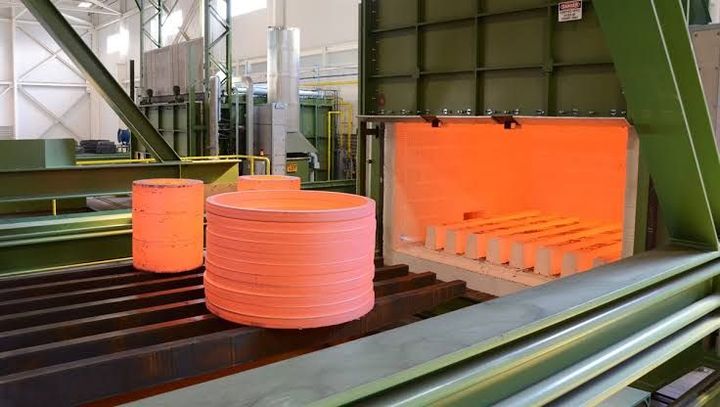
Heat treatment is widely used in industries where metal components must perform under mechanical loads, friction, temperature changes, or repeated cycles. Automotive components, aerospace parts, industrial machinery, tools, gears, shafts, bearings, and fabricated components can all involve different forms of thermal processing.

Modern industrial heat treatment combines traditional metallurgical principles with advanced furnaces, induction systems, vacuum technology, atmosphere control, sensors, automation, and digital monitoring.

This guide explains industrial heat treatment equipment, commonly processed materials, major thermal processes, cooling methods, industrial applications, quality control, automation, and emerging manufacturing technologies.

What Is Industrial Heat Treatment?

Industrial heat treatment is the controlled thermal processing of metals and alloys to achieve desired physical, mechanical, or structural characteristics.

A basic thermal cycle typically involves:

  • Heating the material
  • Holding it at a controlled temperature
  • Cooling it under specified conditions

The precise thermal cycle depends on factors such as:

  • Material composition
  • Component dimensions
  • Desired properties
  • Required microstructure
  • Production volume
  • Furnace atmosphere
  • Cooling requirements

Heat treatment can be performed on individual components, batches, coils, sheets, bars, forgings, castings, and other metal products.

Why Industrial Heat Treatment Matters

Metal components may require different properties at different stages of manufacturing.

Heat treatment can be used to:

  • Increase hardness
  • Improve strength
  • Increase toughness
  • Reduce residual stresses
  • Improve ductility
  • Improve machinability
  • Increase wear resistance
  • Refine microstructure
  • Improve fatigue performance
  • Increase dimensional stability

The objective is to establish an appropriate balance of properties for the intended application.

Industrial Heat Treatment Equipment

Industrial heat treatment equipment ranges from relatively simple batch furnaces to highly automated production lines.

Common systems include:

  • Batch furnaces
  • Box furnaces
  • Continuous furnaces
  • Vacuum furnaces
  • Controlled-atmosphere furnaces
  • Bell furnaces
  • Induction heating systems
  • Salt bath systems
  • Quenching equipment
  • Cooling systems
  • Automated handling equipment

The equipment selected depends on the material, component size, production volume, process, and required environmental control.

Batch Furnaces

Batch furnaces process a defined quantity of components at one time.

They are commonly used where manufacturers require flexibility between different components or thermal cycles.

Potential applications include:

  • Tools
  • Machine components
  • Small and medium batches
  • Maintenance-related processing
  • Specialty components

Batch equipment can accommodate different loads without requiring a continuous production line.

Continuous Furnaces

Continuous furnaces move components through multiple thermal zones.

A typical system can include:

  1. Loading
  2. Preheating
  3. Heating
  4. Soaking
  5. Controlled cooling
  6. Quenching
  7. Unloading

Continuous systems can provide consistent thermal processing for higher-volume manufacturing.

Vacuum Heat Treatment Equipment

Vacuum furnaces operate under reduced atmospheric pressure.

Potential advantages include:

  • Reduced oxidation
  • Cleaner surfaces
  • Controlled processing conditions
  • Reduced contamination
  • Precise temperature control

Vacuum treatment can be useful for specialty steels, tools, aerospace components, precision parts, and selected high-performance alloys.

Controlled-Atmosphere Furnaces

Atmosphere-controlled furnaces regulate the gases surrounding the workpiece during processing.

Atmosphere management can help control:

  • Oxidation
  • Decarburization
  • Carburization
  • Surface reactions
  • Contamination

Common gases include nitrogen, argon, hydrogen, and carbon-containing process gases, depending on the application.

Induction Heat Treatment

Induction heating uses electromagnetic fields to generate heat directly within electrically conductive materials.

It can provide:

  • Rapid heating
  • Localized treatment
  • Repeatable processing
  • High production rates
  • Automation compatibility

Induction hardening is frequently applied to selected areas of components such as gears, shafts, and other parts requiring hardened surfaces.

Materials Used in Industrial Heat Treatment

Different materials respond differently to thermal processing.

Carbon Steel

Carbon steels are commonly heat-treated using processes such as:

  • Annealing
  • Normalizing
  • Hardening
  • Tempering
  • Stress relieving

The carbon content strongly influences hardenability and the resulting microstructure.

Alloy Steel

Alloy steels contain additional elements that influence properties and heat treatment behavior.

Common alloying elements include:

  • Chromium
  • Nickel
  • Molybdenum
  • Manganese
  • Vanadium

These materials can be used where greater strength, toughness, hardenability, or wear resistance is required.

Stainless Steel

Stainless steels include several metallurgical families, each with different heat treatment requirements.

Depending on the grade, processes may include:

  • Solution treatment
  • Stress relieving
  • Stabilization
  • Controlled cooling

Tool Steel

Tool steels are designed for applications involving cutting, forming, molding, or repeated mechanical contact.

Heat treatment is particularly important because tool performance can depend on the balance between:

  • Hardness
  • Toughness
  • Wear resistance
  • Dimensional stability

Aluminum Alloys

Certain aluminum alloys can be strengthened through heat treatment.

Common processes include:

  • Solution heat treatment
  • Quenching
  • Artificial aging
  • Natural aging

Nickel-Based Alloys

Nickel-based alloys are used in demanding environments and can require carefully controlled thermal processing.

Applications may include selected aerospace, energy, and high-temperature components.

Major Industrial Heat Treatment Processes

Annealing

Annealing involves heating a metal to a suitable temperature followed by controlled cooling.

It can be used to:

  • Reduce hardness
  • Increase ductility
  • Relieve internal stresses
  • Improve machinability
  • Modify microstructure

Different annealing cycles are used depending on the material.

Normalizing

Normalizing is commonly applied to steel.

The material is heated above a relevant transformation temperature and then cooled under controlled conditions, often in air.

It can help:

  • Refine grain structure
  • Improve structural uniformity
  • Adjust mechanical properties
  • Prepare material for additional processing

Hardening

Hardening generally involves heating a material to an appropriate temperature followed by rapid cooling.

The process can increase hardness and strength.

The resulting properties depend on:

  • Material composition
  • Heating temperature
  • Holding time
  • Cooling rate
  • Component geometry

Tempering

Tempering is usually performed after hardening.

The hardened material is reheated to a controlled temperature and held for a specified period.

It can reduce brittleness and improve the balance between hardness and toughness.

Stress Relieving

Stress-relief treatment is used to reduce residual stresses caused by processes such as:

  • Welding
  • Machining
  • Casting
  • Forging
  • Forming

This can help reduce unwanted dimensional changes during later manufacturing stages.

Surface Hardening Processes

Some industrial components need a hard surface while maintaining a tougher interior.

Surface hardening processes include:

  • Induction hardening
  • Flame hardening
  • Carburizing
  • Nitriding
  • Carbonitriding

These processes can improve resistance to wear and repeated contact stresses.

Carburizing

Carburizing introduces carbon into the surface of suitable steel components.

The process can create a hardened surface layer while maintaining a relatively tough core.

Common applications include:

  • Gears
  • Shafts
  • Pins
  • Bushings
  • Transmission components

Nitriding

Nitriding introduces nitrogen into the surface of suitable materials.

It can improve:

  • Surface hardness
  • Wear resistance
  • Fatigue performance
  • Surface durability

Nitriding can also provide relatively low dimensional distortion under suitable processing conditions.

Quenching and Cooling

Cooling conditions are critical in many heat treatment processes.

Quenching can use:

  • Water
  • Oil
  • Polymer solutions
  • Air
  • Inert gases

The selected medium influences the cooling rate and resulting microstructure.

Industrial quenching systems can include:

  • Quench tanks
  • Pumps
  • Agitation systems
  • Temperature monitoring
  • Filtration
  • Heat exchangers

Heating Methods

Industrial furnaces and heating systems can use different energy sources.

Electrical Heating

Electrical resistance elements provide controlled and programmable heating.

Potential benefits include:

  • Precise temperature control
  • Uniform heating
  • Programmability
  • Clean operating environments

Gas Heating

Gas-fired systems generate heat through combustion.

They can be used in large industrial furnaces and applications requiring substantial thermal capacity.

Induction Heating

Electromagnetic energy heats the component directly.

This approach can provide rapid and localized heating.

Vacuum Heating

Vacuum systems provide thermal processing under reduced pressure, which can reduce unwanted surface reactions.

Temperature Monitoring and Control

Accurate temperature management is fundamental to industrial heat treatment.

Equipment may use:

  • Thermocouples
  • Infrared sensors
  • Temperature controllers
  • PLC systems
  • Data acquisition devices
  • Digital control systems

Modern equipment can continuously compare measured temperatures against programmed thermal profiles.

Furnace Atmosphere Management

Atmosphere management becomes particularly important when surface chemistry must be controlled.

The system may monitor:

  • Gas composition
  • Pressure
  • Flow rate
  • Oxygen levels
  • Carbon potential

Maintaining the correct atmosphere can help produce more consistent surface conditions.

Quality Control

Industrial heat treatment requires process verification because thermal variations can affect material properties.

Common quality-control methods include:

  • Hardness testing
  • Metallographic analysis
  • Dimensional inspection
  • Surface inspection
  • Microstructure evaluation
  • Non-destructive testing

Process documentation can also provide traceability for production batches.

Hardness Testing

Hardness measurements are commonly used to evaluate whether a treatment achieved the required surface or bulk properties.

Common methods include:

  • Rockwell
  • Brinell
  • Vickers
  • Knoop

Testing method selection depends on material type, component size, surface condition, and applicable specifications.

Microstructure Analysis

Metallographic examination provides information about the internal structure of a processed metal.

It can reveal:

  • Grain structure
  • Phase distribution
  • Hardened layers
  • Transformation characteristics
  • Potential processing abnormalities

Microstructural analysis can be especially useful when investigating unexpected material behavior.

Distortion and Dimensional Control

Thermal processing can cause dimensional changes because of:

  • Thermal expansion
  • Phase transformations
  • Residual stresses
  • Uneven cooling
  • Component geometry

Precision components may therefore require careful load arrangement, thermal uniformity, cooling control, and post-treatment inspection.

Industrial Applications

Automotive Manufacturing

Heat-treated components can include:

  • Transmission gears
  • Shafts
  • Bearings
  • Axles
  • Engine components
  • Suspension components

Aerospace Manufacturing

Heat treatment can be used for selected:

  • Structural parts
  • Engine components
  • Landing gear components
  • Fasteners
  • Precision parts

Tool and Die Manufacturing

Thermal processing is important for:

  • Cutting tools
  • Dies
  • Molds
  • Punches
  • Forming tools

Heavy Machinery

Industrial machinery can incorporate heat-treated components where strength, durability, and wear resistance are important.

Energy Industry

Selected energy-related equipment can require controlled heat treatment to achieve required material characteristics.

Construction and Infrastructure

Heat-treated steel and other metals can be found in various components used in construction equipment, machinery, and infrastructure-related applications.

Automation and Robotics

Automation can improve repeatability and reduce manual handling.

Automated systems can control:

  • Loading
  • Unloading
  • Furnace movement
  • Heating cycles
  • Holding periods
  • Quenching
  • Cooling
  • Process recording

Robotic handling can be integrated with production lines to transfer components between processing stages.

Industry 4.0 Heat Treatment

Digital manufacturing technologies are increasingly being integrated into heat treatment facilities.

Industry 4.0 systems can connect:

  • Sensors
  • Furnaces
  • PLCs
  • Robots
  • Data platforms
  • Quality systems

This can provide real-time visibility into equipment and production conditions.

Artificial Intelligence and Data Analytics

Large quantities of heat treatment data can be analyzed using advanced software and machine-learning techniques.

Potential applications include:

  • Predictive maintenance
  • Process anomaly detection
  • Quality prediction
  • Energy optimization
  • Thermal-cycle analysis
  • Equipment monitoring

AI-based systems can support engineering teams by identifying patterns, but material-specific validation remains essential.

Energy Efficiency

Industrial heat treatment can be energy-intensive.

Manufacturers may improve efficiency through:

  • Improved furnace insulation
  • Better chamber sealing
  • Heat recovery
  • Efficient heating elements
  • Optimized cycle times
  • Automated controls
  • Energy monitoring

Efficient furnace operation can help reduce unnecessary thermal losses while maintaining required processing conditions.

Safety Considerations

Industrial heat treatment involves high temperatures and potentially hazardous electrical, gas, mechanical, and pressure-related systems.

Safety measures can include:

  • Thermal guarding
  • Emergency shutdown systems
  • Gas detection
  • Ventilation
  • Pressure monitoring
  • Temperature alarms
  • Equipment interlocks
  • Preventive maintenance
  • Operator training

Safety procedures should be based on applicable regulations, equipment documentation, and site-specific risk assessments.

Selecting Industrial Heat Treatment Equipment

Several factors should be evaluated when determining which equipment configuration is appropriate.

Material

The metal or alloy determines the required thermal cycle and atmosphere.

Component Size

The size and geometry influence furnace capacity, heating uniformity, and cooling behavior.

Production Volume

Batch systems may suit flexible production, while continuous systems may be appropriate for higher throughput.

Temperature Range

Equipment should provide the required operating range with appropriate temperature uniformity.

Atmosphere

Vacuum or controlled-atmosphere technology may be required for specific materials and surface conditions.

Cooling Requirements

The quenching or cooling system should achieve the necessary cooling characteristics consistently.

Automation Level

Production requirements may determine whether manual, semi-automated, or fully automated handling is appropriate.

Future of Industrial Heat Treatment

Industrial heat treatment is moving toward increasingly intelligent and connected manufacturing environments.

Important developments include:

  • Smart furnace controls
  • Digital twins
  • Advanced sensors
  • AI-assisted monitoring
  • Automated material handling
  • Predictive maintenance
  • Real-time quality monitoring
  • Energy optimization
  • Digital traceability
  • Advanced atmosphere control

These technologies can improve process visibility and help manufacturers respond more quickly to production variations.

Frequently Asked Questions

What is industrial heat treatment?

Industrial heat treatment is the controlled heating, holding, and cooling of metals or alloys to modify their microstructure and properties.

What equipment is used for industrial heat treatment?

Common equipment includes batch furnaces, continuous furnaces, vacuum furnaces, controlled-atmosphere systems, induction heaters, quenching systems, and automated material-handling equipment.

Which metals can undergo heat treatment?

Many metals and alloys can undergo some form of thermal processing, including carbon steels, alloy steels, stainless steels, tool steels, heat-treatable aluminum alloys, and selected nickel-based alloys.

What is the difference between annealing and hardening?

Annealing generally aims to reduce hardness, improve ductility, relieve stresses, or modify microstructure, while hardening generally aims to increase hardness and strength through controlled heating and rapid cooling.

Why is tempering performed after hardening?

Tempering is commonly used after hardening to reduce excessive brittleness and establish a more suitable balance between hardness and toughness.

How is modern technology changing industrial heat treatment?

Automation, sensors, data analytics, AI, robotics, and Industry 4.0 connectivity are helping improve process monitoring, repeatability, traceability, maintenance, and energy management.

Conclusion

Industrial heat treatment is an essential technology for producing metal components with controlled mechanical and physical properties. By carefully managing heating, soaking, atmosphere, and cooling conditions, manufacturers can modify materials for demanding applications across automotive, aerospace, tooling, machinery, energy, construction, and general engineering.

The equipment used for these processes ranges from batch and continuous furnaces to vacuum systems, controlled-atmosphere equipment, induction heating systems, and automated quenching lines. The correct configuration depends on the material, component geometry, production volume, thermal cycle, and required properties.

At the same time, industrial heat treatment is becoming increasingly digital. Sensors, automation, robotics, artificial intelligence, predictive maintenance, and energy-monitoring technologies are creating more connected and data-driven manufacturing processes.

As metal manufacturing continues to demand greater precision, consistency, efficiency, and traceability, heat treatment technology will remain an important part of modern industrial production.

Disclaimer

This article is intended solely for informational and educational purposes. It does not provide engineering, manufacturing, workplace safety, regulatory, or professional technical advice. It does not endorse, recommend, compare, rank, review, market, or promote any heat treatment equipment manufacturer, furnace supplier, industrial technology provider, or specific product. Equipment specifications, thermal cycles, material behavior, operating conditions, safety requirements, and applicable standards vary according to the application and jurisdiction. Technical decisions should be made by appropriately qualified professionals using applicable standards, process specifications, and manufacturer documentation.

author-image

Ravi Shankar Maurya

We create purposeful content that speaks, resonates, and drives action.

August 11, 2026 . 7 min read