Dental Chairs Explained: Types, Features, Ergonomics, Technology & Modern Dental Equipment Insights
Dental chairs are specialised pieces of equipment designed to position patients comfortably and provide dental professionals with suitable access to the mouth during examinations and treatments. They form a central part of the dental operatory, where dentists, hygienists, and dental assistants carry out procedures ranging from routine oral examinations to complex restorative treatments.
Modern dental chairs combine adjustable seating, backrests, headrests, arm supports, movement controls, and other features that help accommodate different patients and clinical procedures. Many systems also integrate equipment such as operating lights, instrument delivery units, suction controls, water systems, and foot controls.
The design of a dental chair can influence patient positioning, clinician posture, workflow, cleaning procedures, and the organisation of the treatment area. However, a chair alone does not determine treatment quality. Appropriate clinical training, infection prevention, equipment maintenance, and safe operating practices are equally important.
Understanding dental chair types, features, ergonomic principles, and technological developments can help dental students, clinic planners, healthcare administrators, and dental professionals learn how modern dental treatment environments are organised.
What Is a Dental Chair?
A dental chair is a purpose-designed seat that supports a patient during dental examinations and procedures. It allows the patient to sit upright, recline, or move into a position suitable for the treatment being performed.
Unlike ordinary seating, a dental chair is engineered to support controlled positioning and repeated adjustment in a clinical environment. Depending on its design, it may use electric motors, hydraulic mechanisms, mechanical linkages, or a combination of these systems.
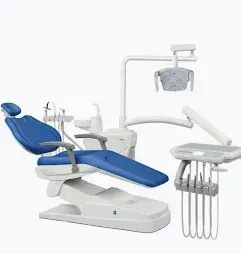
A complete dental chair unit may include several connected components:
Patient seat and backrest
Adjustable headrest
Armrests or arm supports
Chair base and lifting mechanism
Positioning controls
Operating light
Instrument delivery system
Dental handpiece connections
Saliva ejector and high-volume suction connections
Water supply and rinse systems
Foot control
Cuspidor or spittoon, where included
Not every chair includes all these components. Some are supplied as integrated dental units, while others are designed to connect with separately installed equipment.
Importance of Dental Chairs in Modern Dentistry
Dental chairs support the practical organisation of clinical treatment. Their design affects several aspects of the dental environment.
1. Patient Positioning
Different procedures require different patient positions. An adjustable chair helps move the patient between upright, semi-reclined, and reclined positions as clinically appropriate.
Suitable positioning can improve access to the oral cavity while helping the patient remain stable during treatment.
2. Clinician Ergonomics
Dentists often perform detailed procedures while looking into a small working area. Appropriate chair positioning can help reduce unnecessary bending, twisting, and reaching.
Good ergonomics also depends on the clinician's stool, lighting, instrument placement, magnification, and working technique.
3. Patient Comfort
Contoured cushions, suitable upholstery, adjustable headrests, and controlled movements can help accommodate different body shapes and comfort needs.
Patients with limited mobility, back discomfort, or difficulty remaining in one position may require additional adjustments or a different positioning approach.
4. Clinical Workflow
A well-organised dental chair unit keeps frequently used instruments and controls within a planned working area. This can reduce unnecessary movement and help the dental team coordinate treatment steps.
5. Equipment Integration
Modern dental units may connect chair movement, operating lights, instrument delivery, suction, and other equipment through coordinated controls.
The exact level of integration varies by model and clinical configuration.
6. Cleaning and Infection Prevention
Dental chairs are used repeatedly and may come into contact with contaminated gloves, droplets, and other clinical materials. Smooth surfaces, accessible joints, compatible upholstery, and suitable cleaning procedures support infection prevention.
The chair must be included in the dental facility's documented cleaning and disinfection routine.
Major Types of Dental Chairs
Dental chairs are available in different configurations according to clinical needs, available space, patient requirements, and equipment integration.
1. Manual Dental Chairs
Manual dental chairs use mechanical controls or manually operated mechanisms to adjust selected parts of the chair.
Common characteristics include:
Mechanically adjusted backrests or headrests
Straightforward operating mechanisms
Limited electrical components
Basic positioning functions
These chairs may be suitable for settings where treatment requirements are relatively simple or where a non-motorised design is preferred.
Their adjustment range and ease of operation depend on the particular model.
2. Hydraulic Dental Chairs
Hydraulic dental chairs use fluid-powered mechanisms to raise or lower the patient seat and, depending on the design, adjust other sections.
The hydraulic system transfers force through a controlled mechanism, allowing the chair to support and reposition a patient.
Important considerations include hydraulic stability, leak prevention, maintenance access, and manufacturer-approved operating procedures.
Not every hydraulic chair uses the same configuration, and some models combine hydraulic lifting with other adjustment mechanisms.
3. Electromechanical Dental Chairs
Electromechanical chairs use electric motors and mechanical transmission systems to control chair movements.
Depending on the model, controls may adjust the seat height, backrest angle, and programmed positions.
Common features include:
Powered movement
Hand or foot controls
Preset patient positions
Controlled starting and stopping
Integrated safety features
These systems can simplify positioning during routine clinical workflows. Correct installation, electrical safety, and periodic maintenance remain important.
4. Fully Adjustable Dental Chairs
Fully adjustable chairs are designed to provide multiple positioning options for a wide range of procedures.
Features may include independent seat and backrest movement, adjustable headrests, programmable positions, and coordinated movement sequences.
These chairs can accommodate different treatment approaches, although the exact adjustment range varies by design.
5. Integrated Dental Chair Units
An integrated dental chair unit combines patient positioning with several treatment-related components in one coordinated system.
Depending on the configuration, the unit may include an operating light, instrument tray, handpiece connections, suction controls, water delivery, and a cuspidor.
Integrated units can help organise equipment around the treatment area. Their layout should be assessed in relation to clinician handedness, assistant access, room dimensions, and maintenance requirements.
6. Portable Dental Chairs
Portable dental chairs are designed to be moved or assembled in different locations. Some are lightweight folding chairs intended for outreach activities, temporary clinical arrangements, or selected mobile dental programmes.
Portable designs may offer fewer powered adjustments and less integrated equipment than permanent dental units.
They should be used only in arrangements that provide suitable patient support, clinical access, lighting, infection prevention, and equipment stability.
7. Paediatric Dental Chairs
Paediatric dental chairs are designed to accommodate children and the requirements of paediatric dental environments.
Depending on the model, they may feature smaller dimensions, suitable positioning supports, child-appropriate upholstery, and designs intended to help children feel more comfortable.
Some clinics use standard adjustable chairs with appropriate positioning adaptations instead of a dedicated paediatric chair.
Patient communication, behaviour guidance, and age-appropriate clinical practices remain important regardless of chair design.
8. Bariatric Dental Chairs
Bariatric dental chairs are designed to accommodate patients whose weight or body dimensions exceed the limits of standard chairs.
Relevant design considerations include:
Clearly specified maximum patient weight
Seat width and depth
Structural stability
Armrest clearance
Safe transfer and positioning
Suitable lifting capacity
Clinics should confirm the manufacturer's rated limits and follow instructions for patient transfer. A chair should never be operated beyond its stated capacity.
9. Dental Chairs for Specialist Procedures
Certain dental environments require specific positioning characteristics or additional compatibility with specialist equipment.
For example, oral surgery may require stable patient positioning and appropriate access for the clinical team. Endodontic procedures may benefit from a chair arrangement that supports consistent access and magnification.
Specialist requirements should be evaluated alongside the rest of the treatment system rather than assuming that one chair type is suitable for every procedure.
Main Components of a Modern Dental Chair
Understanding the chair's components helps explain how it supports patient positioning and clinical workflow.
Seat and Cushioning
The seat supports the patient's body and distributes pressure across the contact area. Cushion shape, firmness, width, and upholstery can affect comfort and ease of repositioning.
Materials should withstand repeated cleaning with approved products without becoming damaged or difficult to disinfect.
Backrest
The backrest supports the patient's torso and moves between positions suited to different procedures.
A well-designed backrest can help maintain support while providing the dental team with appropriate access. The available angle and movement pattern vary by chair.
Adjustable Headrest
The headrest supports the patient's head and helps position the oral cavity for treatment.
Depending on the design, it may adjust in height, angle, or length. Some headrests accommodate different patient heights and positioning needs.
Head and neck support should be adjusted carefully, particularly for patients with restricted mobility or relevant medical considerations.
Armrests
Armrests can help patients enter the chair, settle into position, and maintain a comfortable posture.
Some designs move aside or fold to support easier access. Their operation should be checked before patient transfer and before powered chair movements.
Chair Base and Lifting Mechanism
The base supports the chair structure and contains or connects to the lifting mechanism.
Hydraulic or electromechanical systems raise and lower the seat within the manufacturer's specified limits.
The base should remain stable during movement and be installed according to the equipment instructions.
Operating Light
The operating light illuminates the oral cavity and treatment area.
Modern lights may offer adjustable brightness, colour characteristics, positioning arms, and controls that help reduce unwanted shadows.
Lighting should be positioned to provide suitable visibility without causing unnecessary discomfort or obstructing the clinical team's movement.
Instrument Delivery System
The instrument delivery system places dental handpieces and other instruments within the treatment area.
Common arrangements include over-the-patient delivery, rear delivery, and side delivery. The appropriate layout depends on clinical workflow, clinician preference, and the role of the dental assistant.
Suction System
Dental suction removes fluids and debris from the oral cavity during suitable procedures.
Systems may include saliva ejectors and high-volume evacuation connections. Their performance depends on the wider suction installation, tubing, maintenance, and appropriate infection-control procedures.
Foot Control
Foot controls allow clinicians to operate selected functions without using their hands.
Depending on the unit, they may control handpiece operation, chair movement, or other equipment functions.
Controls should be easy to identify, appropriately positioned, and maintained to prevent unintended activation.
Essential Features to Understand When Evaluating Dental Chairs
A dental chair's features should be assessed according to the clinical environment and the people who will use it.
Adjustable Height and Backrest
Height adjustment helps position the patient's mouth relative to the clinician and assistant. Backrest adjustment supports changes in patient posture during treatment.
The chair's movement range should suit the intended procedures and available workspace.
Programmable Positions
Some powered chairs include preset positions for common clinical tasks.
Presets can reduce repeated manual adjustment, but they should be used with attention to patient comfort, safe movement, and the requirements of the procedure.
Smooth and Controlled Movement
Controlled movement helps reduce sudden changes in patient position.
A chair should respond predictably to its controls and stop appropriately when a movement is interrupted or a safety feature is activated.
Emergency Stop and Safety Controls
Some chairs incorporate movement-interruption controls, obstruction detection, or other safety features.
Operators should understand which protections are included, how they work, and what limitations apply. Safety mechanisms must not be bypassed.
Upholstery and Surface Design
Dental chair surfaces should be compatible with the cleaning and disinfection products specified by the manufacturer.
Cracked upholstery, damaged seams, exposed foam, or deteriorating surfaces can complicate cleaning and may require repair or replacement.
Patient Transfer Support
Patients may need help getting into or out of the chair. Armrest design, chair height, nearby space, and access for mobility aids can influence transfer safety.
Staff should follow appropriate transfer procedures and use additional equipment when required.
Maintenance Access
Accessible components can simplify inspection and routine maintenance.
Equipment documentation should identify approved cleaning products, maintenance intervals, electrical requirements, and procedures for reporting faults.
Ergonomics in Dental Chair Design
Ergonomics is the study of how equipment, tasks, and environments can be arranged to suit human capabilities and reduce unnecessary physical strain.
Dentistry involves sustained visual concentration, fine hand movements, and repeated work in a relatively small area. Poor positioning may contribute to discomfort in the neck, shoulders, back, wrists, and other body regions.
Patient Ergonomics
The patient should be supported in a position that is appropriate for the treatment and their physical needs.
Useful considerations include:
Adequate head and neck support
Appropriate backrest angle
Sufficient legroom
Comfortable arm placement
Clear communication before repositioning
Suitable assistance when entering or leaving the chair
A fully reclined position is not appropriate for every patient or every procedure. Positioning should take account of patient tolerance and relevant clinical considerations.
Dentist Ergonomics
Dentists often work close to the patient's mouth while maintaining a clear view of the treatment area.
Chair height and backrest position should be coordinated with the clinician's stool, working posture, magnification, and lighting.
The objective is to reduce sustained bending, twisting, excessive reaching, and awkward wrist positions wherever practical.
Dental Assistant Ergonomics
Dental assistants need appropriate access to instruments, suction, materials, and other equipment.
A well-planned chair and delivery system can support coordination between the dentist and assistant while reducing unnecessary movement.
The room layout should allow both team members to work without repeatedly crossing paths or reaching around obstructions.
Ergonomics for Different Procedures
Routine examinations, restorative procedures, endodontic treatment, and oral surgery may require different patient and clinician positions.
The chair should support the relevant positioning needs without forcing the clinical team into awkward postures.
Ergonomic design is most effective when combined with appropriate training, planned breaks, suitable stools, and good clinical technique.
Technology in Modern Dental Chairs
Dental chair technology has developed from basic positioning mechanisms to integrated systems that coordinate several functions.
Electric Motors and Position Sensors
Powered chairs may use motors, limit switches, and position sensors to control movement.
These components help the chair reach defined positions and prevent movement beyond specified limits.
Correct operation depends on suitable installation, maintenance, and functional checks.
Programmable Control Systems
Electronic control systems can store or manage selected chair positions and coordinate movement sequences.
Depending on the unit, controls may be located on the chair, delivery system, foot control, or another approved interface.
Operators should understand the controls before treating patients and avoid relying on presets without checking patient positioning.
Integrated Instrument Controls
Some dental units connect handpiece operation, instrument selection, water delivery, and other functions through a common control system.
Integration may reduce the number of separate controls required, but it also means the unit must be maintained as a coordinated system.
LED Operating Lights
LED technology is widely used in modern dental operating lights. LED systems can provide adjustable illumination and may use less electrical energy than some older lighting technologies.
Performance depends on light output, colour characteristics, positioning, and the design of the particular unit.
Digital Displays
Selected dental units use digital displays to show operating settings or equipment status.
A display can make selected functions easier to monitor, but it does not replace clinical judgement or required equipment checks.
Connected and Data-Enabled Equipment
Some modern dental environments use connected devices and digital practice systems to support workflow management and equipment monitoring.
Connectivity varies considerably between products. Clinics should evaluate data security, access controls, compatibility, and the need for software updates before connecting clinical equipment to a network.
Infection Prevention and Dental Chair Hygiene
Dental chairs are part of the clinical environment and must be managed within a broader infection-prevention programme.
Cleaning and disinfection requirements depend on the surface, the level of contamination, the product instructions, and applicable healthcare guidance.
Between-Patient Cleaning
Surfaces touched during treatment may require cleaning and disinfection between patients.
These can include chair controls, armrests, headrests, adjustment handles, and other frequently contacted surfaces.
Staff should follow the clinic's infection-control protocol and the instructions for the disinfectant and chair materials.
Protective Barriers
Suitable disposable barriers may be used on selected surfaces that are difficult to clean between patients or are frequently touched during treatment.
Barriers should be changed between patients, and the underlying surfaces should be managed according to the applicable infection-control procedure.
Waterline Management
Dental unit waterlines may support microbial growth if they are not maintained appropriately.
Facilities should follow the manufacturer's waterline treatment and monitoring instructions, along with applicable infection-prevention guidance. Water quality should be managed according to the intended clinical use.
Suction and Waste Management
Suction lines, traps, filters, and related components require appropriate cleaning and maintenance.
Procedures should follow the equipment instructions and the clinic's infection-control programme. Staff must also follow applicable rules for handling clinical waste and contaminated materials.
Upholstery Inspection
Cracks, tears, damaged seams, and degraded coatings can make cleaning more difficult.
Regular inspections help identify surfaces that need repair or replacement. Improvised cleaning chemicals should be avoided when they may damage the upholstery or reduce its cleanability.
Dental Chair Installation and Clinic Layout
Dental chair installation involves more than placing the chair in a room. The complete treatment environment must accommodate patients, clinicians, assistants, instruments, utilities, and maintenance access.
Space Planning
The room should provide enough space for chair movement, clinician stools, assistant access, patient entry and exit, and required equipment.
Clearances should be based on the chair's dimensions, movement range, installation instructions, and applicable building or healthcare requirements.
Electrical Requirements
Powered chairs may require specific electrical connections, grounding, and installation conditions.
Electrical work should be performed by qualified personnel according to the equipment documentation and applicable local requirements.
Plumbing and Suction Connections
Integrated dental units may require water supply, drainage, compressed air, and suction connections.
The exact requirements depend on the equipment configuration. Installation should be planned so that connections remain accessible for inspection and maintenance.
Lighting and Visibility
The operating light should illuminate the working area without interfering with the dentist's or assistant's position.
General room lighting should also support safe movement, cleaning, and clinical tasks.
Accessibility
The clinic should consider how patients with mobility limitations can enter the treatment room and transfer to the chair.
The appropriate arrangement may include wider access routes, suitable transfer space, supportive armrests, or additional transfer equipment.
Dental Chairs for Different Clinical Settings
Dental chairs are used across several types of clinical environments.
| Clinical setting | Common chair considerations | Main purpose |
|---|---|---|
| General dentistry | Adjustable positioning, integrated instruments, operating light | Examinations and routine procedures |
| Paediatric dentistry | Suitable dimensions, supportive positioning, child-friendly environment | Dental care for children |
| Orthodontics | Access to the oral cavity, adjustable headrest, suitable lighting | Examination and orthodontic procedures |
| Endodontics | Stable positioning, compatible lighting and magnification arrangements | Root canal-related procedures |
| Oral surgery | Stable support, appropriate access, compatible clinical equipment | Surgical dental procedures |
| Community dentistry | Practical setup, patient access, reliable equipment | Dental care in community or outreach settings |
| Teaching clinics | Adjustable positioning, visibility, and access for supervised learning | Education and clinical training |
| Special-care dentistry | Patient transfer support, suitable positioning range, accessible controls | Treatment adapted to individual needs |
These are general considerations rather than fixed specifications. The correct configuration depends on the procedure, patient population, clinician workflow, and the other equipment used in the room.
Common Dental Chair Problems and Maintenance
Dental chairs contain mechanical, electrical, and sometimes hydraulic components. Routine checks can help identify issues before they interfere with clinical activity.
Chair Does Not Move
Possible causes include a power supply issue, control malfunction, safety interlock, or mechanical fault.
Recommended response: Stop using the chair if its movement is unreliable. Check only the basic items permitted by the manufacturer's instructions and arrange qualified maintenance when required.
Unusual Noise or Jerky Movement
Unusual sounds or inconsistent movement may indicate wear, obstruction, or a problem with the drive mechanism.
Recommended response: Remove the chair from use if the movement creates a safety concern. Do not force the mechanism or continue operating it beyond the approved limits.
Upholstery Damage
Torn or cracked upholstery can make cleaning difficult and may expose underlying material.
Recommended response: Assess the damage, follow the manufacturer's repair guidance, and replace or repair affected components as appropriate.
Operating Light Problems
Poor illumination may result from a damaged light source, control issue, positioning problem, or electrical fault.
Recommended response: Check the approved controls and positioning adjustments. Electrical repairs should be handled by qualified personnel.
Water or Suction Problems
Poor flow, leaks, or unusual odours may indicate a maintenance issue in the wider dental unit.
Recommended response: Follow the manufacturer's maintenance procedures and the clinic's waterline and suction protocols. Do not assume that a chair fault and a waterline problem have the same cause.
Preventive Maintenance
A maintenance programme may include:
Visual inspection of the chair structure and upholstery
Functional checks of movement controls
Inspection of cables and accessible connections
Verification of safety features
Cleaning and disinfection checks
Maintenance of water and suction systems
Documentation of faults and repairs
Scheduled inspection by qualified technicians
The required frequency depends on the manufacturer, intensity of use, clinical environment, and applicable requirements.
Regulations and Standards Relevant to Dental Chairs in India
Dental chairs and associated dental equipment may be subject to different technical, electrical, healthcare, and procurement requirements. Applicability depends on the equipment classification, intended use, manufacturer, and current Indian regulations.
Medical Device Regulation
India regulates medical devices through the Medical Devices Rules, 2017, under the framework of the Drugs and Cosmetics Act, 1940, as amended and applicable.
Whether a particular dental chair or associated component falls under a specific regulatory classification should be verified using current official requirements.
The Central Drugs Standard Control Organisation (CDSCO) publishes regulatory information relevant to medical devices in India.
Bureau of Indian Standards
The Bureau of Indian Standards publishes technical standards for a range of products and equipment. Relevant standards may address electrical safety, performance, materials, or other equipment characteristics.
Not every published standard is automatically mandatory for every dental chair. Manufacturers and facilities should verify which standards and certification requirements apply.
Official information is available through the Bureau of Indian Standards.
Dental Clinic Infection Prevention
Dental facilities should establish infection-prevention procedures appropriate to their clinical activities, including cleaning, disinfection, instrument processing, waterline management, and clinical waste handling.
Dental professionals should consult current official guidance and applicable state or local requirements.
Electrical and Workplace Safety
Powered dental chairs and integrated units should be installed and maintained in accordance with their technical documentation and relevant electrical safety requirements.
Clinics should also assess room layout, safe patient transfer, emergency access, and staff training.
Regulatory details can change. Facilities should verify current requirements with official authorities and qualified technical or regulatory professionals before purchasing, installing, or using equipment.
Emerging Trends in Dental Chair Design
Dental chair development reflects broader changes in healthcare technology, patient expectations, and clinical workflow.
Improved Ergonomic Design
Manufacturers continue to develop chair shapes, headrests, arm supports, and adjustment mechanisms intended to improve positioning and access.
The actual ergonomic benefit depends on the clinician's working technique, room layout, and the range of patients treated.
More Integrated Controls
Some systems combine chair positioning, operating light settings, and instrument functions within coordinated controls.
Integration can simplify selected tasks, although usability and maintenance requirements should be assessed before implementation.
Digital Equipment Monitoring
Connected systems may provide information about equipment status, maintenance needs, or usage patterns.
The scope of monitoring depends on the product, and connected equipment should be assessed for cybersecurity and data-protection requirements.
Patient-Centred Design
Designs increasingly consider patient comfort, accessibility, transfer support, and the needs of people who may have difficulty remaining in a standard position.
These features can help improve the treatment environment but do not replace individual assessment and appropriate clinical care.
Energy and Material Considerations
Equipment design may incorporate efficient lighting, improved durability, and materials intended to withstand repeated cleaning.
Sustainability should be evaluated alongside clinical performance, infection prevention, repairability, and equipment lifespan.
Frequently Asked Questions
1. What is the main purpose of a dental chair?
A dental chair supports and positions the patient during dental examinations and procedures. Its adjustable design helps provide access to the oral cavity and supports the workflow of the dental team.
2. What are the main types of dental chairs?
Common categories include manual, hydraulic, electromechanical, fully adjustable, integrated, portable, paediatric, and bariatric dental chairs. The appropriate type depends on clinical requirements, patient needs, and the treatment environment.
3. What is the difference between a dental chair and a dental chair unit?
A dental chair primarily refers to the patient-support and positioning structure. A dental chair unit may include additional equipment such as an operating light, instrument delivery system, handpiece connections, suction controls, and water delivery components.
4. Why is ergonomics important in dental chair design?
Ergonomics helps organise patient positioning, clinician posture, instrument access, and room layout. Appropriate positioning can reduce unnecessary reaching and awkward postures, although it does not eliminate every risk associated with dental work.
5. How often should a dental chair be maintained?
Maintenance frequency depends on the manufacturer's instructions, usage intensity, and applicable requirements. Clinics should establish a documented maintenance schedule and arrange qualified technical inspection when required.
6. How are dental chairs cleaned between patients?
Dental chairs should be cleaned and disinfected according to the clinic's infection-control procedures and the manufacturer's instructions. Frequently touched surfaces, controls, headrests, and armrests may require particular attention.
7. Can one dental chair be used for every type of procedure?
A versatile dental chair may support many procedures, but requirements vary. Specialist treatments, patient mobility needs, room layout, and additional equipment may require particular positioning capabilities or adaptations.
8. What should a dental clinic consider before installing a chair?
Important considerations include patient capacity, adjustment range, clinician ergonomics, room dimensions, electrical and utility connections, cleaning requirements, equipment integration, accessibility, maintenance, and regulatory compliance.
Conclusion
Dental chairs are essential components of modern dental treatment environments. Their adjustable structures support patient positioning, while integrated lights, instrument delivery systems, suction connections, and controls help organise clinical procedures.
Different chair types serve different purposes, from basic manual arrangements to powered integrated systems and specialised designs for particular patient needs. Ergonomic positioning, accessible controls, cleanable surfaces, reliable movement, and suitable maintenance all contribute to effective use.
Choosing and installing a dental chair requires consideration of the procedures performed, the needs of patients and clinicians, the room layout, infection-prevention practices, and applicable technical requirements. As dental technology develops, integrated controls, improved ergonomic features, and connected monitoring may continue to shape modern dental environments.
Disclaimer
This article is intended solely for general educational and informational purposes. It does not promote any particular dental chair brand, manufacturer, clinic, or commercial offering. Equipment specifications, clinical guidance, and regulatory requirements may change over time. Readers should verify current information through official authorities, equipment documentation, and qualified dental or technical professionals before making clinical, installation, or compliance decisions.