Software AG Built.io Guide: Explore Built.io, webMethods.io, Integration, Features & Key Facts
Application integration has become an important part of modern software architecture. Organizations often use multiple cloud applications, enterprise systems, databases and APIs, creating a need for technologies that allow these systems to exchange information and coordinate workflows.
Built.io was a cloud integration technology company that became part of Software AG's integration portfolio. Software AG's 2019 materials identify Built.io as part of its cloud-integration acquisitions and technology portfolio.
Built.io technology became associated with the broader webMethods.io family, including webMethods.io Integration. Today, the webMethods platform has a different ownership context: IBM completed its acquisition of webMethods and StreamSets from Software AG on July 1, 2024.
This guide explains Built.io, its connection with Software AG and webMethods.io, major integration capabilities, technologies and key facts.
What Was Built.io?
Built.io was a cloud-focused integration technology company and platform that provided tools for connecting applications and creating integration workflows.
Its technology was designed around the growing requirement to connect:
Cloud applications
SaaS platforms
APIs
Databases
Enterprise applications
Business workflows
Data sources
Software AG acquired Built.io in 2018 as part of its strategy to strengthen cloud integration capabilities. Software AG's acquisition materials list Built.io alongside its broader webMethods integration portfolio.
The technology became part of Software AG's wider integration strategy rather than remaining an independent company.
Built.io and Software AG
Software AG had already established the webMethods brand around enterprise integration and business process technologies.
The addition of Built.io strengthened the cloud-oriented side of this portfolio.
The broader Software AG integration ecosystem included technologies for:
Application integration
API management
B2B integration
Data connectivity
Cloud integration
Enterprise messaging
Workflow orchestration
This created a connection between traditional enterprise integration technologies and newer cloud-based integration requirements.
What Is webMethods.io Integration?
webMethods.io Integration is an Integration Platform as a Service (iPaaS) designed to connect cloud and on-premises applications.
Software AG documentation describes it as an iPaaS with pre-built connectors for popular cloud applications and support for custom REST, SOAP, flat-file and on-premises application connectivity.
The platform is designed to allow developers and other technical users to create integrations through graphical tools, connectors and workflow-based orchestration.
How webMethods.io Integration Works
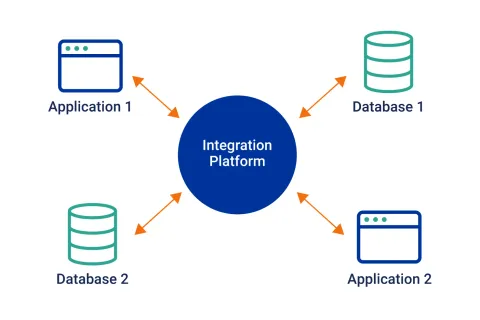
A typical integration can connect several systems through a workflow.
For example:
CRM → Integration Workflow → ERP → Database → Notification System
The integration layer can:
Receive information from one application.
Process or transform the data.
Apply business logic.
Send the information to another application.
Monitor the transaction.
Record errors or execution information.
This approach can reduce the need for every application to build independent connections to every other system.
Key Features of webMethods.io Integration
Pre-Built Connectors
Connectors provide predefined ways to communicate with applications and protocols.
Software AG documentation describes connectors for areas such as CRM, ERP and SaaS applications, as well as technologies including FTP/SFTP, REST and AMQP.
Connectors can reduce the amount of custom integration work required for commonly used applications.
Workflow Orchestration
The platform provides a graphical environment for creating multi-step integration workflows.
Workflows can coordinate multiple application calls and processing steps.
For example:
New Order → Validate Data → Update Inventory → Update ERP → Send Notification
The graphical approach can make complex integration logic easier to visualize.
Integration Recipes and Templates
Pre-built integration templates, sometimes referred to as recipes, can provide starting points for common integration scenarios.
Instead of creating every workflow from the beginning, developers can use an existing template and adapt it to a particular environment.
Data Mapping and Transformation
Different applications frequently use different data structures.
For example:
CustomerName
in one application may correspond to:
customer_name
in another.
Integration platforms can map fields and transform information between different formats.
webMethods.io Integration includes graphical mapping, transformation and enrichment capabilities.
Monitoring and Reporting
Integration workflows need visibility because a failure in one system can affect multiple downstream processes.
webMethods.io Integration provides dashboards, execution history, transaction monitoring, audit logs, error logs and alerts.
These capabilities can help teams identify failed transactions and investigate integration problems.
User and Role Management
The platform also provides tenant and role-management capabilities.
Administrators can create users and assign roles that restrict access to particular platform functionality.
APIs and webMethods.io
APIs are an important part of application integration.
An API provides a defined interface through which one application can communicate with another.
Common API technologies include:
REST
SOAP
GraphQL
Webhooks
OpenAPI-based interfaces
webMethods.io can work with REST endpoints and other integration technologies, while the broader webMethods ecosystem also includes API management capabilities.
API-based integration can be useful when applications need structured and reusable communication interfaces.
Cloud and On-Premises Integration
One of the important characteristics of enterprise integration is the need to connect different types of environments.
An organization may have:
Cloud CRM + On-Premises ERP + Cloud Database + Internal Application
An integration platform can act as an intermediary between these environments.
Software AG documentation describes webMethods.io Integration as supporting cloud and on-premises application integration.
This type of architecture is commonly associated with hybrid integration.
Common Integration Use Cases
webMethods.io Integration can support different application-connection scenarios.
CRM and ERP Integration
Customer or order information can be exchanged between CRM and ERP applications.
SaaS Application Integration
Multiple SaaS applications can exchange information through connectors and APIs.
Data Synchronization
Information can be transferred between systems to maintain more consistent records.
Workflow Automation
A change in one system can trigger actions in another system.
API-Based Integration
Applications can communicate through REST or other API interfaces.
File-Based Integration
FTP and SFTP-based workflows can be used where file exchange remains part of an organization's architecture.
Built.io, webMethods.io and IBM webMethods
The names can be confusing because the ownership and product landscape have changed over time.
A simplified timeline is:
| Period | Development |
|---|---|
| Before 2018 | Built.io operated as an independent cloud integration technology company |
| 2018 | Software AG acquired Built.io and incorporated its technology into its integration strategy |
| 2019 onward | Built.io appeared within Software AG's broader cloud and webMethods integration portfolio |
| December 2023 | IBM announced its agreement to acquire webMethods and StreamSets from Software AG |
| July 1, 2024 | IBM completed the acquisition |
| Current | IBM markets the platform as IBM webMethods Hybrid Integration |
Software AG's historical materials document Built.io's acquisition, while IBM's announcement and current webMethods platform provide the later ownership context.
IBM webMethods Today
The modern webMethods platform is now part of IBM's integration portfolio.
IBM describes IBM webMethods Hybrid Integration as a unified integration platform supporting application integration, API management, event management, managed file transfer and B2B integration.
The current platform also incorporates capabilities related to:
Hybrid cloud integration
API management
Event-driven integration
Managed file transfer
B2B integration
AI-assisted integration
Governance
Workflow orchestration
This represents an evolution from the earlier Software AG webMethods.io environment toward a broader hybrid integration platform.
Key Technologies Behind Integration
A webMethods-based integration environment can involve several technology concepts.
REST APIs
REST APIs allow applications to exchange structured information over HTTP.
SOAP
SOAP is a protocol-based approach that remains relevant in some enterprise environments and legacy integrations.
Message-Based Integration
Message technologies can allow systems to communicate asynchronously.
Event-Driven Integration
Applications can publish events that other systems consume.
Data Transformation
Information can be converted between different structures and formats.
Managed File Transfer
Secure file movement can remain important for enterprise and B2B processes.
B2B Integration
B2B integration connects organizations and trading partners for exchanging business information such as orders, invoices and shipping-related documents. IBM's current webMethods platform includes B2B integration among its core capabilities.
Benefits of Integration Platforms
An integration platform can provide several technical and operational benefits.
Centralized Integration Management
Integration workflows can be managed through a common platform rather than maintaining numerous independent connections.
Reusable Connectivity
Pre-built connectors can reduce repeated development work.
Workflow Automation
Applications can trigger actions in other systems automatically.
Data Transformation
Different data structures can be mapped and transformed between applications.
Monitoring
Dashboards, logs and alerts can improve visibility into integration activity.
Hybrid Connectivity
Cloud and on-premises applications can be connected within the same broader architecture.
Challenges to Consider
Integration also introduces several challenges.
Legacy Applications
Older applications may lack modern APIs and require specialized connectivity methods.
Data Quality
Incorrect, incomplete or inconsistent data can affect downstream applications.
API Changes
Changes to an external API can require updates to integration workflows.
Security
Integration platforms handle data moving between multiple systems, making authentication, authorization and encryption important considerations.
Integration Complexity
Large environments may contain hundreds or thousands of applications, APIs and workflows.
Monitoring Requirements
Failed transactions need to be identified and investigated quickly, especially when integrations support important business processes.
Built.io and webMethods.io: Key Facts
Built.io was a cloud integration technology company.
Software AG acquired Built.io in 2018.
Built.io became part of Software AG's broader cloud integration strategy.
webMethods.io Integration was positioned as an iPaaS for connecting cloud and on-premises applications.
webMethods.io Integration provided pre-built connectors, workflow orchestration and data transformation capabilities.
Software AG's webMethods platform was acquired by IBM in 2024.
IBM currently presents webMethods as part of its hybrid integration portfolio.
Frequently Asked Questions
What was Built.io?
Built.io was a cloud integration technology company focused on connecting applications, APIs and cloud services. Software AG acquired the company in 2018.
What is webMethods.io Integration?
webMethods.io Integration was Software AG's cloud-based iPaaS for connecting cloud and on-premises applications through connectors, APIs and workflow orchestration.
Is Built.io still an independent company?
No. Built.io was acquired by Software AG in 2018 and became part of its integration technology portfolio.
Who owns webMethods today?
IBM completed its acquisition of webMethods and StreamSets from Software AG on July 1, 2024. The current platform is marketed by IBM as IBM webMethods Hybrid Integration.
What does webMethods integration connect?
The platform can connect cloud and on-premises applications, APIs, databases, SaaS applications, files and business systems through different integration mechanisms and connectors.
Conclusion
Built.io represents an important part of the evolution of cloud-based application integration. After its acquisition by Software AG in 2018, its technology became part of a broader integration strategy that included webMethods.io.
webMethods.io Integration provided capabilities such as application connectivity, pre-built connectors, workflow orchestration, data transformation, monitoring and hybrid cloud integration.
The ownership landscape subsequently changed when IBM completed its acquisition of Software AG's webMethods and StreamSets businesses in 2024. Today, IBM webMethods Hybrid Integration represents the current evolution of this technology area, combining application integration with API management, events, B2B integration, managed file transfer and hybrid-cloud capabilities.
Disclaimer: This article is provided for general informational and educational purposes. Product names, ownership, capabilities, platform architecture and availability may change over time. Readers should refer to current official documentation for the latest technical and product information.