E10, E20 and E85 Fuels Explained: Ethanol Concentrations & Fuel Characteristics
Ethanol-blended fuels combine ethanol with petrol in specified proportions. They are used in transportation to diversify fuel sources and incorporate renewable components into conventional petrol supplies.
E10, E20 and E85 are common designations for ethanol-petrol blends. The number generally indicates the approximate ethanol percentage by volume, although the exact composition of a commercial fuel can vary according to local standards and seasonal requirements.
These blends differ in ethanol concentration, energy content, combustion characteristics, material compatibility, and suitable vehicle applications. Understanding these differences helps explain why a fuel designed for one type of engine may not be appropriate for another.
What Is Ethanol in Fuel?
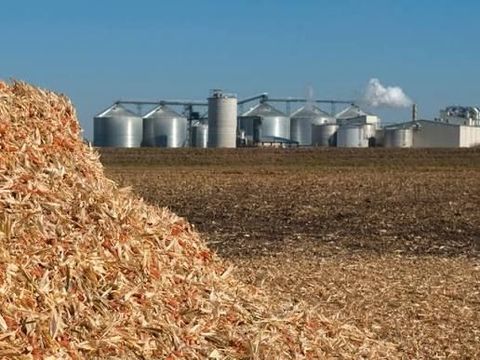
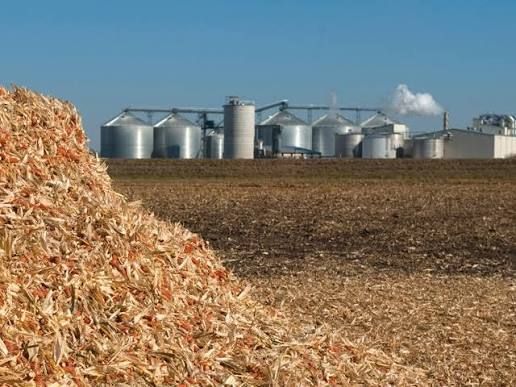
Ethanol is an alcohol produced through processes such as fermentation of sugars from sugarcane, corn, grains, and other suitable biological materials. It can be blended with petrol for use in compatible internal-combustion engines.
Ethanol has several characteristics that influence fuel performance:
High octane rating: Ethanol can improve a petrol blend's resistance to engine knocking.
Oxygen content: Ethanol contains oxygen, which affects combustion characteristics.
Lower energy content per litre: Ethanol contains less energy per litre than conventional petrol.
Water absorption: Ethanol readily absorbs water, making storage and handling important.
Material compatibility: Increasing ethanol concentration can affect fuel-system materials and engine requirements.
The effects of ethanol depend on the engine, the petrol component, operating conditions, and the applicable fuel specification.
Understanding E10 Fuel
E10 generally contains approximately 10% ethanol and 90% petrol by volume.
It is used in several markets as a way to incorporate ethanol into conventional petrol supplies. Its suitability depends on the vehicle manufacturer's recommendations and local fuel standards.
Main Characteristics of E10
Contains a relatively low proportion of ethanol compared with E20 and E85.
Can increase the octane rating of the petrol blend.
Has slightly lower energy content per litre than comparable ethanol-free petrol.
Requires appropriate moisture control during storage and distribution.
Is compatible with many modern petrol vehicles, although manufacturer guidance should always be checked.
E10 and Engine Performance
E10 can operate in many petrol engines designed or approved for this blend. Its oxygen content and octane characteristics influence combustion, while its lower energy content may slightly affect fuel economy.
The actual outcome depends on engine calibration, driving conditions, vehicle design, and the characteristics of the base petrol.
E10 should not automatically be assumed suitable for every older vehicle, motorcycle, small engine, or piece of outdoor equipment.
Understanding E20 Fuel
E20 generally contains approximately 20% ethanol and 80% petrol by volume.
It has a higher ethanol concentration than E10 and can support greater use of ethanol in transportation fuels. However, its use requires attention to vehicle compatibility, fuel specifications, and operating conditions.
Main Characteristics of E20
Contains approximately twice the ethanol proportion of E10.
Can provide a higher octane rating than a comparable lower-ethanol blend.
Has lower energy content per litre than conventional petrol without ethanol.
Requires suitable fuel-system materials and engine calibration.
May affect fuel economy and cold-start behaviour, depending on the vehicle.
E20 and Engine Compatibility
Vehicles designed and approved for E20 are intended to operate with the relevant blend under specified conditions. Other vehicles may have different requirements for fuel-system components, seals, hoses, injectors, and engine controls.
Compatibility cannot be determined from vehicle age alone. The owner's manual, manufacturer's official guidance, and the applicable fuel specification are the most reliable references.
E20 in India
India has introduced ethanol blending as part of its transport-energy policy. E20 is an important blend in this programme.
Vehicle suitability varies by model and manufacturer. Drivers should consult current official guidance rather than assuming that all petrol vehicles have identical compatibility.
Understanding E85 Fuel
E85 is a high-ethanol fuel designation commonly associated with flex-fuel vehicles in certain markets. It can contain a high proportion of ethanol, but its exact ethanol content varies according to regional fuel specifications and seasonal requirements.
It is not simply a higher-concentration version of E20 that every petrol vehicle can use.
Main Characteristics of E85
Contains a much higher ethanol proportion than E10 or E20.
Has a substantially lower energy content per litre than conventional petrol.
Requires a compatible engine and fuel system.
Can provide high-octane characteristics.
May require different fuel calibration and cold-start strategies.
Is commonly associated with flex-fuel vehicles in markets where this fuel is available.
E85 and Flex-Fuel Vehicles
Flex-fuel vehicles are designed to operate with approved petrol-ethanol blends across a specified range. Their fuel systems and engine controls accommodate the characteristics of higher ethanol concentrations.
Depending on the vehicle, fuel composition may be detected through dedicated sensing equipment or inferred by the engine control system.
Conventional petrol vehicles should not be assumed to support E85. Using an unsuitable blend can lead to starting problems, material degradation, incorrect fuel calibration, or other operational issues.
Comparing E10, E20 and E85
Characteristic | E10 | E20 | E85 |
|---|---|---|---|
Approximate ethanol content | 10% | 20% | High ethanol content, commonly up to about 85% |
Petrol proportion | Approximately 90% | Approximately 80% | Varies by specification |
Energy content per litre | Slightly below comparable ethanol-free petrol | Lower than E10 in general | Substantially lower than conventional petrol |
Octane characteristics | Can improve blend octane | Can provide higher octane characteristics | Generally high octane |
Vehicle requirements | Many compatible petrol vehicles | Vehicles approved for E20 | Compatible flex-fuel vehicles |
Cold-start considerations | Usually limited for compatible vehicles | Depends on vehicle and conditions | May require specific cold-start strategies |
Common application | Conventional petrol vehicles approved for E10 | Vehicles approved for E20 | Flex-fuel vehicles |
The table provides a general comparison. Actual fuel properties and compatibility depend on the applicable specification, vehicle design, and operating environment.
Ethanol Concentration and Energy Content
Ethanol contains less energy per litre than conventional petrol. As ethanol concentration increases, the energy content per litre of the blend generally decreases.
This can affect the volume of fuel required to travel a given distance. However, fuel economy does not depend on energy content alone. Engine efficiency, vehicle design, driving style, road conditions, and engine calibration also influence the result.
Higher ethanol concentration does not automatically mean that an engine will perform poorly. Ethanol's octane characteristics can support suitable engine designs, and some engines may be calibrated to take advantage of those properties.
The practical outcome depends on whether the engine is designed and calibrated for the fuel being used.
Octane Rating and Combustion Characteristics
Octane rating describes a fuel's resistance to knocking, an abnormal combustion phenomenon that can occur in spark-ignition engines.
Ethanol has a high octane rating and can improve the knock resistance of petrol blends. This characteristic can be useful in engines designed to take advantage of higher-octane fuels.
However, a higher ethanol percentage does not guarantee a proportional increase in the finished fuel's octane rating. The result depends on the base petrol, blending properties, and relevant fuel specifications.
Engine performance also depends on ignition timing, compression ratio, air-fuel mixture, temperature, and engine-control strategies.
Vehicle Compatibility and Fuel-System Requirements
Fuel compatibility involves more than the ability to ignite a mixture inside the engine. Ethanol concentration can influence the materials and systems that transport, store, and deliver fuel.
Important considerations include:
Fuel lines and seals: Materials must be suitable for the intended ethanol concentration.
Fuel injectors: Higher ethanol concentrations can require different fuel delivery characteristics.
Engine calibration: Fuel injection and ignition control must match the fuel's properties.
Cold-start behaviour: Higher ethanol concentrations can make cold starting more challenging under some conditions.
Fuel pumps and tanks: Components must meet the manufacturer's requirements for the intended fuel.
Emissions controls: The engine and emissions system must be designed to operate with the approved blend.
Always follow the manufacturer's stated fuel requirements. Do not use E20 or E85 solely on the assumption that a vehicle capable of running on E10 will support higher concentrations.
Fuel Storage and Quality Considerations
Ethanol-blended fuels require appropriate storage and quality management throughout production, transportation, and distribution.
Water Contamination
Ethanol absorbs water. Under certain conditions, water contamination in an ethanol-petrol blend can lead to phase separation, where the mixture separates into distinct liquid phases.
Proper storage, tank maintenance, and contamination control help maintain fuel quality.
Fuel Stability
Fuel composition can change during storage depending on environmental conditions and the characteristics of the blend. Following the vehicle or equipment manufacturer's storage recommendations is important, particularly for seasonal or infrequently used equipment.
Material Compatibility
Storage tanks, seals, pipes, and other components must be suitable for the fuel they contain. Incompatible materials can deteriorate or contribute to contamination.
Fuel Standards
Commercial fuels must meet the applicable specifications for their market. These requirements can cover ethanol concentration, volatility, water tolerance, octane rating, and other relevant characteristics.
Environmental Considerations
The environmental impact of ethanol-blended fuels depends on both vehicle operation and the complete fuel-production lifecycle.
Renewable Feedstocks
Ethanol can be produced from sugarcane, corn, grains, and selected agricultural residues. The use of renewable feedstocks can diversify the sources of transport fuel.
Greenhouse Gas Emissions
Lifecycle emissions depend on agricultural practices, fertilizer use, manufacturing energy, transport, land-use changes, and other factors. Ethanol from different production pathways can have substantially different environmental profiles.
Tailpipe Emissions
Ethanol concentration can influence combustion and certain exhaust emissions. However, the result depends on the engine, fuel blend, operating conditions, and emissions-control equipment.
It is therefore inaccurate to assume that every ethanol blend reduces every type of vehicle emission in every situation.
Resource Use
Ethanol production can require land, water, energy, and agricultural inputs. Efficient manufacturing, responsible feedstock sourcing, and effective water management can influence overall environmental performance.
Ethanol Blending and Fuel Quality Management
Blending facilities combine ethanol and petrol using controlled processes to achieve the required composition.
In-Line Blending
Separate fuel streams are introduced into a flowing mixture at controlled rates. Monitoring equipment checks flow and blending proportions.
Batch Blending
Specified quantities of ethanol and petrol are combined in a tank. Sampling and testing help confirm that the finished batch meets the required specification.
Laboratory Testing
Fuel testing may examine ethanol concentration, water content, acidity, volatility, and other properties. The exact tests depend on the fuel type and local standards.
Automated Monitoring
Sensors, flow meters, control systems, and digital records can help identify deviations and improve traceability throughout fuel handling.
Safety Considerations
Ethanol and petrol are flammable fuels. Their handling requires appropriate storage, ventilation, transfer procedures, and fire prevention measures.
Important precautions include:
Using fuel containers and equipment approved for the intended fuel.
Keeping fuels away from ignition sources.
Preventing spills and managing vapour hazards.
Following vehicle and equipment manufacturer instructions.
Avoiding unapproved fuel-system modifications.
Observing local requirements for fuel storage and transportation.
E85 and other high-ethanol blends must only be used in vehicles and systems designed or approved for them.
Ethanol-Blended Fuels in India
India's ethanol blending programme aims to incorporate ethanol into petrol and diversify transport fuel sources. Sugarcane-derived materials, molasses, and grain-based feedstocks can contribute to domestic ethanol production, subject to applicable policy and requirements.
E10 and E20 are relevant to the Indian fuel landscape, but compatibility varies across vehicle models. Drivers should verify the approved fuel blend for their particular vehicle using official manufacturer documentation.
E85 is not interchangeable with E20 and should not be used in a conventional petrol vehicle unless the vehicle is specifically approved for that fuel.
Fuel specifications, policy targets, and implementation details can change. Current information should be checked with the Ministry of Petroleum and Natural Gas, the Bureau of Indian Standards, and the relevant vehicle manufacturer.
Recent Developments in Ethanol Fuel Technology
Ethanol-related research and industrial development includes several areas.
Improved Engine Calibration
Engine-control technologies can adjust fuel delivery and ignition timing to match approved fuel characteristics. This helps compatible engines operate under different driving conditions.
Advanced Fuel Blending
Automated measurement, controlled mixing, and improved quality monitoring can help maintain consistent fuel composition.
Cellulosic Ethanol
Research into agricultural residues and other plant materials aims to broaden the range of raw materials available for ethanol production. Commercial feasibility depends on conversion efficiency, processing energy, and feedstock supply.
Digital Quality Monitoring
Modern measurement systems and laboratory records can improve traceability and help identify fuel-quality deviations during production and distribution.
The maturity and availability of these technologies differ by country and application. Research developments should not be confused with universal commercial adoption.
Frequently Asked Questions
1. What is the main difference between E10, E20 and E85?
The main difference is ethanol concentration. E10 generally contains about 10% ethanol, E20 about 20%, and E85 is a high-ethanol blend commonly associated with flex-fuel vehicles.
2. Can an E10 vehicle use E20?
Not necessarily. The vehicle must be approved for E20 by its manufacturer. Check the owner's manual or official compatibility information.
3. Can a conventional petrol car use E85?
Generally, no. E85 is intended for compatible flex-fuel vehicles or other specifically approved systems.
4. Does E20 have less energy per litre than E10?
Generally, yes. Because ethanol contains less energy per litre than petrol, a higher ethanol concentration usually lowers the blend's energy content per litre.
5. Does a higher ethanol concentration improve octane rating?
Ethanol can improve a petrol blend's octane characteristics, but the final rating depends on the base petrol and the properties of the finished blend.
6. Is E85 suitable for motorcycles?
Only if the motorcycle manufacturer specifically approves the fuel. Most motorcycles should not be assumed compatible with E85.
7. Can ethanol-blended fuel absorb water?
Yes. Ethanol readily absorbs water, and contamination under certain conditions can cause phase separation in ethanol-petrol blends.
8. Does ethanol-blended fuel always produce fewer emissions?
No. Emissions depend on the engine, blend composition, operating conditions, feedstock, and manufacturing pathway. Lifecycle assessment is necessary for broader environmental comparisons.
Conclusion
E10, E20 and E85 represent different levels of ethanol concentration in petrol-based fuels. E10 is a lower-ethanol blend used in many compatible vehicles, E20 contains a higher ethanol proportion and requires appropriate vehicle approval, while E85 is a high-ethanol fuel associated with compatible flex-fuel vehicles.
These blends differ in energy content, octane characteristics, storage requirements, and engine compatibility. Their suitability depends on vehicle design, local fuel standards, and manufacturer guidance.
Understanding ethanol concentrations and fuel characteristics helps explain the technical considerations behind fuel blending, vehicle operation, and renewable fuel policy.
Disclaimer
This article is intended for general educational and informational purposes only. It does not promote any particular brand, manufacturer, product, or commercial transaction. Fuel composition, technical specifications, vehicle compatibility, and regulations may vary by country and change over time. Always consult current official fuel standards, vehicle documentation, and relevant authorities before making decisions about fuel use.