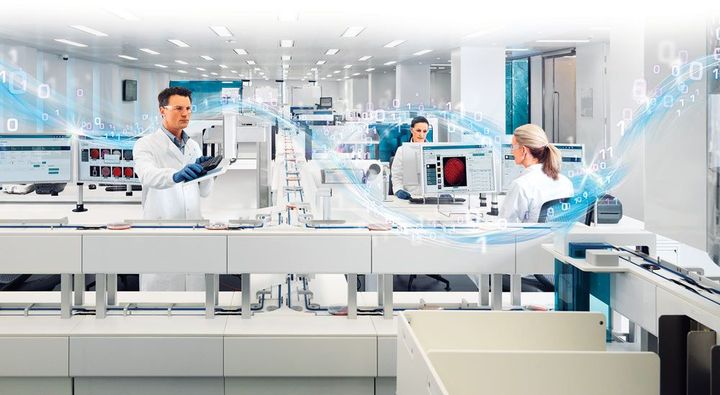
Laboratory automation is changing this model by combining specialised hardware, software and redesigned workflows. Depending on the system, automation can support activities such as specimen processing, inoculation, incubation, digital plate imaging and selected downstream microbiology processes.
Choosing the right system, however, is not simply a matter of selecting the most advanced equipment. The appropriate solution depends on specimen volume, laboratory layout, workflow complexity, staffing, information systems, required turnaround times, validation requirements and future expansion plans.
1. What Is Laboratory Automation in Clinical Bacteriology?
Laboratory automation refers to the use of equipment and software to perform defined laboratory processes with reduced manual intervention.
In clinical bacteriology, automation can extend across several stages:
Specimen → Inoculation → Incubation → Imaging → Culture Review → Identification → Susceptibility Testing → Reporting
Not every automation platform covers every stage. Some systems automate individual functions, while more comprehensive systems integrate multiple stages into a connected workflow.
This distinction is important when comparing different automation approaches.
2. What Is Total Laboratory Automation?
Total Laboratory Automation (TLA) generally describes a connected automation environment capable of handling several major stages of culture-based microbiology.
Published reviews describe TLA systems as potentially incorporating:
-
Automated inoculation
-
Plate handling
-
Automated incubation
-
Digital plate imaging
-
Culture workflow management
-
Identification-related processes
-
Antimicrobial susceptibility testing workflows
-
Software and middleware integration
Despite the term "total," automation does not eliminate the need for microbiologists. Human interpretation, exception handling, clinical judgement, quality oversight and certain specialised procedures remain essential.
3. Why Automation Matters in Clinical Bacteriology
Automation can address several challenges associated with conventional microbiology workflows.
Research reviews have reported potential improvements in:
-
Standardisation
-
Laboratory efficiency
-
Productivity
-
Workplace safety
-
Turnaround time
-
Workflow consistency
Automation can also reduce repetitive manual activities and allow trained laboratory personnel to concentrate on tasks requiring greater technical judgement.
However, the actual impact varies according to the laboratory's existing processes and implementation strategy.
4. Understanding the Clinical Bacteriology Workflow
Before choosing an automation system, it is important to understand the existing workflow.
A simplified culture-based workflow can include:
Step 1: Specimen Receipt
Samples arrive and are registered within the laboratory information environment.
Step 2: Specimen Processing
The specimen is prepared according to the relevant laboratory procedure.
Step 3: Inoculation
The specimen is applied to appropriate culture media.
Step 4: Incubation
Inoculated media are placed under appropriate environmental conditions.
Step 5: Culture Examination
Technologists assess growth and colony characteristics.
Step 6: Identification
Relevant organisms are identified using appropriate laboratory methods.
Step 7: Antimicrobial Susceptibility Testing
Where clinically appropriate, susceptibility testing is performed.
Step 8: Interpretation and Reporting
Results are reviewed, validated and communicated through the laboratory information system.
Automation can support multiple points within this sequence, but the exact scope varies by platform.
5. Automated Inoculation
Automated inoculation is one of the foundational elements of bacteriology automation.
Automated plating instruments can standardise how specimens are applied to culture media.
Potential advantages include:
-
More consistent streaking
-
Reduced operator variability
-
Improved colony isolation
-
Reduced repetitive manual work
-
Better workflow standardisation
Research has reported improvements in colony isolation and reduced requirements for certain follow-up subcultures in automated workflows.
When comparing systems, laboratories should examine the types of specimens the instrument can process and the culture media it supports.
6. Automated Incubation
Automated incubation moves beyond simply placing plates inside a conventional incubator.
Smart incubation systems can integrate:
-
Automated plate movement
-
Controlled environmental conditions
-
Timed incubation
-
Digital imaging
-
Plate tracking
-
Automated workflow management
The ability to maintain plates within a controlled automated environment can help create a more standardised culture workflow.
7. Digital Plate Imaging
Digital imaging is one of the most important developments in automated bacteriology.
Instead of requiring every culture plate to be physically removed and manually examined, automated systems can capture digital images of plates and make those images available through software interfaces.
This can support:
-
Remote review
-
Digital documentation
-
Sequential image comparison
-
Workflow prioritisation
-
Telebacteriology
-
Image-assisted interpretation
Digital imaging does not replace microbiological expertise. Rather, it changes how culture information is presented and reviewed.
8. Artificial Intelligence and Image Analysis
AI and computer vision are increasingly being investigated for microbiology workflows.
Potential applications include:
-
Colony detection
-
Growth classification
-
Colony counting
-
Culture screening
-
Image prioritisation
-
Recognition of specific visual patterns
The broader development of automation, informatics and AI in clinical microbiology is creating opportunities to combine digital culture images with software-based analysis.
AI-based outputs should be treated according to the laboratory's validation, quality and clinical governance requirements.
9. Automation Hardware
A laboratory automation system can contain multiple hardware components.
Specimen Processors
These can automate selected specimen preparation and inoculation tasks.
Automated Inoculators
These instruments apply specimens to culture media using standardised processes.
Transport Systems
Automated movement systems can transfer plates between processing, incubation and imaging areas.
Smart Incubators
These provide controlled incubation while supporting automated plate management.
Imaging Systems
Cameras capture digital images of culture plates.
Robotic Handling Systems
Robotic mechanisms can move plates and other laboratory materials between workflow stages.
The exact combination depends on the automation architecture.
10. Software and Middleware
Hardware is only one part of an automated laboratory.
Software controls how information and workflow instructions move through the system.
Important software capabilities can include:
-
Sample tracking
-
Workflow management
-
Plate identification
-
Image management
-
Result documentation
-
Exception handling
-
User interfaces
-
Instrument communication
Clinical microbiology automation reviews emphasise that hardware and workflow must be considered together rather than independently.
11. Laboratory Information System Integration
Laboratory Information System (LIS) integration is a critical part of automation.
The LIS manages information related to specimens, results and reporting, while automation software manages physical and digital workflow functions.
A well-designed interface should support reliable exchange of information between the systems.
The literature describes the interface between the automation operating system and LIS as an important consideration, with bidirectional communication supporting efficient workflows.
Before implementation, laboratories should clarify:
-
Which system acts as the primary source of information
-
How orders are transferred
-
How results return to the LIS
-
How specimen status is tracked
-
How exceptions are handled
-
How system downtime is managed
12. Partial Automation vs Total Automation
Not every laboratory needs the same degree of automation.
Partial Automation
May focus on individual functions such as:
-
Inoculation
-
Incubation
-
Specimen processing
More Comprehensive Automation
Can integrate:
-
Inoculation
-
Incubation
-
Imaging
-
Plate management
-
Workflow software
-
Selected identification and susceptibility workflows
The right choice depends on laboratory requirements rather than the terminology used to describe the system.
13. How to Choose the Right Automation System
The most important principle is:
Start with the workflow, not the machine.
A laboratory should first understand what it needs to improve and then identify technology capable of addressing those requirements.
Important selection factors include:
-
Specimen volume
-
Specimen diversity
-
Culture workload
-
Staffing
-
Laboratory space
-
Workflow timing
-
LIS compatibility
-
Existing instruments
-
Maintenance requirements
-
Validation requirements
-
Future scalability
14. Evaluate Specimen Volume
Workload is one of the most important selection criteria.
Analyse:
-
Average daily specimen volume
-
Peak daily volume
-
Weekend workload
-
Night-time workload
-
Seasonal variation
-
Number of plates generated
-
Number of cultures requiring follow-up
A system designed around average workload alone may become a bottleneck during peak periods.
Therefore, capacity planning should consider both normal and high-volume scenarios.
15. Understand Specimen Diversity
Clinical bacteriology laboratories process many specimen categories.
Examples include:
-
Urine
-
Respiratory specimens
-
Wound specimens
-
Blood-related cultures
-
Stool specimens
-
Screening specimens
-
Sterile-site specimens
Different specimens can require different media, processing approaches and interpretation workflows.
A system that performs extremely well for one specimen category may not provide the same advantages for another.
16. Evaluate Culture Media Compatibility
Culture media compatibility should be examined carefully.
Questions to consider include:
-
Which plate formats are supported?
-
Which media can be loaded?
-
Can multiple media types be processed?
-
How are special media handled?
-
Can manual exceptions be introduced?
-
How are non-standard workflows managed?
A highly automated system is only useful if it accommodates the laboratory's actual culture portfolio.
17. Examine Throughput
Throughput describes how much work a system can process within a defined period.
Laboratories should examine:
-
Specimens per hour
-
Plates per hour
-
Incubator capacity
-
Imaging capacity
-
Peak workload handling
-
Queue management
-
Recovery after downtime
Capacity should be evaluated across the entire workflow, not only one instrument.
A fast inoculator can still produce a bottleneck if incubation, imaging or downstream processing cannot keep pace.
18. Analyse Turnaround Time
Turnaround time is a major performance consideration in clinical microbiology.
Automation can potentially reduce delays by:
-
Standardising processing
-
Reducing manual handling
-
Maintaining continuous incubation
-
Providing digital images
-
Prioritising cultures
-
Supporting automated workflow decisions
However, turnaround time depends on biological growth, specimen type, testing requirements and clinical interpretation—not just machine speed.
19. Laboratory Space Requirements
Physical space is often underestimated.
Before selecting a system, assess:
-
Available floor area
-
Ceiling height
-
Electrical infrastructure
-
Environmental requirements
-
Access routes
-
Maintenance access
-
Staff workstations
-
Emergency pathways
-
Manual backup areas
Clinical Chemistry's review specifically identifies available space and the need to maintain manual processes during installation and downtime as important implementation considerations.
20. Staffing and Workflow Redesign
Automation changes jobs within the laboratory rather than simply removing work.
Staff may spend less time on:
-
Repetitive plate handling
-
Manual inoculation
-
Physical plate transportation
-
Repetitive documentation
At the same time, more attention may be required for:
-
Digital culture review
-
Exception management
-
System monitoring
-
Quality control
-
Troubleshooting
-
Validation
-
Complex microbiological interpretation
Successful automation therefore requires workflow redesign and staff training.
21. Workflow Standardisation
Automation works best when processes are clearly defined.
Before implementation, laboratories should document:
-
Current procedures
-
Specimen pathways
-
Decision points
-
Exceptions
-
Manual interventions
-
Result-review procedures
This allows the laboratory to determine which processes should be automated and which should remain manual.
22. Exception Handling
Not every specimen will follow the standard workflow.
A good automation system should have clear mechanisms for:
-
Unusual specimens
-
Incorrect containers
-
Media problems
-
Instrument errors
-
Unexpected growth
-
Mixed cultures
-
Special testing requirements
-
Manual intervention
Automation should make exceptions visible rather than allowing unusual cases to disappear inside an automated process.
23. Connectivity With Other Instruments
Automation rarely operates completely independently.
It may need to interact with:
-
LIS
-
Identification systems
-
Susceptibility testing systems
-
Mass spectrometry platforms
-
Blood culture systems
-
Digital imaging software
-
Middleware
The ability to integrate existing and future instruments can have a major effect on the long-term usefulness of an automation platform.
24. Quality and Standardisation
Standardisation is one of the major potential benefits of automation.
Automated systems can reduce variation associated with repetitive manual processes and provide more consistent handling.
However, automation itself does not guarantee quality.
Laboratories still require:
-
Quality-control procedures
-
Validation
-
Verification
-
Performance monitoring
-
Staff competency
-
Maintenance
-
Documented procedures
CLSI's AUTO04 standard addresses operational requirements and information elements for clinical laboratory automation systems.
25. Validation Before Routine Use
Automation should be appropriately validated before becoming part of routine clinical operations.
Validation planning may include:
-
Workflow verification
-
Instrument performance
-
Specimen handling
-
Plate processing
-
Image quality
-
Interface testing
-
Result transmission
-
Error handling
-
Backup procedures
The exact validation requirements depend on the laboratory, jurisdiction, intended use and applicable regulatory framework.
26. Maintenance and Technical Support
Automation introduces additional technical infrastructure.
Laboratories should evaluate:
-
Preventive maintenance requirements
-
Service response processes
-
Spare-part availability
-
Software updates
-
Instrument downtime
-
Remote support
-
Staff troubleshooting capabilities
The system should also have a defined recovery process for unexpected failures.
27. Downtime Planning
No automated system should be treated as infallible.
A laboratory should maintain procedures for operating during:
-
Power interruptions
-
Network failures
-
Software problems
-
Mechanical failures
-
LIS outages
-
Imaging-system failures
-
Planned maintenance
A practical backup workflow helps protect continuity of diagnostic operations.
28. Data and Digital Image Management
Digital bacteriology can generate large amounts of image and workflow data.
Important considerations include:
-
Image storage
-
Data retention
-
Access controls
-
User authentication
-
Backup
-
Audit trails
-
Data transfer
-
Cybersecurity
Digital images may become valuable records for quality review, education and selected remote-review workflows.
29. Ergonomics and Workplace Design
Automation can influence laboratory ergonomics.
Automated specimen processing and plate handling may reduce repetitive activities such as manual de-capping, re-capping and physical plate movement. Literature has described ergonomic benefits associated with automated pre-analytical processing.
However, workstation design remains important.
Staff should have appropriate spaces for:
-
Digital image review
-
Manual culture examination
-
Complex microbiology procedures
-
Exception handling
-
Documentation
30. Cost Considerations
Although automation can require substantial investment, financial evaluation should consider the complete lifecycle rather than only initial equipment expenditure.
Relevant factors include:
-
Hardware
-
Software
-
Installation
-
Laboratory modifications
-
Validation
-
Training
-
Maintenance
-
Consumables
-
IT infrastructure
-
Downtime
-
Staffing requirements
Published reviews emphasise that the value of automation depends heavily on the laboratory's existing workflow and implementation strategy.
31. Scalability and Future Expansion
A system should not only meet today's workload.
Consider whether it can accommodate:
-
Increasing specimen volumes
-
Additional instruments
-
New specimen types
-
Expanded digital imaging
-
AI-based analysis
-
Additional laboratory locations
-
New LIS capabilities
A scalable architecture can reduce the need for major redesign when laboratory requirements change.
32. AI and the Future of Bacteriology Automation
AI is becoming an important complement to automation.
Future systems may increasingly combine:
Automation + Digital Imaging + AI + Informatics
Potential applications include:
-
Automated colony detection
-
Culture screening
-
Growth classification
-
Image prioritisation
-
Decision support
-
Automated result suggestions
Research into laboratory automation, informatics and AI identifies these technologies as important areas for future development in clinical microbiology.
33. Digital Bacteriology and Remote Review
Digital imaging can change where and how cultures are reviewed.
Instead of requiring a technologist to physically handle every plate, digital images can be accessed through appropriate software systems.
Potential applications include:
-
Remote consultation
-
Multi-site laboratory networks
-
Education
-
Quality review
-
Digital documentation
-
Workload distribution
Telebacteriology has been identified as an important component of the broader digital transformation of clinical bacteriology.
34. A Practical Selection Checklist
Before selecting an automation system, laboratories can create a structured checklist.
Workflow
-
Which steps should be automated?
-
Which steps must remain manual?
-
Where are current bottlenecks?
Workload
-
What is the daily volume?
-
What is the peak volume?
-
Which specimen types dominate?
Hardware
-
What instruments are required?
-
What media are supported?
-
What capacity is available?
Software
-
Is digital imaging included?
-
How is workflow managed?
-
What interfaces are available?
LIS
-
Is bidirectional communication supported?
-
How are results transferred?
-
How are exceptions documented?
Infrastructure
-
Is adequate space available?
-
Are electrical and network requirements met?
-
Is backup processing possible?
People
-
What training is required?
-
How will responsibilities change?
-
Who will monitor the system?
Quality
-
What validation is required?
-
How will performance be monitored?
-
What are the downtime procedures?
Future
-
Can the system scale?
-
Can new technologies be integrated?
-
Can additional instruments be connected?
35. Common Mistakes to Avoid
Choosing Based Only on Throughput
A high-capacity system is not automatically the best system.
Ignoring Existing Workflow
Automation should solve real workflow problems rather than simply add equipment.
Underestimating Space
Physical infrastructure can become a major implementation challenge.
Treating Automation as Fully Autonomous
Microbiology still requires expert interpretation and exception management.
Neglecting LIS Integration
Poor connectivity can undermine otherwise sophisticated automation.
Ignoring Downtime
Backup processes are essential.
Focusing Only on Initial Investment
Long-term maintenance, staffing, infrastructure and workflow effects also matter.
36. Key Technology Components at a Glance
| Technology | Primary Role |
|---|
| Automated inoculator | Standardised specimen plating |
| Smart incubator | Controlled automated incubation |
| Digital imaging | Automated culture photography |
| Robotics | Plate and material movement |
| Middleware | Workflow and data coordination |
| LIS interface | Laboratory information exchange |
| AI analysis | Image and pattern interpretation |
| Automated ID/AST | Selected downstream microbiology processes |
The exact configuration varies between automation platforms and laboratory requirements.
FAQs
What is laboratory automation in clinical bacteriology?
It is the use of specialised hardware and software to automate selected parts of culture-based bacteriology, including processes such as inoculation, incubation, imaging and downstream workflow management.
What is total laboratory automation?
TLA generally refers to an integrated automation approach covering multiple stages of the microbiology workflow, potentially including inoculation, incubation, digital imaging, identification and antimicrobial susceptibility workflows.
How do I choose the right bacteriology automation system?
Start by analysing specimen volume, specimen diversity, workflow bottlenecks, available laboratory space, staffing, LIS integration, required throughput, maintenance and future scalability.
Can laboratory automation replace microbiologists?
No. Automation can reduce repetitive manual work and standardise defined processes, but microbiologists remain important for interpretation, quality oversight, troubleshooting, exceptions and clinical decision-making.
What role does AI play in bacteriology automation?
AI can support digital culture analysis through applications such as colony detection, image classification, screening and workflow prioritisation. These capabilities require appropriate validation and clinical oversight.
Conclusion
Choosing laboratory automation for clinical bacteriology is fundamentally a workflow decision rather than an equipment decision.
The most effective approach begins with understanding specimen volumes, culture processes, staffing, bottlenecks and laboratory requirements. From there, the laboratory can evaluate automated inoculation, smart incubation, digital imaging, robotics, software, LIS integration and downstream microbiology technologies.
A well-designed system can improve standardisation, efficiency, workflow consistency and turnaround performance, but successful implementation depends on thoughtful planning, validation, staff preparation, infrastructure and reliable downtime procedures.
The future of clinical bacteriology is likely to bring together automation, digital imaging, artificial intelligence and laboratory informatics, creating workflows in which machines handle increasingly structured tasks while microbiology professionals focus on interpretation, quality and clinically meaningful decisions.
Disclaimer
This article is provided for general educational and informational purposes only. It does not constitute medical, laboratory, regulatory or professional advice and does not recommend any specific laboratory automation system, manufacturer or technology. Automation capabilities, software features, regulatory requirements and laboratory workflows vary by system and jurisdiction. Clinical laboratories should conduct appropriate validation, risk assessment and regulatory review and consult qualified laboratory professionals before implementing or changing diagnostic workflows.