Customer Data Analytics Tools Explained: Segmentation & Behaviour Analysis
Every interaction between customers and digital platforms can generate information. Website visits, application activity, transaction records, product searches, feedback, and communication patterns can help organizations understand how people interact with different platforms.
Customer data analytics involves collecting, organizing, and examining this information to identify patterns, preferences, engagement trends, and behavioural characteristics.
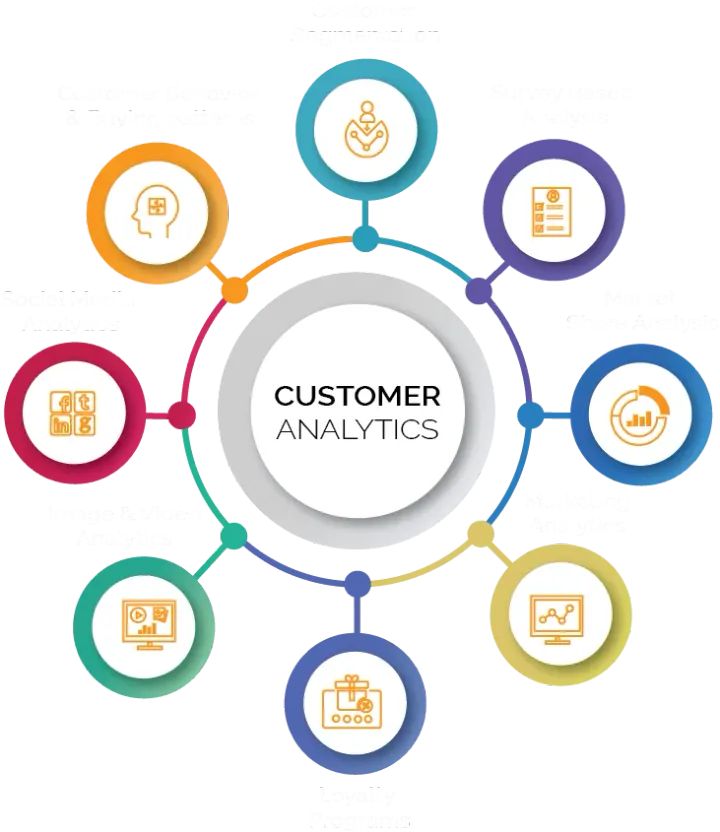
Customer data analytics tools use technologies such as artificial intelligence, machine learning, statistical analysis, and data visualization to turn information into meaningful insights. These insights can support audience segmentation, customer journey analysis, engagement measurement, demand forecasting, and business planning.
As digital interactions continue to increase, customer analytics has become an important part of business intelligence across retail, banking, telecommunications, education, travel, healthcare, and other industries.
What Are Customer Data Analytics Tools?
Customer data analytics tools are software platforms used to collect, organize, analyze, and visualize information related to customer interactions.
They help organizations understand how different audience groups interact with websites, applications, digital content, and other platforms.
Common capabilities include:
Customer segmentation and classification
Behaviour and interaction analysis
Customer journey mapping
Engagement measurement
Predictive analytics
Audience trend identification
Feedback and sentiment analysis
Data visualization and reporting
AI-supported pattern recognition
Customer data integration
These tools may operate independently or connect with customer relationship management systems, business intelligence platforms, data warehouses, and marketing analytics environments.
Importance of Customer Data Analytics
Understanding customer behaviour can help organizations make informed decisions about digital experiences, communication, content, and business operations.
Understanding Audience Characteristics
Analytics can help identify broad patterns across audience groups, including interaction frequency, content preferences, and engagement levels.
Improving Customer Experience
Website navigation, application usage, and feedback data can highlight areas where digital experiences may be difficult or confusing.
Identifying Behavioural Trends
Organizations can examine how interaction patterns change over time and identify differences between customer groups.
Supporting Business Planning
Historical activity and engagement trends can help organizations understand demand patterns and plan future activities.
Measuring Digital Performance
Analytics tools can measure website engagement, application activity, content interaction, and other performance indicators.
Types of Customer Data
Customer analytics involves different categories of information. Each category provides a different perspective on interactions and behaviour.
1. Demographic Data
Demographic information may include age range, language, education level, or other population characteristics where collection and use are lawful and appropriate.
Such information can help researchers understand broad audience patterns. Sensitive personal characteristics require additional care and should not be used without an appropriate legal basis.
2. Geographic Data
Geographic information may describe broad regions, countries, or general locations associated with audience activity.
It can help identify regional differences in digital engagement and content interests. Precise location information requires careful privacy management.
3. Transactional Data
Transactional data records completed financial or account-related activities.
Examples include transaction dates, order categories, payment records, and transaction frequency. Access should be restricted according to organizational security policies.
4. Behavioural Data
Behavioural data describes how people interact with digital platforms.
Examples include:
Pages viewed
Search activity
Navigation patterns
Application usage
Content engagement
Session frequency
Interaction sequences
This information is particularly useful for understanding digital journeys.
5. Psychographic Data
Psychographic research examines broad interests, attitudes, lifestyle patterns, and motivations.
This category often relies on surveys and research studies. Interpretations should be cautious because inferred attitudes may not accurately represent an individual's preferences.
6. Feedback and Sentiment Data
Feedback information includes survey responses, comments, reviews, and other forms of user-generated text.
Natural language processing can help organize large volumes of feedback and identify recurring themes.
Customer Segmentation Explained
Customer segmentation is the process of dividing a broad audience into smaller groups based on shared characteristics or patterns.
Segmentation helps analysts compare different groups instead of treating all users as having identical behaviour.
1. Demographic Segmentation
This method groups audiences according to relevant demographic characteristics, such as age ranges, language, or education categories.
Its usefulness depends on the purpose of the analysis and the lawful use of the information.
2. Geographic Segmentation
Geographic segmentation groups activity by broad geographic areas.
It can help identify differences in website engagement, regional interests, and general usage patterns.
3. Behavioural Segmentation
Behavioural segmentation groups users according to interaction patterns.
Examples include frequent visitors, occasional visitors, returning users, and users who engage with particular content categories.
4. Transaction-Based Segmentation
This approach examines transactional patterns, such as activity frequency, transaction categories, or changes in account activity.
It is commonly used in financial and retail analytics, subject to appropriate privacy and security controls.
5. Engagement-Based Segmentation
Engagement segmentation groups users according to their interactions with digital content or applications.
Possible categories include highly active users, occasional users, and users with declining activity.
6. Needs-Based Segmentation
Needs-based segmentation uses research, surveys, and observed patterns to identify groups with similar requirements or interests.
It can support improvements to digital content, platform structure, and user experience.
Customer Behaviour Analysis
Customer behaviour analysis examines how people interact with products, platforms, information, and digital environments.
It looks beyond basic activity counts to understand interaction sequences, frequency, engagement patterns, and changes over time.
Website Behaviour Analysis
Website analytics can reveal:
Most-viewed pages
Traffic sources
Session duration
Navigation paths
Search activity
Returning visitor patterns
Content engagement
These indicators help explain how visitors interact with website content.
Application Behaviour Analysis
Application analytics examines how users interact with mobile or desktop applications.
Common measurements include feature usage, session frequency, navigation flows, application errors, and retention patterns.
Content Behaviour Analysis
Content analytics studies how audiences interact with articles, videos, educational material, and other digital information.
It can identify popular topics, reading patterns, video completion, and engagement differences across content categories.
Customer Journey Analysis
Customer journey analysis examines the sequence of interactions across different channels and touchpoints.
A typical journey may include discovering a website, viewing content, exploring related pages, returning later, and completing an account-related activity.
Journey analysis can help identify repeated steps, interruptions, and areas where the experience may need improvement.
Popular Customer Data Analytics Tools and Platforms
Different tools support different analytical activities. Some focus on website behaviour, while others provide customer data integration, business intelligence, or advanced machine learning.
1. Google Analytics 4
<AsyncImage query="Google Analytics 4 reports dashboard interface screenshot" aspectRatio="16:9" width="100%" />
<Entity value="Google Analytics 4" category="software" disambig="Digital analytics platform" /> is a digital analytics platform that measures activity across websites and applications.
Its event-based data model supports the examination of user interactions, traffic sources, engagement, and conversion-related events.
Common applications include:
Website activity analysis
Audience engagement measurement
Traffic source examination
Event tracking
Content performance analysis
Application activity reporting
2. Microsoft Power BI
<AsyncImage query="Microsoft Power BI customer analytics dashboard interface" aspectRatio="16:9" width="100%" />
<Entity value="Microsoft Power BI" category="software" disambig="Business intelligence and data visualization platform" /> is used to connect datasets, create interactive dashboards, and examine business information.
It can combine customer-related datasets from different sources and present them through charts, tables, and reports.
Common applications include customer activity reporting, audience comparisons, engagement analysis, and business performance monitoring.
3. Tableau
<AsyncImage query="Tableau customer segmentation data visualization dashboard" aspectRatio="16:9" width="100%" />
<Entity value="Tableau" category="software" disambig="Data visualization and business intelligence platform" /> supports interactive data exploration and visual reporting.
It can help analysts examine customer segments, compare engagement patterns, identify trends, and communicate findings through dashboards.
4. Adobe Analytics
<AsyncImage query="Adobe Analytics workspace reporting dashboard interface" aspectRatio="16:9" width="100%" />
<Entity value="Adobe Analytics" category="software" disambig="Digital experience analytics platform" /> supports detailed analysis of digital interactions across websites and applications.
It can help organizations examine visitor activity, digital journeys, content engagement, and audience patterns.
5. Mixpanel
<AsyncImage query="Mixpanel product analytics insights dashboard interface" aspectRatio="16:9" width="100%" />
<Entity value="Mixpanel" category="software" disambig="Product and digital behaviour analytics platform" /> focuses on event-based product analytics.
Its capabilities support the examination of user journeys, feature engagement, retention, and behavioural trends across digital products.
6. Amplitude
<AsyncImage query="Amplitude product analytics behavioral cohort dashboard interface" aspectRatio="16:9" width="100%" />
<Entity value="Amplitude" category="software" disambig="Digital product analytics platform" /> provides behavioural analytics and product intelligence capabilities.
It supports cohort analysis, journey examination, engagement measurement, and the identification of patterns across user groups.
7. Segment
<AsyncImage query="Twilio Segment customer data platform interface screenshot" aspectRatio="16:9" width="100%" />
<Entity value="Twilio Segment" category="software" disambig="Customer data platform and data integration technology" /> helps collect and organize customer interaction information from different digital sources.
It can route approved data to connected analytics and business systems, helping maintain a more consistent view of customer interactions.
AI Technologies Used in Customer Analytics
Artificial intelligence adds advanced analytical capabilities to customer data platforms.
Machine Learning
Machine learning models identify patterns from historical information.
Applications include audience classification, behavioural grouping, engagement prediction, and anomaly detection.
Natural Language Processing
Natural language processing examines text-based information such as survey responses, comments, and feedback.
It can identify common topics, categorize responses, and estimate sentiment patterns.
Predictive Analytics
Predictive analytics uses historical data and statistical models to estimate possible future behaviour.
Examples include estimating engagement trends, identifying possible changes in activity, and forecasting audience demand.
Predictions should be treated as estimates rather than guaranteed outcomes.
Clustering Algorithms
Clustering algorithms group records according to similarities within selected data features.
Methods such as K-means clustering can support audience segmentation when the input variables and model assumptions are appropriate.
Generative AI
Generative AI can summarize customer analytics reports, explain trends, assist with data queries, and prepare natural-language descriptions of analytical findings.
Generated explanations should be verified against the original dataset to prevent inaccurate interpretations.
Key Customer Analytics Metrics
Metrics help organizations measure interaction patterns and compare audience activity over time.
| Metric | Meaning | Analytical purpose |
|---|---|---|
| Active users | Users interacting during a defined period | Engagement measurement |
| Session duration | Time associated with a session | Interaction analysis |
| Engagement rate | Share of sessions meeting defined engagement criteria | Website performance |
| Retention rate | Share of users returning during a defined period | Continued engagement |
| Churn rate | Share of users who stop an activity or relationship | Activity changes |
| Repeat activity | Frequency of returning interactions | Behaviour analysis |
| Conversion rate | Share completing a defined target action | Journey measurement |
| Customer lifetime value | Estimated value associated with a customer relationship | Long-term analysis |
Metric definitions can differ across platforms. Analysts should use consistent calculation methods and clearly document the time periods and populations being measured.
Customer Data Analytics Workflow
A structured workflow helps ensure that customer information is processed consistently and responsibly.
Step 1: Define the Analytical Objective
Identify the question the analysis should answer, such as understanding website engagement, comparing audience groups, or examining changes in retention.
Step 2: Collect Relevant Information
Gather appropriate information from approved sources, such as website analytics, application events, surveys, and account records.
Step 3: Integrate Data Sources
Combine relevant datasets while maintaining consistent identifiers, definitions, and access permissions.
Step 4: Clean and Validate Data
Check for missing values, duplicate records, inconsistent formats, and inaccurate entries.
Step 5: Create Customer Segments
Group users according to relevant behavioural, geographic, demographic, or engagement characteristics.
Step 6: Analyze Behaviour
Examine interaction sequences, frequency, retention, content activity, and changes over time.
Step 7: Apply AI and Statistical Methods
Use suitable analytical models for clustering, classification, forecasting, and text analysis.
Step 8: Visualize Findings
Present results through dashboards, charts, tables, and explanatory reports.
Step 9: Review and Improve
Check analytical assumptions, validate findings, and update the process when data or business conditions change.
Applications Across Different Industries
Customer data analytics is used in many sectors to understand digital interactions and audience patterns.
Retail and E-Commerce
Retail organizations examine browsing patterns, transaction records, content engagement, and inventory-related activity.
Analytics can help identify audience groups, understand demand trends, and examine changes in digital shopping behaviour.
Banking and Financial Institutions
Financial organizations analyze transaction activity, account interactions, and customer engagement patterns.
These insights can support operational monitoring and financial research. Sensitive financial data requires strict security and access controls.
Telecommunications
Telecommunications organizations examine network usage, account activity, application engagement, and interaction frequency.
Analytics can help identify usage trends and understand differences between audience groups.
Healthcare
Healthcare organizations can analyze appointment patterns, digital platform interactions, patient feedback, and administrative information.
The use of health-related information requires appropriate legal safeguards, confidentiality, and professional oversight.
Education
Educational institutions can study learning platform activity, course engagement, attendance patterns, and academic participation.
These insights can help evaluate digital learning experiences while ensuring that automated assessments do not replace appropriate human judgement.
Travel and Hospitality
Travel platforms can analyze search patterns, content interactions, destination interests, and booking-related activity.
Such analysis can help organizations understand changing travel interests and digital journey patterns.
Customer Data Platforms and Their Role
A Customer Data Platform (CDP) is a technology environment designed to collect and organize customer-related information from multiple sources.
A CDP can bring together approved records from websites, mobile applications, digital communication channels, and other systems.
Important capabilities may include:
Data collection and integration
Customer identity resolution
Profile organization
Audience classification
Data sharing with connected platforms
Consent and preference management
A CDP and an analytics platform serve related but different purposes. A CDP primarily focuses on organizing customer information, while analytics tools focus on examining that information and producing insights.
Challenges and Limitations of Customer Data Analytics
Customer analytics can provide useful insights, but several limitations require attention.
Data Inconsistency
Information collected across different platforms may use different formats, definitions, and identifiers.
Privacy Concerns
Customer data may contain personal or sensitive information. Its collection and use must follow applicable privacy requirements.
Inaccurate Segmentation
Poor data quality or unsuitable grouping methods can create misleading audience categories.
Algorithmic Bias
AI models may reproduce biases present in historical information or selected analytical features.
Cross-Platform Integration
Combining website, application, database, and offline information can require complex technical integration.
Incorrect Interpretation
A correlation between two activities does not automatically establish that one caused the other.
Data Security
Unauthorized access, excessive data collection, and weak security controls can expose confidential information.
Data Privacy, Security, and Responsible Analytics
Responsible customer analytics requires organizations to handle information carefully throughout its lifecycle.
Important practices include:
Collecting only information relevant to a defined purpose
Maintaining suitable consent and preference mechanisms
Applying role-based access controls
Encrypting sensitive information
Establishing retention and deletion policies
Maintaining accurate records of data processing
Reviewing third-party data integrations
Testing AI models for bias and reliability
Protecting personal information during reporting and sharing
In India, organizations handling personal information should consider applicable provisions of the Digital Personal Data Protection Act, 2023, and relevant rules and notifications. Current requirements should be verified through official government publications.
Future Trends in Customer Data Analytics
Customer analytics continues to evolve through improvements in AI, data integration, and digital measurement.
AI-Powered Behaviour Analysis
Machine learning can help identify patterns across large datasets and highlight changes in engagement.
Privacy-Conscious Analytics
Organizations are increasingly examining approaches that reduce unnecessary personal data collection and improve transparency.
Real-Time Customer Insights
Streaming technologies can help analyze interactions as they occur, supporting timely monitoring of digital activity.
Predictive Customer Journey Analysis
Advanced models can estimate possible future interactions and identify patterns across different stages of a digital journey.
Conversational Analytics
Natural language interfaces allow users to ask questions about customer datasets and receive summaries or visual reports.
Cross-Platform Data Integration
Connected data environments can help analysts examine interactions across websites, applications, and other approved channels.
Tools and Resources for Learning Customer Data Analytics
People interested in customer analytics can explore several learning resources.
Google Analytics learning resources: Website and application measurement concepts.
Microsoft Learn: Power BI, reporting, and data visualization.
Tableau learning resources: Dashboard development and visual analytics.
Adobe Experience League: Digital analytics and experience measurement.
Mixpanel documentation: Event-based analytics and behavioural analysis.
Amplitude resources: Product analytics and cohort analysis.
Python documentation: Programming foundations for data analysis.
Scikit-learn documentation: Machine learning and clustering methods.
Kaggle: Datasets and educational exercises for analytical practice.
Learning statistics, SQL, data visualization, privacy principles, and basic machine learning provides a strong foundation.
Frequently Asked Questions
1. What are customer data analytics tools?
Customer data analytics tools are software platforms that collect, process, and analyze information about customer interactions, engagement, and behaviour.
2. What is customer segmentation?
Customer segmentation is the process of dividing a broad audience into smaller groups based on shared characteristics, interests, or interaction patterns.
3. What is behavioural analysis?
Behavioural analysis examines how people interact with websites, applications, content, and digital platforms over time.
4. Which tools are commonly used for customer analytics?
Common platforms include Google Analytics 4, Microsoft Power BI, Tableau, Adobe Analytics, Mixpanel, Amplitude, and Segment.
5. How does AI improve customer data analytics?
AI can support pattern recognition, clustering, predictive modelling, text analysis, anomaly detection, and automated report summarization.
6. What is the difference between a CDP and an analytics platform?
A Customer Data Platform focuses on collecting and organizing customer information from multiple sources. An analytics platform examines information to identify patterns, trends, and insights.
7. Why is customer data privacy important?
Customer data may include personal or sensitive information. Appropriate privacy practices help protect individuals and ensure that information is handled according to applicable requirements.
8. What skills are useful for customer data analytics?
Useful skills include statistics, SQL, spreadsheets, Python, data visualization, customer journey analysis, segmentation methods, and privacy fundamentals.
Conclusion
Customer data analytics tools help organizations understand audience characteristics, digital interactions, engagement patterns, and behavioural trends. By combining data integration, segmentation, visualization, machine learning, and predictive analytics, these platforms transform scattered information into structured insights.
Customer segmentation helps identify groups with shared characteristics, while behavioural analysis explains how people interact with digital environments over time. Together, these methods support business intelligence, digital experience research, operational planning, and informed decision-making.
As AI and analytics technologies develop, customer data analysis is becoming more automated and integrated. However, reliable insights still depend on accurate information, responsible data practices, appropriate model selection, and careful human interpretation.
Disclaimer
This article is intended for general educational and informational purposes only. It does not promote any particular brand, software platform, manufacturer, or commercial transaction. Software capabilities, analytical methods, privacy requirements, and data-protection regulations may change over time. Always consult official documentation and relevant authorities when evaluating customer analytics systems or handling personal information.