Automated Laboratory Equipment Explained: Types, Technologies, Applications & Laboratory Automation Insights
Automated laboratory equipment refers to instruments, machines, robotic systems and software designed to reduce manual steps involved in laboratory testing and sample processing.
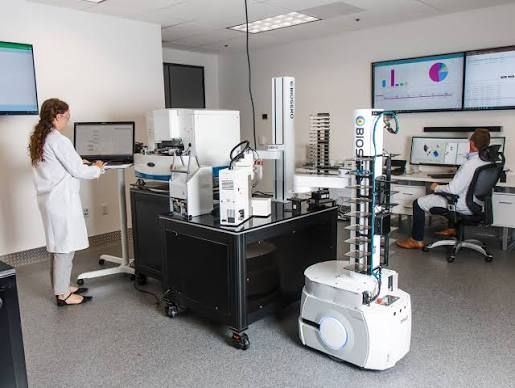
Modern laboratory automation can cover a large part of the testing workflow, from sample identification and transportation to centrifugation, analysis, result verification and storage. In clinical laboratories, automation systems may connect specimen-handling equipment with chemistry, immunoassay, hematology and other analytical instruments.
The U.S. FDA recognizes several Clinical and Laboratory Standards Institute (CLSI) standards specifically related to laboratory automation, including standards covering specimen carriers, barcodes, communications, operational requirements, information technology security and automated result verification.
Automation therefore is not simply about replacing a manual laboratory instrument with a computerized machine. It is an integrated approach that connects equipment, samples, software, data and laboratory workflows.
What Is Automated Laboratory Equipment?
Automated laboratory equipment uses mechanical, electronic, optical, software or robotic technologies to perform laboratory procedures with limited manual intervention.
Depending on the application, automation can perform tasks such as:
- Sample identification
- Barcode reading
- Tube sorting
- Sample transportation
- Centrifugation
- Decapping
- Aliquot preparation
- Reagent handling
- Pipetting
- Mixing
- Incubation
- Chemical analysis
- Immunoassay testing
- Hematology analysis
- Result calculation
- Result verification
- Sample storage
The FDA describes laboratory automation systems as configurable systems that can include hardware, software, sample conveyors, centrifuges, decappers, storage modules and clinical analyzers.
Why Laboratory Automation Is Important
Laboratories can process large numbers of specimens every day. Manual handling of each tube, reagent and test step can increase workload and introduce opportunities for handling errors.
Automation can help laboratories achieve:
- Consistent sample handling
- Higher processing capacity
- Reduced repetitive manual work
- Faster workflow
- Improved traceability
- Better standardization
- Automated data transfer
- More efficient use of laboratory personnel
- Continuous workflow monitoring
However, automation does not remove the need for qualified laboratory professionals. Human oversight remains important for quality control, unusual results, instrument problems and clinical interpretation.
Main Categories of Automated Laboratory Equipment
Automated laboratory equipment can be divided into several broad categories.
| Equipment Category | Main Function |
|---|---|
| Automated Chemistry Analyzer | Biochemical testing |
| Immunoassay Analyzer | Hormone, antibody and antigen testing |
| Hematology Analyzer | Blood-cell analysis |
| Coagulation Analyzer | Blood-clotting tests |
| Molecular Analyzer | DNA/RNA-based testing |
| Sample Processor | Automated preparation and handling |
| Robotic Pipetting System | Automated liquid transfer |
| Laboratory Conveyor | Sample transportation |
| Automated Centrifuge | Sample separation |
| Tube Sorter | Specimen identification and routing |
| Automated Storage System | Sample preservation and retrieval |
| Laboratory Automation Software | Workflow and data management |
Different laboratories may use individual automated instruments or connect multiple instruments into a larger automation line.
Automated Chemistry Analyzers
Automated chemistry analyzers are widely used in clinical laboratories.
They can perform measurements involving substances such as:
- Glucose
- Creatinine
- Urea
- Liver enzymes
- Electrolytes
- Lipids
- Proteins
- Calcium
- Other biochemical markers
A typical automated chemistry workflow may involve:
- Sample identification
- Sample aspiration
- Reagent addition
- Mixing
- Incubation
- Optical or other measurement
- Calculation
- Result transmission
Automation can allow multiple samples and tests to be processed according to programmed workflows.
Automated Immunoassay Analyzers
Immunoassay systems use antigen-antibody interactions to detect or measure specific substances.
They can be used for testing involving:
- Hormones
- Tumor markers
- Infectious-disease markers
- Cardiac biomarkers
- Vitamins
- Therapeutic drug monitoring
- Other immunological targets
Automation can control reagent handling, incubation, washing, detection and result calculation.
Automated Hematology Analyzers
Hematology analyzers examine blood-cell characteristics.
Common measurements include:
- Red blood cell count
- White blood cell count
- Hemoglobin
- Hematocrit
- Platelet count
- Cell indices
- White-cell differential parameters
Automated hematology systems can process large numbers of blood samples while applying standardized analytical procedures.
Automated Coagulation Analyzers
Coagulation analyzers are designed to assess aspects of blood clotting.
Tests can include:
- Prothrombin time
- INR
- Activated partial thromboplastin time
- Fibrinogen
- Other coagulation parameters
Automated systems can control sample and reagent handling while monitoring the analytical reaction.
Automated Molecular Testing Systems
Molecular laboratory automation is particularly important in DNA and RNA-based testing.
Automated molecular systems can integrate several stages such as:
- Sample preparation
- Nucleic-acid extraction
- Reagent handling
- Amplification
- Detection
- Result interpretation
Depending on the platform, technologies can include PCR, real-time PCR and other molecular detection methods.
Automated Microbiology Equipment
Automation is increasingly being applied to microbiology workflows.
Potential applications include:
- Sample inoculation
- Culture handling
- Colony imaging
- Identification
- Antimicrobial susceptibility testing
- Automated incubation
- Digital image analysis
Automation can reduce repetitive work while creating standardized workflows for high-volume laboratories.
Robotic Pipetting Systems
Robotic liquid-handling systems are designed to transfer precise quantities of liquids between containers.
They can be used in:
- Research laboratories
- Pharmaceutical laboratories
- Biotechnology laboratories
- Molecular biology
- Clinical diagnostics
- Genomics
- Drug-development workflows
A robotic pipetting system may include:
- Robotic arm
- Pipette head
- Disposable tips
- Sample racks
- Reagent positions
- Barcode reader
- Control software
- Automated deck
The system follows programmed instructions to transfer liquids between defined positions.
Automated Sample Handling Systems
Sample handling is one of the most important areas of laboratory automation.
A modern system can automatically:
- Identify a tube
- Check its location
- Transport it
- Centrifuge it
- Remove the cap
- Route it to an analyzer
- Aliquot the sample
- Recap the tube
- Store it
The FDA's description of VITROS Automation Solutions provides an example of a configurable system incorporating conveyors, centrifuges, decappers, storage modules, sample entry and analyzer connections.
Automated Laboratory Conveyors
Laboratory conveyors physically transport sample tubes between different processing points.
They can connect:
- Sample reception
- Centrifugation
- Analyzers
- Sorting stations
- Storage
- Retrieval systems
The conveyor becomes a physical connection between different laboratory instruments.
Automated Centrifuges
Centrifugation is often required before analysis because certain specimens need to be separated into different components.
An automated centrifuge can receive sample tubes through a robotic or conveyor-based workflow.
Depending on the system, automation can manage:
- Tube loading
- Rotor placement
- Centrifugation
- Tube removal
- Routing to the next stage
This reduces repetitive manual handling.
Automated Decapping and Recapping
Opening and closing specimen tubes can be repetitive in high-volume laboratories.
Automated decapping systems can remove tube caps before analysis, while recapping modules can close tubes after processing.
These systems can help standardize specimen handling and reduce repetitive manual operations.
Automated Tube Sorting
Tube sorting systems use barcode information and laboratory workflow rules to determine where each specimen should go.
For example, a tube may be routed toward:
- Chemistry
- Immunoassay
- Hematology
- Coagulation
- Molecular testing
- Manual review
- Storage
The FDA recognizes CLSI standards related specifically to specimen identification data and barcode use in laboratory automation.
Automated Sample Storage
After testing, some specimens may need to be retained for a defined period.
Automated storage systems can organize tubes based on:
- Barcode
- Patient/sample identifier
- Test status
- Storage time
- Temperature requirement
- Retrieval priority
Advanced systems can automatically retrieve a stored specimen when additional testing is requested.
Laboratory Information Systems and Automation
Laboratory automation becomes considerably more powerful when equipment communicates with the Laboratory Information System (LIS).
The LIS can provide test orders and receive analytical results.
A simplified workflow can look like:
Patient → Sample Collection → Barcode → LIS → Automation System → Analyzer → Result → LIS → Verification → Report
The FDA recognizes CLSI LIS and automation standards addressing electronic information exchange between clinical laboratory instruments and computer systems.
Barcode Technology
Barcode identification is a fundamental component of many automated laboratory workflows.
A barcode can associate a physical specimen tube with digital information.
The system can use that identification to determine:
- Sample identity
- Requested tests
- Processing route
- Analyzer destination
- Storage location
- Result association
This reduces dependence on manual tube identification.
The FDA recognizes CLSI standards covering barcode formats and specimen identification data for laboratory automation.
RFID and Advanced Identification
Some laboratory environments can use RFID or other identification technologies in addition to conventional barcodes.
These technologies can support automated tracking of:
- Samples
- Racks
- Equipment
- Consumables
- Storage locations
The appropriate identification technology depends on workflow requirements and system compatibility.
Automated Liquid Handling
Liquid-handling automation is important in both clinical and research laboratories.
Automated systems can control:
- Pipetting volume
- Dispensing speed
- Mixing
- Reagent addition
- Sample transfer
- Serial dilution
Precision and repeatability are particularly important when very small liquid volumes are involved.
Artificial Intelligence in Laboratory Automation
AI and machine-learning technologies are increasingly being explored across laboratory workflows.
Potential applications include:
- Image analysis
- Result classification
- Anomaly detection
- Predictive maintenance
- Workflow optimization
- Sample prioritization
- Quality monitoring
- Pattern recognition
AI does not replace the analytical process itself. Instead, it can become an additional software layer that helps analyze information produced by instruments and laboratory systems.
Machine Vision
Machine vision systems use cameras and image-processing algorithms to inspect laboratory objects.
Potential applications include:
- Tube identification
- Label verification
- Sample inspection
- Colony imaging
- Cell analysis
- Plate inspection
- Instrument monitoring
Machine vision can reduce the need for manual visual inspection in repetitive workflows.
Automated Result Verification
Not every laboratory result necessarily requires the same level of manual review.
Automated result-verification systems can apply predefined rules to determine whether a result can proceed automatically or requires additional review.
The FDA recognizes CLSI AUTO10-A, a guideline concerning autoverification of clinical laboratory test results.
Rules may consider factors such as:
- Reference ranges
- Critical values
- Delta checks
- Instrument flags
- Quality-control status
- Sample problems
- Previous results
Human review remains important when results fall outside predefined rules.
Laboratory Automation Architecture
A fully automated laboratory can be viewed as several connected layers.
Pre-analytical layer
- Sample reception
- Identification
- Sorting
- Centrifugation
- Decapping
- Aliquoting
Analytical layer
- Chemistry
- Immunoassay
- Hematology
- Coagulation
- Molecular testing
Post-analytical layer
- Result verification
- Recapping
- Sorting
- Storage
- Retrieval
Information layer
- LIS
- Middleware
- Instrument software
- Data management
- Reporting systems
This layered architecture allows laboratories to automate specific parts of the workflow without necessarily automating everything at once.
Total Laboratory Automation
Total Laboratory Automation (TLA) refers to an integrated approach where multiple stages and instruments are connected into a coordinated automated workflow.
A TLA system can potentially connect:
Sample Entry → Identification → Centrifugation → Decapping → Analyzer → Sorting → Result Processing → Storage
The FDA has documented laboratory automation systems containing configurable combinations of conveyors, centrifuges, decappers, storage modules, aliquoting modules and clinical analyzers.
Modular Laboratory Automation
Not every laboratory needs a complete automation line.
A modular approach allows laboratories to automate individual processes and expand gradually.
For example:
Stage 1: Barcode identification
Stage 2: Automated centrifugation
Stage 3: Analyzer connection
Stage 4: Automated sample sorting
Stage 5: Automated storage
This approach can be useful where laboratory space, workflow volume or equipment requirements change over time.
Benefits of Automated Laboratory Equipment
Higher Throughput
Automation can process multiple samples in parallel and maintain consistent workflows.
Reduced Repetitive Work
Automated systems can take over repetitive activities such as tube sorting, pipetting and sample transportation.
Better Traceability
Barcode-based identification and software tracking can create a digital record of sample movement.
Consistency
Automated procedures can reduce variation caused by differences in manual handling.
Workflow Standardization
Defined software rules can help laboratories apply consistent processing procedures.
Faster Data Transfer
Electronic communication between instruments and laboratory information systems can reduce manual data entry.
Continuous Operation
Some automated laboratory systems can operate for extended periods with limited manual intervention, depending on the configuration and laboratory operating model.
Limitations and Challenges
Automation also introduces technical and operational challenges.
Initial Investment
Advanced equipment, software, installation and infrastructure can require substantial investment.
Maintenance
Automated systems contain mechanical, electrical and software components that require regular maintenance.
Integration Complexity
Different instruments may use different communication protocols and data formats.
Staff Training
Laboratory personnel need appropriate training to operate, monitor and troubleshoot automated systems.
Downtime
A failure in a central automation component can affect multiple connected instruments.
Cybersecurity
Connected laboratory equipment creates additional cybersecurity considerations.
The FDA recognizes CLSI AUTO11-A2, which addresses information technology security for in-vitro diagnostic instruments and software systems.
Data Connectivity
Automated equipment needs reliable communication with other laboratory systems.
Important considerations include:
- Data formats
- Communication protocols
- Instrument interfaces
- Sample identifiers
- Test orders
- Result transmission
- Error handling
- System security
The FDA recognizes CLSI AUTO03-A2 for communications involving automated clinical laboratory systems, instruments, devices and information systems.
Quality Control in Automated Laboratories
Automation does not eliminate quality-control requirements.
Laboratories still need to monitor:
- Calibration
- Internal quality control
- Reagent status
- Instrument performance
- Sample integrity
- Control materials
- System alarms
- Analytical flags
- Maintenance status
Automation can make quality monitoring more systematic, but laboratory professionals remain responsible for appropriate oversight.
Sample Integrity
An automated system must preserve specimen integrity throughout the workflow.
Potential issues include:
- Wrong tube
- Insufficient sample
- Clotted specimen
- Hemolysis
- Leakage
- Incorrect labeling
- Incorrect storage
- Delayed processing
Automation systems can use barcode checks and instrument flags to identify certain problems, but not every pre-analytical issue can be eliminated automatically.
Safety Features
Automated laboratory equipment can incorporate safety mechanisms such as:
- Emergency stops
- Protective covers
- Door sensors
- Mechanical interlocks
- Overload detection
- Temperature monitoring
- Liquid-level monitoring
- Alarm systems
- Software access controls
Laboratory personnel should follow the equipment manufacturer's instructions and facility safety procedures.
Applications Beyond Clinical Laboratories
Laboratory automation is not limited to hospitals.
It is also used in:
- Pharmaceutical research
- Biotechnology
- Food testing
- Environmental analysis
- Academic research
- Chemical laboratories
- Genomics
- Drug-development research
- Industrial quality laboratories
In research environments, robotic liquid handling and automated plate processing can support high-throughput experimental workflows.
Automated Laboratory Equipment in Pharmaceutical Research
Pharmaceutical laboratories use automation for repetitive and high-throughput processes.
Examples include:
- Compound screening
- Liquid handling
- Sample preparation
- Plate reading
- Assay workflows
- Analytical testing
- Data capture
Automation can allow researchers to run large numbers of experimental conditions using standardized procedures.
Automated Laboratory Equipment in Biotechnology
Biotechnology laboratories can use automation in areas such as:
- DNA preparation
- RNA workflows
- Sequencing preparation
- Cell-based assays
- Protein analysis
- Sample normalization
- High-throughput screening
Robotic systems can coordinate multiple repetitive liquid-handling steps while software records the workflow.
Automated Laboratory Equipment in Food Testing
Food laboratories can use automated equipment for analytical testing involving:
- Nutritional parameters
- Contaminants
- Microbiology
- Chemical composition
- Quality parameters
Automation can help standardize repetitive testing workflows.
Automated Laboratory Equipment in Environmental Testing
Environmental laboratories analyze samples such as:
- Water
- Soil
- Waste
- Industrial samples
- Air-related specimens
Automation can help manage high sample volumes and repetitive analytical procedures.
Recent Developments in Laboratory Automation
Current laboratory automation is moving toward greater integration rather than simply increasing the speed of individual analyzers.
Important developments include:
- AI-assisted analysis
- Robotic sample handling
- Integrated automation tracks
- Automated storage and retrieval
- Digital laboratory workflows
- Remote equipment monitoring
- Predictive maintenance
- Advanced barcode systems
- Improved cybersecurity
- Automated result verification
The FDA's current recognized-standard listings show that laboratory automation standards now address areas ranging from electromechanical interfaces and specimen identification to cybersecurity and autoverification.
Choosing Automated Laboratory Equipment
Before selecting equipment, laboratories should evaluate:
Testing volume
How many samples are processed per day or shift?
Test menu
Which analyses need to be automated?
Workflow
Where are the largest manual bottlenecks?
Integration
Can the equipment communicate with the existing LIS and other instruments?
Laboratory space
Is sufficient space available for conveyors, robotic modules and maintenance access?
Scalability
Can additional modules be added later?
Maintenance
What preventive maintenance and technical support are required?
Consumables
What tubes, tips, reagents and other consumables are required?
Data security
How is patient or laboratory data protected?
Quality requirements
What calibration, quality-control and validation processes are required?
Automated vs Manual Laboratory Equipment
| Factor | Automated Equipment | Manual Workflow |
|---|---|---|
| Sample handling | Machine-controlled | Personnel-controlled |
| Throughput | Generally higher | Depends on staffing |
| Repetitive work | Reduced | Higher |
| Data transfer | Often electronic | More manual entry |
| Traceability | Highly trackable | Depends on documentation |
| Flexibility | Program-dependent | Highly adaptable |
| Maintenance | More complex | Generally simpler |
| Initial investment | Higher | Lower |
| Staff role | Monitoring and exception handling | Direct processing |
Automation and manual work are not mutually exclusive. Most laboratories combine automated systems with human expertise.
Future of Automated Laboratory Equipment
The future of laboratory automation is likely to involve increasingly connected equipment.
Possible developments include:
- More intelligent robotics
- AI-assisted image analysis
- Autonomous sample routing
- Predictive maintenance
- Cloud-connected laboratory platforms
- Greater instrument interoperability
- Digital twins for laboratory workflows
- Automated inventory monitoring
- More sophisticated sample-storage systems
- Integrated cybersecurity
The long-term direction is toward laboratories where instruments, robots and information systems operate as a coordinated digital ecosystem.
Tools and Resources
Useful resources when researching automated laboratory equipment include:
- Laboratory Information Systems
- Laboratory workflow-mapping tools
- Instrument-interface documentation
- Barcode and specimen-identification standards
- Equipment validation protocols
- Quality-control software
- Laboratory inventory systems
- Preventive-maintenance schedules
- Pressure or workflow monitoring tools where applicable
- Manufacturer technical documentation
- Applicable clinical laboratory standards
The FDA's recognized standards database is particularly useful for understanding recognized standards related to laboratory automation, communications, specimen identification, cybersecurity and result verification.
FAQs
What is automated laboratory equipment?
Automated laboratory equipment consists of instruments, robotic systems and software that perform laboratory procedures with limited manual intervention. It can cover sample handling, analysis, data processing and storage.
What are examples of automated laboratory equipment?
Examples include chemistry analyzers, immunoassay analyzers, hematology analyzers, coagulation analyzers, molecular analyzers, robotic pipetting systems, automated centrifuges, tube sorters, conveyors and automated sample-storage systems.
What is total laboratory automation?
Total Laboratory Automation is an integrated approach in which multiple stages of laboratory processing are connected through automated equipment, transportation systems and software.
Does laboratory automation eliminate laboratory professionals?
No. Automation can reduce repetitive manual activities, but qualified personnel remain important for quality control, troubleshooting, exception handling, validation and interpretation.
What role does AI play in laboratory automation?
AI can support areas such as image analysis, anomaly detection, workflow optimization, predictive maintenance and automated classification. Its role depends on the laboratory application and validation requirements.
Conclusion
Automated laboratory equipment has transformed many laboratory workflows by connecting sample handling, analytical instruments, robotics, software and data systems.
Modern automation can range from a single automated analyzer to a complete laboratory automation line that identifies specimens, transports tubes, performs centrifugation, manages analytical instruments, verifies selected results and stores samples.
The most important technologies include automated chemistry and immunoassay analyzers, hematology systems, molecular platforms, robotic liquid handlers, conveyors, centrifuges, tube sorters, automated storage and laboratory information systems.
As laboratories become increasingly digital, automation is also expanding into AI-assisted analysis, predictive maintenance, cybersecurity, advanced sample tracking and intelligent workflow management.
The goal is not simply to make laboratories more automated. It is to create consistent, traceable, connected and efficient workflows while maintaining appropriate human oversight and laboratory quality standards.
Disclaimer
This article is provided for general informational and educational purposes only. Laboratory equipment, automation capabilities, regulatory requirements and software features vary by application, manufacturer and jurisdiction. Automated systems used for clinical or diagnostic purposes should be selected, installed, validated and operated according to applicable regulations, laboratory procedures, manufacturer documentation and qualified professional guidance. This article is not intended as medical advice, product endorsement or a substitute for professional laboratory or clinical guidance.