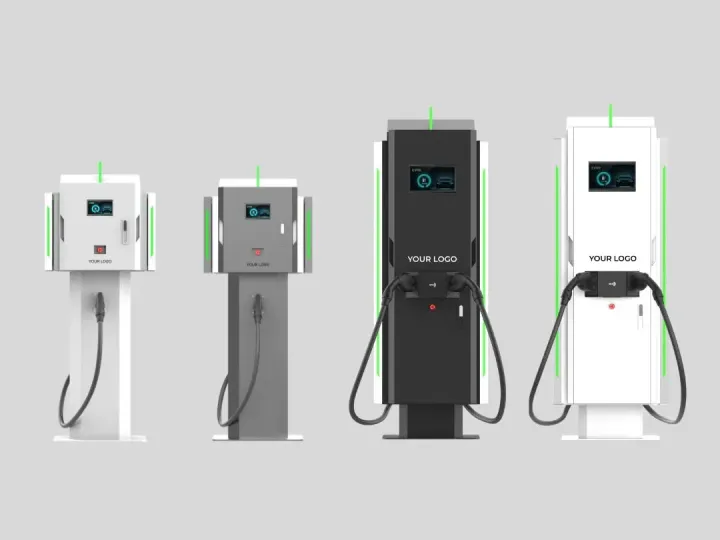
White Label EV Chargers Explained: Manufacturing, Customization, Features, Standards & Industry Guide
The EV charging industry is evolving from standalone charging hardware into a combination of power electronics, software, connectivity, energy management, and digital services.
A white label EV charger provides a way for one company to introduce charging equipment under its own brand while the underlying hardware is manufactured by another company. Depending on the agreement, the branding partner may customize the enclosure, logo, packaging, user interface, firmware configuration, connectivity, and software experience.
The concept is becoming increasingly relevant as charging networks, energy companies, automotive businesses, fleet operators, technology companies, and other organizations look for scalable charging products without developing every hardware component internally.
Importantly, white labeling does not necessarily mean that every part of a charger can be changed. The level of customization depends on whether the relationship is white label, OEM, or ODM.
1. What Is a White Label EV Charger?
A white label EV charger is an existing charging product manufactured by one company and rebranded for another company.
The original manufacturer typically handles areas such as:
- Hardware engineering
- Component sourcing
- Manufacturing
- Assembly
- Testing
- Firmware
- Technical documentation
- Certification
The branding company may control elements such as:
- Brand name
- Logo
- Product appearance
- Packaging
- User interface
- Product naming
- Customer-facing software
The exact arrangement depends on the manufacturing contract.
2. How White Label EV Charging Works
A simplified white-label model looks like this:
Original Manufacturer → Charger Hardware → Customization → Branding → Testing → Market Deployment
The manufacturer creates the technical foundation, while the branding partner creates a customer-facing product identity.
Some programs allow only cosmetic changes, while others support extensive mechanical, electrical, software, and communication customization.
3. White Label vs OEM vs ODM
These terms are often used interchangeably, but they can represent different arrangements.
White Label
A manufacturer provides an existing product that another company rebrands.
Typical changes include:
- Logo
- Color
- Packaging
- Product name
- User interface
OEM
An OEM arrangement can involve supplying components, subassemblies, or a product platform for integration into another company's product.
ODM
An Original Design Manufacturer develops a product according to another company's specifications.
ODM projects can involve:
- Custom enclosure
- Electrical architecture
- Power rating
- Software
- Connectors
- Communication
- Certifications
The deeper the customization, the closer the relationship generally moves toward an ODM-style development model.
4. Why White Label EV Chargers Are Used
White labeling can reduce the amount of engineering required to introduce a charging product.
Potential advantages include:
- Faster product development
- Access to established hardware
- Reduced internal R&D requirements
- Established manufacturing processes
- Existing firmware platforms
- Existing certification pathways
- Brand customization
- Scalable production
Industry manufacturers increasingly position white-label programs as a way for brands to enter the charging market without developing every layer from the beginning.
5. Main Types of White Label EV Chargers
White-label arrangements can cover several charging categories.
AC Chargers
Commonly used for:
- Residential charging
- Workplace charging
- Commercial parking
- Destination charging
DC Fast Chargers
Designed for higher-power charging applications.
Fleet Chargers
Designed around coordinated charging of multiple vehicles.
Portable Chargers
Compact systems designed for flexible or temporary applications.
Specialized Chargers
These may be designed for particular vehicle categories or operating environments.
6. AC White Label Chargers
AC chargers generally provide alternating current to the vehicle.
The vehicle's onboard charger performs the primary AC-to-DC conversion.
White-label AC products can range from relatively simple residential equipment to network-connected commercial charging stations.
Common features include:
- Type 2 or other regional connectors
- Wi-Fi
- Ethernet
- Cellular connectivity
- RFID
- Mobile applications
- Energy metering
- Load management
- OCPP connectivity
7. DC White Label Chargers
DC charging systems perform the primary power conversion outside the vehicle.
A DC charger can include:
- AC input
- Rectifier
- Power modules
- DC output
- Charging controller
- Cooling system
- Communication hardware
- Protection systems
Higher-power DC chargers require more sophisticated thermal and electrical engineering.
8. Manufacturing Process
A typical white-label charger manufacturing process includes several stages.
Stage 1: Product Selection
The branding company selects an existing charger platform.
Stage 2: Technical Evaluation
Important specifications are reviewed, including:
- Power
- Voltage
- Connector
- Communication
- Enclosure
- Metering
- Safety
Stage 3: Customization
Branding and technical changes are defined.
Stage 4: Prototype
A customized sample may be produced.
Stage 5: Validation
Electrical, thermal, software, mechanical, and safety functions are evaluated.
Stage 6: Certification
Required conformity and certification requirements are addressed.
Stage 7: Production
Approved units move into scaled manufacturing.
Stage 8: Quality Control
Production units are inspected and tested before shipment.
9. Charger Components
A modern EV charger can contain many electronic and mechanical components.
Important components include:
- Power semiconductors
- Control boards
- Relays
- Contactors
- Circuit protection
- Sensors
- Energy meters
- Communication modules
- Connectors
- Cables
- Cooling components
- Displays
- Enclosures
The exact component architecture depends on the charging power and product type.
10. Power Electronics
Power electronics are the heart of an EV charger.
They manage the conversion and control of electrical energy.
Key technologies include:
- Rectifiers
- DC-DC converters
- Inverters
- Power-factor correction
- Switching devices
- Digital controllers
Advanced systems increasingly use wide-bandgap semiconductors such as silicon carbide (SiC) and gallium nitride (GaN).
11. Silicon Carbide Technology
SiC semiconductors can support high-voltage and high-frequency power conversion.
Potential benefits include:
- Lower switching losses
- Higher efficiency
- High-temperature operation
- Higher power density
- Smaller power-conversion systems
They are particularly relevant to high-power charging equipment.
12. Gallium Nitride Technology
GaN is another wide-bandgap semiconductor technology.
Potential advantages include:
- High switching frequency
- Compact design
- Efficient power conversion
- High power density
Its suitability depends on the charger's voltage, power level, architecture, thermal requirements, and design objectives.
13. Customization Options
White-label programs can provide several levels of customization.
Basic Customization
- Logo
- Product name
- Packaging
- Color
Intermediate Customization
- Enclosure finish
- Display
- User interface
- Cable configuration
- Connectivity options
Advanced Customization
- Mechanical design
- Electrical architecture
- Firmware
- Communication
- Power rating
- Connector configuration
Not every manufacturer supports all of these options.
14. Branding Customization
Brand identity can be incorporated into:
- Front panels
- Logos
- Product labels
- LED indicators
- Screens
- Mobile applications
- Packaging
- User documentation
A professional white-label product should maintain consistent branding across both physical and digital interfaces.
15. Enclosure Design
The enclosure protects internal electronics from environmental conditions and physical exposure.
Common considerations include:
- Material
- Size
- Mounting
- Weather resistance
- Heat dissipation
- Cable management
- Service access
Outdoor chargers may require appropriate ingress protection depending on their intended environment.
16. User Interface
The user interface can include:
- Status LEDs
- Touchscreens
- LCD displays
- Buttons
- RFID readers
- Mobile applications
The interface should make charging status easy to understand.
Typical information can include:
- Available
- Charging
- Complete
- Fault
- Energy delivered
- Charging duration
17. Smart Charging
Modern white-label chargers can include smart-charging functions.
These may support:
- Charging schedules
- Load balancing
- Power limits
- Remote control
- Energy management
- Solar integration
- Demand management
Smart charging is particularly important when multiple chargers operate simultaneously.
18. Dynamic Load Balancing
Dynamic load balancing monitors available electrical capacity and adjusts charger output accordingly.
For example:
Higher Building Demand → Lower EV Charging Power
and:
Lower Building Demand → Higher Available EV Charging Power
This can help coordinate multiple charging points without unnecessarily exceeding available electrical capacity.
19. OCPP Compatibility
Open Charge Point Protocol (OCPP) allows EV chargers to communicate with charging management systems.
It can support functions such as:
- Remote monitoring
- Configuration
- Diagnostics
- Charging-session management
- Firmware management
- Fault reporting
OCPP is particularly important when a white-label charger needs to connect to a third-party charging management platform.
20. OCPP White Label Certification
White labeling does not automatically mean that a rebranded charger has its own independent certification.
The Open Charge Alliance provides a specific White Label Certificate process for qualifying rebranded charging stations and charging-management systems.
According to OCA, the rebranded product must be technically identical to the originally certified product in the relevant hardware and firmware configuration, and the original vendor must provide consent.
This distinction is important when evaluating claims of "OCPP certified" equipment.
21. ISO 15118
ISO 15118 addresses high-level communication between electric vehicles and charging systems.
It supports technologies and functions associated with:
- Charging communication
- Identification
- Plug & Charge
- Energy management
- Bidirectional charging
For advanced white-label chargers, compatibility with ISO 15118 can become an important technical consideration.
22. Charging Connectors
A white-label charger needs to use connectors appropriate to its target market.
Examples include:
- Type 1
- Type 2
- CCS
- NACS
- CHAdeMO
- GB/T
Connector selection affects vehicle compatibility and regional market suitability.
23. Energy Metering
Energy measurement can be important for:
- Usage monitoring
- Charging analytics
- Billing
- Energy management
- Reporting
Depending on the market, different accuracy and certification requirements may apply.
A manufacturer should provide clear documentation regarding the meter's specifications and certification rather than simply describing a charger as "metered."
24. Safety Features
Safety is one of the most important parts of charger design.
Possible protection features include:
- Overvoltage protection
- Overcurrent protection
- Short-circuit protection
- Ground-fault protection
- Temperature monitoring
- Insulation monitoring
- Emergency shutdown
- Surge protection
- Connector locking
The exact safety architecture varies by product type and applicable regulations.
25. Thermal Management
Higher-power chargers generate significant heat.
Cooling methods can include:
- Passive cooling
- Fans
- Heat sinks
- Liquid cooling
- Thermal monitoring
DC fast chargers generally require more sophisticated thermal management than lower-power AC equipment.
26. Communication Technologies
White-label chargers may support several connectivity options.
These can include:
- Wi-Fi
- Ethernet
- Cellular networks
- Bluetooth
- RFID
- CAN-based vehicle communication
The appropriate combination depends on the charger and intended application.
27. White Label Charging Software
Hardware branding is only one part of the overall ecosystem.
A complete branded charging experience can also include:
- Driver application
- Operator dashboard
- Charger management
- Billing
- Energy reporting
- User accounts
- Notifications
- Analytics
Some companies offer white-label software independently from white-label hardware, so the two should not automatically be assumed to come from the same provider.
28. Charging Management System
A Charging Station Management System (CSMS) can act as the digital control layer between chargers and operators.
It may provide:
- Charger status
- Remote commands
- Session information
- Energy data
- Fault alerts
- User management
- Firmware management
- Reporting
OCPP is commonly used as the communication interface between charge points and backend systems.
29. White Label Mobile Applications
A white-label charging application can carry the branding partner's:
- Logo
- Colors
- Name
- User interface
- Domain
- Customer communication
Potential functions include:
- Charger discovery
- Charging initiation
- Session monitoring
- Account management
- Notifications
- Charging history
The software layer can therefore have a major impact on the overall customer experience.
30. Cybersecurity
Connected chargers introduce cybersecurity considerations.
Important areas include:
- Authentication
- Encryption
- Secure communication
- Access control
- Firmware security
- Credential management
- Remote update security
- Network monitoring
Cybersecurity should be evaluated at both hardware and software levels.
31. Certification and Standards
A white-label charger may need to satisfy multiple requirements.
Depending on the market, these can involve:
- Electrical safety
- EMC
- Environmental protection
- Connector standards
- Energy metering
- Communication protocols
- Cybersecurity
- Regional certification
A charger designed for one market may not automatically satisfy requirements in another.
32. IEC 61851
The IEC 61851 family provides requirements for conductive EV charging systems.
It covers aspects of:
- Charging systems
- Electrical safety
- Charging modes
- Control functions
- Communication-related requirements
The relevant part depends on the charger architecture and application.
33. IEC 62196
IEC 62196 addresses plugs, socket outlets, vehicle connectors, and vehicle inlets used for conductive charging.
It is particularly relevant when evaluating connector compatibility.
34. IP Ratings
The Ingress Protection (IP) rating describes the enclosure's resistance to solid objects and water under specified test conditions.
For example, an outdoor charger may require a higher level of environmental protection than equipment designed exclusively for controlled indoor environments.
The IP rating should therefore be evaluated alongside the actual installation environment.
35. Regional Compliance
Different markets can have different regulatory requirements.
A white-label manufacturer may need to consider:
- European requirements
- North American requirements
- Indian requirements
- Middle Eastern requirements
- Asian requirements
- Local electrical regulations
Certification should be matched to the exact product configuration and target market.
36. Quality Control
Quality control is essential because chargers contain many interconnected electrical and electronic components.
Manufacturing checks can include:
- Component inspection
- PCB testing
- Electrical testing
- Insulation testing
- Functional testing
- Communication testing
- Thermal testing
- Final inspection
Consistent production testing helps reduce variation between units.
37. Prototype Testing
Before large-scale production, a customized charger should undergo prototype evaluation.
Testing can cover:
- Electrical performance
- Mechanical fit
- Thermal behavior
- Communication
- User interface
- Connector compatibility
- Software
- Safety functions
This stage can identify problems before production volumes increase.
38. Interoperability Testing
A charger must work correctly with compatible:
- EVs
- Charging networks
- Backend platforms
- Mobile applications
- Energy-management systems
Interoperability testing is therefore an important part of white-label charger validation.
39. Manufacturing Supply Chain
A charger manufacturer's supply chain can include:
- Semiconductor suppliers
- PCB manufacturers
- Connector suppliers
- Cable manufacturers
- Enclosure manufacturers
- Meter suppliers
- Display suppliers
- Communication-module suppliers
Supply-chain stability can influence product availability and long-term consistency.
40. Firmware and Software Updates
Modern chargers can receive firmware updates.
Updates may improve:
- Security
- Communication
- Compatibility
- Diagnostics
- Charging performance
- Stability
A white-label agreement should clearly define who controls firmware updates and how updates are validated.
41. Technical Documentation
A professional white-label program should provide appropriate documentation.
Useful documentation can include:
- Datasheets
- Installation manuals
- User manuals
- Electrical specifications
- Wiring information
- Communication documentation
- Certification documents
- Firmware information
- Maintenance procedures
Clear documentation makes deployment and support easier.
42. After-Production Support
Long-term support can be as important as the initial hardware.
Areas to define include:
- Firmware updates
- Spare components
- Warranty terms
- Diagnostics
- Replacement procedures
- Technical documentation
- Software compatibility
A white-label brand should understand which responsibilities remain with the manufacturer and which belong to the branding company.
43. Common White Label EV Charger Applications
White-label chargers can be used across several sectors.
Residential Charging
Branded home charging equipment.
Workplace Charging
Charging equipment for employees and company vehicles.
Commercial Charging
Equipment deployed in commercial facilities.
Fleet Charging
Coordinated charging for vehicle fleets.
Public Charging Networks
Branded charging stations connected to a central platform.
Energy Management
Charging systems integrated with solar, storage, and building energy systems.
44. Benefits of White Label Manufacturing
White-label manufacturing can provide several strategic advantages.
Faster Market Entry
An established hardware platform can reduce development time.
Established Technology
The product may already have undergone technical development and validation.
Brand Control
The customer-facing identity can remain under the branding company's control.
Scalability
Production can expand as demand increases.
Reduced Development Complexity
The branding company does not necessarily need to develop every hardware subsystem internally.
These benefits depend heavily on the manufacturer's capabilities and the exact agreement.
45. Limitations of White Label Chargers
White labeling also has limitations.
Limited Customization
Some manufacturers permit only cosmetic changes.
Vendor Dependence
The brand may depend on another company for hardware and firmware.
Certification Constraints
Changing hardware or firmware can affect certification status.
Supply-Chain Dependence
Component shortages can affect production.
Software Dependency
The charger may rely on a manufacturer's backend or firmware architecture.
Product Differentiation
Two brands may use similar underlying hardware.
46. White Label Charger Selection Framework
A useful evaluation model is:
Hardware → Customization → Compliance → Software → Support → Scalability
Hardware
Evaluate power, voltage, connectors, efficiency, and reliability.
Customization
Determine which physical and digital elements can be changed.
Compliance
Verify relevant certifications and test documentation.
Software
Check OCPP, backend integration, applications, and update capabilities.
Support
Understand warranty, diagnostics, spare parts, and firmware responsibilities.
Scalability
Assess whether the manufacturer can maintain quality as production volumes increase.
47. Questions to Ask a White Label Manufacturer
Before entering a manufacturing arrangement, consider asking:
- Is the charger an existing product or a new design?
- Which components are proprietary?
- What can be customized?
- Which certifications already exist?
- Are certifications tied to a specific hardware or firmware version?
- Which OCPP versions are supported?
- Is OCPP certification available?
- Can the charger connect to a third-party CSMS?
- Who controls firmware?
- What connector configurations are available?
- What power ratings are supported?
- What communication interfaces are available?
- How is cybersecurity managed?
- What testing is performed on every production unit?
- What documentation is provided?
- What happens if a component becomes unavailable?
- How are firmware updates handled?
- What support is provided after production?
48. White Label EV Charger Checklist
- Define target market
- Select AC or DC architecture
- Determine power rating
- Choose connector
- Check vehicle compatibility
- Define branding requirements
- Define enclosure requirements
- Review communication options
- Check OCPP compatibility
- Review ISO 15118 capabilities where relevant
- Verify safety requirements
- Check EMC requirements
- Verify applicable certifications
- Review energy-metering requirements
- Evaluate cybersecurity
- Test interoperability
- Define firmware responsibilities
- Review software integration
- Establish quality-control requirements
- Plan long-term component availability
49. White Label EV Charging Industry Trends
Several developments are shaping the white-label market.
More Connected Hardware
Chargers increasingly communicate with cloud platforms and energy-management systems.
Software Integration
Hardware and software are becoming more closely connected.
Advanced Power Electronics
SiC and GaN technologies are supporting improvements in efficiency and power density.
Bidirectional Charging
V2G, V2H, and V2L capabilities are increasing interest in bidirectional charging architectures.
Smart Charging
Dynamic load management and energy optimization are becoming more important.
Higher Power
DC charging systems continue to move toward higher power levels.
Greater Customization
Some manufacturers are expanding customization beyond logos and colors into software, enclosure design, interfaces, and connectivity.
50. Future of White Label EV Chargers
The future of white-label EV charging is likely to involve deeper integration between hardware, software, energy systems, and branding.
Instead of simply rebranding a physical charger, future programs may increasingly combine:
Custom Hardware + Firmware + CSMS + Mobile App + Energy Management + Analytics
This can create a more complete branded charging ecosystem.
However, deeper customization also creates additional requirements for certification, cybersecurity, software maintenance, interoperability testing, and long-term technical support.
FAQs
What is a white label EV charger?
A white label EV charger is an existing charging product manufactured by one company and rebranded by another company. The level of customization can range from basic branding to more advanced mechanical and software changes.
What is the difference between white label and OEM?
White labeling generally involves rebranding an existing product, while an OEM relationship can involve supplying components or products for integration into another company's product. The exact terminology varies between manufacturers.
Can white label EV chargers be customized?
Yes. Depending on the manufacturer, customization can include logos, colors, packaging, enclosure design, connectors, displays, software, firmware, communication, and other technical characteristics.
Can a white label charger use OCPP?
Yes, many network-connected chargers support OCPP. However, OCPP support and formal OCPP certification are not necessarily the same thing. The Open Charge Alliance has a dedicated process for qualifying certain rebranded products through its White Label Certification program.
Does rebranding change a charger's certification?
It can. Certification depends on the exact product configuration and applicable certification scheme. A hardware or firmware modification may affect the validity of an existing certification. OCPP's white-label certification process, for example, requires the rebranded product to remain technically identical to the certified original in the relevant hardware and firmware configuration.
Can white label chargers connect to different charging platforms?
Potentially, if the charger supports the required communication protocols and the backend platform is compatible. OCPP is particularly important for interoperability with charging-management systems.
Are white label EV chargers only for public charging?
No. They can be developed for residential, workplace, commercial, fleet, destination, and public charging applications.
Conclusion
White label EV chargers provide a bridge between established charging technology and customized brand identity.
Rather than developing every component internally, a company can work with an experienced manufacturer to create a branded charging product built around an existing or customized hardware platform.
The most important areas to evaluate are:
Manufacturing + Customization + Power Electronics + Standards + Software + Safety + Interoperability + Long-Term Support.
A successful white-label program is therefore about much more than placing a logo on a charger. The underlying hardware, firmware, certification, communication protocols, software ecosystem, quality control, and support structure all contribute to the final product.
As EV charging becomes increasingly connected and intelligent, white-label programs are likely to evolve from simple hardware rebranding toward complete branded charging ecosystems combining physical chargers, digital platforms, energy management, analytics, and smart-charging capabilities.
Disclaimer
This article is provided solely for general informational and educational purposes. It does not endorse, recommend, rank, or promote any specific EV charger manufacturer, company, product, technology, charging network, or commercial solution. Manufacturing capabilities, specifications, certifications, standards, software features, regulations, and market conditions can change over time. Readers should independently verify current technical documentation, certification status, applicable standards, interoperability, and regulatory requirements through authoritative sources before making engineering, procurement, manufacturing, or technology decisions.

Ravi Shankar Maurya
We create purposeful content that speaks, resonates, and drives action.
August 18, 2026 . 10 min read