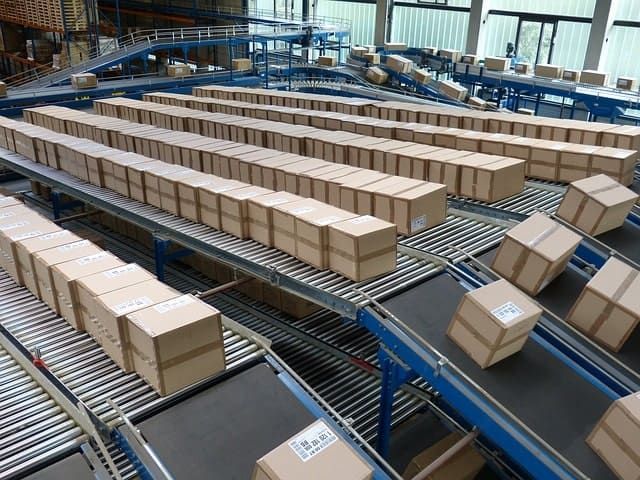
Warehouse Conveyor Belt Systems Explained: Types, Features & Applications
Warehouse conveyor belt systems are material-handling technologies designed to move products, packages, cartons, containers, and other items through different areas of a warehouse or distribution facility.
Instead of relying entirely on manual movement, conveyor systems can create organized pathways between receiving, storage, picking, sorting, packing, and dispatch areas. Depending on their configuration, conveyors can operate continuously, intermittently, or according to automated control signals.
Modern warehouse conveyor systems can also integrate with barcode scanners, sensors, warehouse management systems, automated storage systems, robotic equipment, and sorting technologies.
This guide explains the major types of warehouse conveyor belts, their components, features, applications, automation technologies, selection considerations, safety practices, and future developments.
What Is a Warehouse Conveyor Belt System?
A warehouse conveyor belt system is a mechanical material-handling arrangement that transports items from one location to another using a moving belt or related conveying mechanism.
A typical system can include:
- Conveyor belt
- Drive motor
- Rollers
- Pulleys
- Frame
- Bearings
- Sensors
- Control system
- Emergency stops
- Transfer equipment
Conveyor systems can be designed for straight movement, inclines, declines, curves, accumulation, sorting, and transfers between different warehouse zones.
How Warehouse Conveyor Systems Work
A basic belt conveyor operates through a continuous loop.
The main operating sequence is:
Loading → Conveying → Detection → Transfer → Sorting → Unloading
The motor drives a pulley, which moves the belt around the conveyor frame. Products placed on the belt travel along the designated path.
Sensors and control systems can determine when products arrive at specific points and coordinate movement with other warehouse equipment.
Main Components
Conveyor Belt
The belt provides the surface that carries products.
Belt materials and construction vary depending on:
- Product weight
- Surface requirements
- Temperature
- Environment
- Required speed
- Cleaning requirements
Drive Motor
The motor provides the mechanical power required to move the belt.
Motor selection depends on factors such as:
- Conveyor length
- Load
- Speed
- Incline
- Operating cycle
Drive Pulley
The drive pulley transfers rotational motion from the motor to the belt.
Idler Rollers
Idlers support the belt and help maintain its shape as it moves along the conveyor.
Conveyor Frame
The frame supports the belt, rollers, drive components, and other equipment.
Sensors
Sensors can detect:
- Product presence
- Position
- Accumulation
- Movement
- Package dimensions
Control System
Controllers coordinate conveyor movement and communication with other material-handling equipment.
Types of Warehouse Conveyor Systems
Different warehouse operations require different conveyor configurations.
Belt Conveyors
Belt conveyors use a continuous moving belt to transport items.
They can handle many types of products, including:
- Cartons
- Boxes
- Packages
- Containers
- Bags
Roller Conveyors
Roller conveyors use a series of rollers to move products.
They may be powered or gravity-driven.
Powered roller conveyors are suitable for automated movement, while gravity roller conveyors can use an inclined layout to move items without continuous motorized propulsion.
Motorized Roller Conveyors
Motorized rollers provide powered product movement.
They can be useful in automated warehouses where products need controlled movement and accumulation.
Gravity Conveyors
Gravity conveyors rely on the weight of products and conveyor inclination.
They can be used for:
- Short-distance movement
- Loading and unloading
- Manual picking areas
- Transfer zones
Incline Conveyors
Incline conveyors move products between different elevations.
They are useful where warehouse layouts include:
- Mezzanines
- Elevated platforms
- Different floor levels
- Multi-level storage
Decline Conveyors
Decline conveyors move products downward.
They can connect higher-level operations with lower-level work areas.
Curved Conveyors
Curved conveyor sections change the direction of product flow without requiring a complete stop.
They can help optimize warehouse layouts where space is limited.
Cleated Conveyors
Cleats are raised sections attached to the belt.
They help keep products from sliding when moving along inclines or declines.
Flexible Conveyors
Flexible conveyor systems can be extended, retracted, or repositioned according to operational requirements.
They may be useful for temporary or changing material-handling layouts.
Conveyor Systems for Different Products
Warehouse conveyor design depends heavily on the items being transported.
Small Packages
Small packages may require closely spaced rollers or specialized belt surfaces to prevent products from becoming trapped.
Large Cartons
Large cartons may require stronger belts, larger rollers, and appropriate load-bearing capacity.
Fragile Products
Fragile products may require controlled acceleration, reduced impact, and appropriate belt surfaces.
Irregular Products
Items with unusual shapes may require customized conveying surfaces or specialized handling systems.
Conveyor System Features
Modern warehouse conveyor systems can include several features.
Variable Speed Control
Variable-speed systems allow conveyor movement to be adjusted according to operational requirements.
Accumulation
Accumulation allows multiple products to temporarily queue in a conveyor section.
This can help coordinate different warehouse processes.
Automated Sorting
Sorting systems can redirect products toward different destinations.
Product Tracking
Barcode scanners, RFID systems, and other identification technologies can track products as they move.
Emergency Stops
Emergency-stop systems provide a method for quickly stopping conveyor movement during unsafe conditions.
Warehouse Conveyor Automation
Automation is increasingly important in modern warehouses.
Conveyors can work alongside:
- Barcode scanners
- RFID systems
- Automated storage systems
- Robotic arms
- Autonomous mobile robots
- Warehouse management systems
- Warehouse control systems
- Automated sorting equipment
This allows different material-handling technologies to operate as a coordinated system.
Conveyor Belts and Warehouse Management Systems
A warehouse management system, or WMS, manages information related to inventory and warehouse operations.
A conveyor system can receive instructions from warehouse control or execution systems based on information such as:
- Product identity
- Destination
- Order status
- Storage location
- Picking requirements
This can help coordinate physical movement with digital inventory information.
Barcode and RFID Integration
Identification technologies can provide information about individual products.
Barcode Scanning
Barcode scanners can identify packages as they move through designated scanning points.
RFID
RFID technology uses radio signals to identify tagged objects.
RFID can support automated tracking where appropriate, although system performance depends on tag type, environment, reader configuration, and application requirements.
Conveyor Sorting Systems
Sorting systems direct products toward specific destinations.
Sorting mechanisms can include:
- Diverters
- Pushers
- Pop-up rollers
- Cross-belt systems
- Shoe sorters
- Tilt-tray systems
The appropriate mechanism depends on product size, weight, speed, and required sorting accuracy.
Applications of Warehouse Conveyor Systems
Receiving
Conveyors can move incoming goods from unloading areas toward inspection, scanning, storage, or staging zones.
Storage
Conveyors can connect storage areas with other warehouse processes.
Order Picking
They can transport picked products toward consolidation or packing areas.
Packing
Conveyors can move packages between packing stations and subsequent processing areas.
Sorting
Automated conveyors can route packages toward different destinations.
Dispatch
Finished packages can move toward staging and loading areas.
Returns Processing
Conveyor systems can transport returned items through inspection, sorting, and processing areas.
Conveyor Systems in E-Commerce Warehouses
High-volume e-commerce warehouses often require fast movement of individual packages and orders.
Conveyors can connect:
- Picking zones
- Packing stations
- Sorting areas
- Dispatch areas
Automation technologies can coordinate product movement with order-management information.
Conveyor Systems in Manufacturing Warehouses
Manufacturing facilities can use conveyors to transport:
- Raw materials
- Components
- Work-in-progress
- Finished goods
- Containers
Integration with production systems can help coordinate material movement with manufacturing activities.
Benefits of Warehouse Conveyor Systems
Organized Material Flow
Conveyors create defined routes through warehouse operations.
Reduced Manual Transportation
Automated movement can reduce repetitive carrying and pushing activities.
Consistent Movement
Controlled conveyor speeds can provide predictable product flow.
Integration With Automation
Conveyors can connect robots, scanners, sorters, storage systems, and warehouse software.
Space Utilization
Vertical, inclined, curved, and customized conveyor configurations can help optimize warehouse layouts.
Improved Process Visibility
Sensors and tracking technologies can provide information about product movement.
Challenges of Conveyor Systems
Conveyor systems also have limitations.
Initial Planning Complexity
A conveyor layout must account for warehouse dimensions, product flow, storage locations, workstations, and future operational requirements.
Maintenance
Belts, rollers, bearings, motors, sensors, and other components require regular inspection and maintenance.
Downtime
A conveyor failure can affect downstream processes, particularly when multiple warehouse activities depend on one conveying line.
Product Compatibility
Not every product is suitable for every conveyor type.
Safety Requirements
Moving belts, rollers, drive mechanisms, and transfer points can create mechanical hazards.
Conveyor Maintenance
Preventive maintenance can help identify potential problems before they affect operations.
Common inspection areas include:
- Belt condition
- Belt alignment
- Roller condition
- Bearings
- Motor performance
- Pulley condition
- Sensor operation
- Emergency stops
- Guards
- Fasteners
Maintenance schedules should follow equipment requirements and site-specific operating conditions.
Predictive Maintenance
Smart conveyor systems can use sensors to monitor equipment condition.
Potential measurements include:
- Motor temperature
- Vibration
- Energy consumption
- Belt speed
- Bearing condition
Analytics can identify unusual patterns that may indicate developing equipment problems.
Conveyor Safety
Conveyor systems contain moving mechanical components and should be operated with appropriate safety controls.
Important measures can include:
- Emergency-stop devices
- Guards
- Warning systems
- Safe access points
- Proper maintenance procedures
- Operator training
- Lockout/tagout procedures where applicable
- Regular safety inspections
Workers should avoid placing hands, clothing, or other objects near moving components.
Safety requirements should follow applicable workplace regulations and equipment documentation.
Choosing a Warehouse Conveyor System
Several factors should be considered when planning a conveyor installation.
Product Characteristics
Consider:
- Size
- Weight
- Shape
- Surface
- Fragility
- Packaging
Required Throughput
Throughput refers to the quantity of products that must move through the system over a given period.
Conveyor Speed
Speed should match the requirements of connected warehouse processes.
Warehouse Layout
The available floor area, height, columns, doors, storage systems, and workstations influence conveyor design.
Elevation Changes
Inclines, declines, and vertical movement may require specialized conveyor configurations.
Automation Level
Determine whether the conveyor needs to operate manually, semi-automatically, or as part of a highly automated warehouse.
Future Expansion
The system should be evaluated for potential changes in product volumes, warehouse layout, and operational requirements.
Smart Conveyor Systems
Modern conveyor systems increasingly incorporate digital technologies.
Smart features can include:
- Sensors
- Machine monitoring
- Automated controls
- Remote diagnostics
- Energy monitoring
- Predictive maintenance
- Data analytics
These technologies can provide greater visibility into conveyor performance.
Energy Efficiency
Conveyor systems consume energy through motors, drives, sensors, and associated equipment.
Energy efficiency can be improved through:
- Variable-speed drives
- Efficient motors
- Controlled acceleration
- Reduced idle operation
- Appropriate conveyor sizing
- Automated start-stop control
The actual energy profile depends on conveyor design and operating conditions.
Future of Warehouse Conveyor Technology
Warehouse conveyor technology is increasingly connected with robotics and intelligent software.
Future developments may include:
- AI-assisted material-flow analysis
- Autonomous conveyor control
- Predictive maintenance
- Advanced machine vision
- Robotic conveyor transfers
- Digital twins
- Real-time warehouse analytics
- Energy optimization
- Greater integration with autonomous mobile robots
The broader direction is toward warehouses where physical material movement and digital inventory information operate as a connected system.
Frequently Asked Questions
What is a warehouse conveyor belt system?
A warehouse conveyor belt system is material-handling equipment designed to move packages, cartons, containers, and other products between different areas of a warehouse.
What are the main types of warehouse conveyors?
Common types include belt conveyors, roller conveyors, motorized roller conveyors, gravity conveyors, incline conveyors, decline conveyors, curved conveyors, cleated conveyors, and flexible conveyors.
How are conveyors used in warehouses?
Conveyors can transport products during receiving, storage, picking, packing, sorting, dispatch, and returns processing.
Can warehouse conveyors be automated?
Yes. Conveyor systems can integrate with sensors, barcode scanners, RFID, robots, automated storage systems, sorters, and warehouse management technologies.
How are conveyor systems maintained?
Maintenance can include inspecting belts, rollers, bearings, motors, pulleys, sensors, alignment, guards, and emergency-stop systems according to equipment and site requirements.
What factors determine conveyor selection?
Important factors include product size and weight, throughput, conveyor speed, warehouse layout, elevation changes, automation requirements, maintenance needs, and potential future expansion.
Conclusion
Warehouse conveyor belt systems are an important part of modern material handling. They provide structured pathways for moving products between receiving, storage, picking, packing, sorting, and dispatch areas.
Different conveyor technologies serve different purposes. Belt conveyors can handle a wide variety of packages, roller systems can support cartons and containers, gravity conveyors can assist with simple movement, while specialized incline, curved, cleated, and sorting systems can address more complex warehouse layouts.
Modern conveyors are also becoming increasingly intelligent. Sensors, barcode systems, RFID, robotics, machine vision, predictive maintenance, and warehouse software can transform a basic conveyor line into part of a connected material-handling network.
Selecting an appropriate conveyor system requires consideration of products, throughput, layout, automation, safety, maintenance, and future operational requirements. As warehouses become more automated and data-driven, conveyor technology will continue to play an important role in coordinated and efficient material movement.
Disclaimer
This article is intended solely for informational and educational purposes. It does not provide engineering, workplace safety, operational, or professional technical advice. It does not endorse, recommend, compare, rank, review, market, or promote any specific conveyor manufacturer, warehouse automation company, software provider, or equipment product. Conveyor capacity, configuration, operating speed, safety requirements, maintenance procedures, and compatibility vary according to the application and facility. Warehouse operators should consult appropriately qualified professionals, applicable safety requirements, and equipment documentation before implementing or modifying conveyor systems.