Meeting Venues Explained: Types, Facilities, Location, Technology & Event Planning Guide
Meeting venues provide dedicated environments for professional discussions, conferences, workshops, training sessions, presentations, networking activities, and corporate gatherings. The right meeting space can influence communication, attendee comfort, productivity, and the overall organization of an event.
Meeting venues range from boardrooms and conference centers to hotels, coworking spaces, training facilities, convention centers, and flexible event spaces. Each type offers different layouts, facilities, capacity options, and technology.
Selecting a suitable venue requires consideration of the event purpose, number of participants, location, room configuration, accessibility, connectivity, audio-visual equipment, privacy, and scheduling requirements.
1. Context: Understanding Meeting Venues
A meeting venue is a physical location designed or adapted to accommodate professional meetings and organized gatherings.
Common meeting venue types include:
- Boardrooms
- Conference rooms
- Conference centers
- Business hotels
- Coworking spaces
- Training centers
- Convention facilities
- Corporate event spaces
- Private meeting rooms
- Flexible workspace facilities
The best venue depends on the size and purpose of the meeting.
A small management discussion may need a private boardroom, while a large conference may require an auditorium, presentation area, registration space, and breakout rooms.
2. Importance of Meeting Venue Selection
Venue selection can affect:
- Attendee convenience
- Communication
- Seating comfort
- Presentation quality
- Networking
- Technical performance
- Accessibility
- Event scheduling
- Overall organization
A venue that matches the meeting's requirements can make it easier for participants to communicate and engage with the planned activities.
3. Types of Meeting Venues
Boardrooms
Boardrooms are generally designed for small and medium-sized professional meetings.
Typical features include:
- Conference tables
- Executive seating
- Display screens
- Video-conferencing equipment
- Internet connectivity
- Private surroundings
Conference Centers
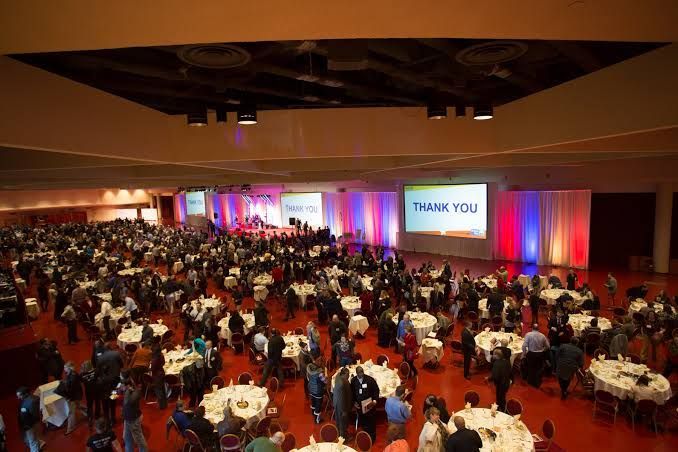
Conference centers are designed for larger professional gatherings.
They may include:
- Large meeting rooms
- Breakout rooms
- Presentation halls
- Reception areas
- Audio-visual systems
- Catering facilities
Business Hotels
Hotels can provide meeting rooms alongside accommodation, dining, and other facilities.
They can be useful for multi-day conferences and meetings involving participants traveling from different locations.
Coworking Spaces
Coworking facilities often provide:
- Meeting rooms
- Private offices
- Conference rooms
- Shared workspaces
- Presentation areas
They may be suitable for smaller meetings, workshops, interviews, and training activities.
Training Centers
Training centers are designed around learning and professional development.
Typical features can include classroom seating, presentation equipment, whiteboards, breakout rooms, and internet connectivity.
Convention Centers
Convention centers generally support large conferences, exhibitions, seminars, and corporate gatherings.
They may include:
- Exhibition halls
- Auditoriums
- Conference rooms
- Registration areas
- Networking areas
- Loading and service areas
4. Meeting Venue Facilities
Meeting venues can provide a wide range of facilities depending on their size and purpose.
Common facilities include:
- Meeting rooms
- Reception areas
- Seating
- Tables
- Restrooms
- Internet connectivity
- Audio-visual equipment
- Breakout spaces
- Parking
- Catering areas
- Accessibility facilities
Before selecting a venue, organizers should distinguish between essential facilities and optional features.
5. Room Capacity
Capacity should be evaluated according to the planned seating arrangement.
For example, a room may accommodate more people in theatre-style seating than in classroom or boardroom arrangements.
Consider:
- Number of participants
- Speakers
- Event staff
- Technical personnel
- Tables
- Presentation equipment
- Walkways
- Registration areas
The objective should be to provide enough usable space rather than simply selecting a venue based on its maximum capacity.
6. Meeting Room Layouts
Boardroom Layout
Participants sit around a central table.
This arrangement works well for:
- Discussions
- Executive meetings
- Strategy sessions
- Negotiations
Classroom Layout
Tables and chairs face the presenter.
It can support:
- Training
- Workshops
- Educational sessions
- Presentations
Theatre Layout
Chairs are arranged in rows facing a presentation area.
It is useful for:
- Conferences
- Seminars
- Speeches
- Large presentations
U-Shaped Layout
Tables form a U shape with an open presentation area.
This arrangement can support interaction between participants and presenters.
Cabaret Layout
Small groups sit around tables facing a presentation area.
It can be useful for workshops and collaborative sessions.
Open Layout
An open arrangement provides greater flexibility for networking, informal discussions, and group activities.
7. Location Considerations
Location can have a major effect on attendee convenience.
Important factors include:
- Road connectivity
- Public transportation
- Airport access
- Railway access
- Parking
- Nearby hotels
- Traffic conditions
- Accessibility
For meetings involving participants from multiple cities, locations close to transportation hubs may simplify travel planning.
8. Accessibility
Meeting venues should accommodate participants with different accessibility requirements.
Consider:
- Accessible entrances
- Ramps
- Elevators
- Accessible restrooms
- Accessible parking
- Suitable pathways
- Clear signage
- Appropriate seating
Accessibility should be evaluated during the initial venue-selection process.
9. Parking and Transportation
Transportation planning can affect attendance and punctuality.
Review:
- On-site parking
- Nearby parking
- Public transportation
- Taxi access
- Ride-sharing pickup areas
- Drop-off zones
- Accessible parking
For larger meetings, organizers may also consider coordinated transportation.
10. Technology and Connectivity
Technology is an important component of modern meetings.
Potential requirements include:
- Wi-Fi
- High-speed internet
- Projectors
- Large displays
- LED screens
- Microphones
- Speakers
- Video-conferencing systems
- Cameras
- Charging points
- Presentation connections
Technology should be selected according to the meeting format rather than simply choosing a venue with the largest number of technical features.
11. Audio-Visual Equipment
Audio-visual systems support presentations and communication.
Common equipment includes:
- Projectors
- Projection screens
- Digital displays
- Wireless microphones
- Wired microphones
- Speakers
- Cameras
- Presentation clickers
- Lighting systems
- Video-conferencing equipment
Organizers should verify compatibility between venue equipment and the devices used by speakers.
12. Internet and Wi-Fi
Reliable internet may be necessary for:
- Video conferencing
- Online presentations
- Cloud applications
- Digital collaboration
- Remote participation
- Online demonstrations
- Digital registration
For large meetings, organizers should ask about network capacity and whether multiple events will share the same connection.
Testing connectivity before the event can help identify technical limitations.
13. Hybrid Meeting Venues
Hybrid meetings combine in-person and remote participation.
A suitable venue may require:
- Stable internet
- Cameras
- Microphones
- Speakers
- Video-conferencing systems
- Presentation displays
- Good lighting
- Technical support
Room acoustics are particularly important because remote attendees depend on clear audio.
14. Seating and Comfort
Attendee comfort can influence concentration during long meetings.
Consider:
- Chair quality
- Table spacing
- Room temperature
- Ventilation
- Lighting
- Noise
- Screen visibility
- Movement space
A well-organized room should allow participants to move between seating, refreshment, registration, and networking areas without unnecessary congestion.
15. Lighting
Lighting affects both comfort and presentation quality.
Possible lighting features include:
- Natural lighting
- Adjustable lighting
- Dimmable systems
- Presentation lighting
- Stage lighting
Presentation rooms should allow screens to remain visible without excessive glare.
16. Acoustics and Noise
Good acoustics help participants hear speakers clearly.
Evaluate:
- Background noise
- Room echo
- Sound insulation
- Nearby traffic
- Adjacent meeting rooms
- Speaker placement
- Microphone coverage
A site inspection can help identify noise issues that may not be obvious from online photographs.
17. Privacy
Some meetings require confidential surroundings.
Examples include:
- Executive discussions
- Strategic planning
- Client meetings
- Negotiations
- Internal business discussions
Privacy can depend on:
- Room location
- Doors
- Sound insulation
- Controlled access
- Nearby public areas
Meeting organizers should identify privacy requirements before selecting a space.
18. Catering and Refreshments
Longer meetings may require food and refreshments.
Potential arrangements include:
- Water
- Tea
- Coffee
- Snacks
- Breakfast
- Lunch
- Dinner
- Refreshment stations
Dietary requirements should be identified in advance.
Organizers should also review venue policies regarding external catering and food arrangements.
19. Breakout Rooms
Breakout spaces can support smaller group activities during larger meetings.
They may be used for:
- Workshops
- Group discussions
- Training
- Networking
- Private conversations
- Smaller presentations
Multiple rooms can make complex meeting schedules easier to manage.
20. Accommodation
Accommodation can be relevant when participants travel from other locations.
Meeting planners may consider:
- Nearby hotels
- Distance between accommodation and venue
- Transportation
- Check-in schedules
- Event timing
Business hotels can be particularly convenient when accommodation and meeting facilities are available within the same property.
21. Safety and Security
Meeting venues should have appropriate safety arrangements.
Consider:
- Emergency exits
- Fire-safety systems
- Security personnel
- Emergency procedures
- First-aid arrangements
- Building access controls
- Crowd-management procedures
Organizers should understand the venue's emergency procedures before the event.
22. Meeting Venue Policies
Each venue may have different policies.
These can cover:
- Event timings
- Setup and teardown
- External vendors
- Catering
- Decorations
- Signage
- Photography
- Audio equipment
- Deliveries
- Parking
- Security
Reviewing these policies in advance can help prevent logistical issues.
23. Site Inspection
A site inspection provides an opportunity to evaluate the venue directly.
Review:
- Entrance
- Reception
- Meeting room
- Breakout areas
- Restrooms
- Parking
- Accessibility
- Internet connectivity
- Audio-visual equipment
- Lighting
- Acoustics
- Staff support
- Emergency exits
A physical inspection can reveal practical issues that may not appear in online descriptions.
24. Meeting Venue Planning Process
A simple planning sequence can make venue selection easier.
Step 1: Define the Meeting
Identify:
- Purpose
- Audience
- Date
- Duration
- Expected attendance
Step 2: Establish Requirements
Determine:
- Room layout
- Technology
- Accessibility
- Catering
- Parking
- Privacy
- Breakout rooms
Step 3: Shortlist Locations
Compare venues based on:
- Accessibility
- Capacity
- Facilities
- Technology
- Location
Step 4: Inspect the Venue
Check the physical environment and technical infrastructure.
Step 5: Review Policies
Confirm rules regarding setup, catering, equipment, vendors, and event timing.
Step 6: Finalize the Plan
Confirm:
- Room configuration
- Equipment
- Schedule
- Attendee arrangements
- Technical requirements
25. Meeting Venue Comparison Framework
| Factor | Questions to Consider |
|---|---|
| Location | Is the venue convenient to reach? |
| Capacity | Does the room accommodate participants comfortably? |
| Layout | Does the layout match the meeting purpose? |
| Technology | Are required systems available? |
| Internet | Is connectivity reliable? |
| Accessibility | Can participants access the facility comfortably? |
| Parking | Is suitable parking available? |
| Catering | Are required refreshments possible? |
| Privacy | Is confidential discussion possible? |
| Acoustics | Can participants hear clearly? |
| Safety | Are emergency procedures established? |
| Schedule | Is enough setup time available? |
| Policies | Are venue rules suitable for the event? |
26. Common Meeting Venue Selection Mistakes
Selecting Based Only on Appearance
A visually attractive venue may not have the required technology or room configuration.
Ignoring Transportation
A difficult-to-reach venue can affect punctuality and attendance.
Underestimating Space
Maximum capacity does not always represent comfortable capacity.
Forgetting Technical Testing
Equipment should be tested before the meeting.
Ignoring Accessibility
Accessibility requirements should be included in initial planning.
Not Checking Acoustics
Poor sound quality can make presentations and discussions difficult to follow.
Overlooking Venue Policies
Restrictions on catering, equipment, setup, or timing can affect event planning.
27. Meeting Technology Checklist
Before an event, organizers can review:
Internet connection
Wi-Fi access
Projector or display
Microphones
Speakers
Video-conferencing equipment
Cameras
Charging points
Presentation cables
Lighting
Technical support
Backup arrangements
28. Sustainability Considerations
Sustainability can also be incorporated into meeting venue selection.
Potential considerations include:
- Energy-efficient lighting
- Waste management
- Recycling
- Reduced paper use
- Public transportation access
- Water conservation
- Energy-efficient facilities
Organizations can establish sustainability requirements before comparing potential venues.
29. Recent Developments in Meeting Venues
Meeting environments are increasingly adapting to new professional working patterns.
Notable developments include:
- Hybrid meeting rooms
- Smart displays
- Advanced video conferencing
- Flexible room configurations
- Digital registration
- Contactless technology
- Collaborative meeting spaces
- Improved accessibility
- Sustainability-focused facilities
These developments allow meeting venues to support both traditional and technology-enabled professional gatherings.
30. Tools and Resources
Meeting planners can use digital tools to organize venue selection and event preparation.
Useful resources include:
- Digital calendars
- Event registration platforms
- Seating-plan tools
- Spreadsheet comparison tools
- Digital maps
- Video-conferencing platforms
- Project-management software
- Venue directories
- Site-inspection checklists
These resources can help coordinate attendees, schedules, facilities, technology, and event logistics.
31. FAQs
What is a meeting venue?
A meeting venue is a physical location designed or adapted for professional meetings, discussions, presentations, workshops, training sessions, conferences, and other organized gatherings.
What types of meeting venues are available?
Common types include boardrooms, conference rooms, conference centers, business hotels, coworking spaces, training centers, convention centers, and flexible event spaces.
What facilities should a meeting venue have?
Facilities may include comfortable seating, meeting tables, internet connectivity, audio-visual equipment, restrooms, accessibility features, parking, breakout rooms, and catering areas.
Why is technology important in meeting venues?
Technology can support presentations, video conferencing, online collaboration, remote participation, digital displays, and communication between attendees.
How do I select a meeting venue?
Start by defining the meeting purpose and attendee requirements. Then evaluate location, capacity, room layout, accessibility, technology, internet, privacy, facilities, safety, scheduling, and venue policies.
32. Conclusion
Meeting venues provide the infrastructure needed for professional discussions, conferences, workshops, training programs, presentations, networking activities, and corporate gatherings.
The selection process should begin with the purpose of the meeting and the requirements of the attendees. Location, capacity, room layout, accessibility, facilities, technology, connectivity, comfort, acoustics, privacy, safety, and scheduling all deserve attention.
A suitable meeting venue is not necessarily the largest or most elaborate space. It is the location that provides the right combination of facilities and environment for the specific meeting.
By defining requirements early, comparing venues systematically, conducting site inspections, testing technology, and reviewing policies, organizers can create a practical and well-structured meeting environment.
Disclaimer
This article is provided solely for general informational and educational purposes. It does not endorse, recommend, rank, review, or promote any specific meeting venue, hotel, conference center, coworking facility, event location, or venue provider. Venue facilities, availability, accessibility, technology, policies, and operating conditions may vary. Organizers should independently verify venue information and applicable safety, accessibility, legal, and operational requirements before making event arrangements.