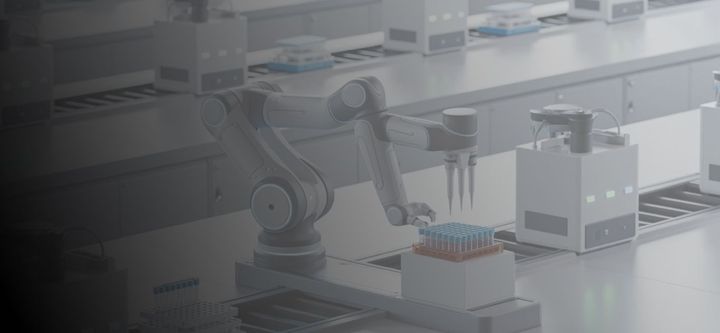
Lab Automation Companies Explained: Technologies, Systems, Applications & Industry Insights
Laboratory automation combines robotics, software, instruments, sensors, and automated workflows to perform laboratory activities with greater consistency and reduced manual intervention. These technologies are used across research laboratories, pharmaceutical development, biotechnology, clinical diagnostics, chemical analysis, food science, and other scientific environments.
Lab automation companies develop different types of systems, including automated liquid handlers, robotic workstations, laboratory information systems, sample-management platforms, automated analytical instruments, and integrated laboratory workflows.
Understanding the technologies and applications behind these systems can help laboratories evaluate automation concepts according to their workflow requirements, sample volumes, equipment compatibility, data needs, and operational environment.
1. Context: Understanding Lab Automation
Laboratory automation refers to the use of automated equipment and software to perform repetitive or structured laboratory processes.
Automation can involve:
- Sample handling
- Liquid dispensing
- Pipetting
- Sample preparation
- Plate handling
- Instrument loading
- Data collection
- Result processing
- Inventory management
- Laboratory scheduling
Some automation systems perform a single laboratory task, while others combine multiple instruments and robotic components into integrated workflows.
2. What Do Lab Automation Companies Develop?
Lab automation companies may develop hardware, software, robotics, instruments, or integrated systems.
Common technology categories include:
- Automated liquid handlers
- Robotic arms
- Automated pipetting systems
- Microplate handling systems
- Sample-management systems
- Laboratory information software
- Automated analytical instruments
- Laboratory robots
- Automated storage systems
- Workflow-management platforms
The exact technology offered differs between companies and product categories.
3. Major Types of Laboratory Automation
Liquid Handling Automation
Liquid-handling systems automate the transfer of liquids between laboratory containers.
Applications can include:
- Sample preparation
- Reagent dispensing
- Assay preparation
- Serial dilution
- Plate preparation
- Molecular biology workflows
Robotic Workstations
Robotic workstations can coordinate multiple laboratory tasks from one platform.
They may integrate:
- Pipetting
- Plate movement
- Heating
- Cooling
- Mixing
- Centrifugation
- Detection instruments
Automated Sample Management
Sample-management systems can automate the movement, identification, storage, and tracking of laboratory samples.
These systems can be useful in laboratories handling large sample volumes.
Automated Analytical Instruments
Analytical instruments can incorporate automation for sample loading, measurement, data collection, and reporting.
Examples include systems used for:
- Chemical analysis
- Molecular testing
- Cell analysis
- Immunoassays
- Chromatography
4. Core Technologies Used in Lab Automation
Several technologies work together to create automated laboratory workflows.
Robotics
Robotic systems can perform repetitive physical movements such as transporting plates, tubes, containers, and other laboratory materials.
Sensors
Sensors can monitor conditions such as:
- Position
- Temperature
- Pressure
- Liquid levels
- Equipment status
Machine Vision
Vision systems can help identify objects, inspect laboratory materials, and support robotic positioning.
Software
Software coordinates equipment, workflows, data, and user instructions.
Artificial Intelligence
AI and machine-learning technologies can be used for areas such as image analysis, pattern recognition, predictive analysis, workflow optimization, and decision support.
5. Automated Liquid Handling
Liquid handling is one of the most common areas of laboratory automation.
Automated systems can control:
- Pipetting volumes
- Dispensing speed
- Mixing
- Sample transfer
- Reagent distribution
- Plate preparation
Automation can help standardize repetitive liquid-handling processes and reduce variation associated with manual procedures.
6. Robotic Laboratory Systems
Laboratory robots can perform physical tasks within controlled environments.
A robotic system may:
- Identify a laboratory item.
- Pick up or access the item.
- Move it to a specified location.
- Perform a programmed operation.
- Transfer it to the next workflow stage.
- Record the relevant information.
More advanced systems can coordinate multiple instruments and workflow steps.
7. Laboratory Automation Software
Software is an important part of modern laboratory automation.
It can provide:
- Workflow control
- Instrument communication
- Sample tracking
- Scheduling
- Data management
- User access controls
- Reporting
- Process monitoring
Software may also connect different laboratory instruments so that they can operate as part of a coordinated workflow.
8. Laboratory Information Management Systems
A Laboratory Information Management System, commonly called a LIMS, is used to manage laboratory data and workflow information.
Typical functions include:
- Sample registration
- Sample tracking
- Test management
- Result recording
- Data organization
- Reporting
- User management
- Workflow monitoring
Integration between LIMS platforms and laboratory automation systems can help connect physical laboratory activities with digital records.
9. Laboratory Integration
Automation becomes more useful when different systems can communicate effectively.
An integrated laboratory may connect:
- Robotic workstations
- Liquid handlers
- Analytical instruments
- Sample storage
- LIMS platforms
- Electronic laboratory notebooks
- Data systems
Integration can reduce manual data entry and provide better visibility across laboratory workflows.
10. Applications of Lab Automation
Laboratory automation is used across numerous scientific fields.
Pharmaceutical Research
Automation can support:
- Compound screening
- Assay preparation
- Sample handling
- Analytical workflows
- Research data management
Biotechnology
Biotechnology laboratories may use automation for:
- Molecular biology
- Genomics
- Proteomics
- Cell-based research
- Sample preparation
Clinical Diagnostics
Automated systems can support:
- Sample preparation
- Testing workflows
- Analysis
- Result processing
- Sample tracking
Chemical Laboratories
Automation can assist with:
- Chemical analysis
- Sample preparation
- Instrument operation
- Data collection
Food and Beverage Testing
Laboratories can use automated systems for:
- Quality testing
- Sample preparation
- Microbiological workflows
- Chemical analysis
Environmental Testing
Automation can support analysis of environmental samples such as water, soil, and air-related materials.
11. High-Throughput Laboratory Automation
High-throughput laboratories process large numbers of samples or experiments.
Automation can help coordinate:
- Sample movement
- Reagent dispensing
- Plate handling
- Instrument loading
- Data collection
- Workflow scheduling
High-throughput systems are particularly relevant when laboratories need consistent processing across many repeated experiments.
12. Benefits of Laboratory Automation
Laboratory automation can provide several operational advantages.
Consistency
Automated systems follow programmed procedures, which can help standardize repetitive tasks.
Throughput
Automation can allow laboratories to process larger numbers of samples within structured workflows.
Traceability
Digital records can help track samples, equipment activities, and workflow steps.
Reproducibility
Standardized processes can support repeatable experimental procedures.
Workflow Efficiency
Automation can reduce repetitive manual activities and allow laboratory personnel to focus on more complex tasks.
13. Challenges of Lab Automation
Automation also introduces technical and operational challenges.
Integration Complexity
Connecting equipment from different manufacturers may require additional software and interfaces.
Workflow Design
Laboratories need to carefully map existing processes before automating them.
Data Management
Automated systems can generate significant quantities of laboratory data.
Maintenance
Robotic and analytical equipment requires regular maintenance and calibration.
Training
Laboratory personnel may need training to operate, troubleshoot, and maintain automated systems.
Scalability
An automation system should be capable of adapting to future workflow requirements where possible.
14. Choosing a Lab Automation Technology
Laboratories can evaluate automation technologies based on:
- Workflow requirements
- Sample volume
- Number of process steps
- Required precision
- Equipment compatibility
- Software integration
- Data requirements
- Laboratory space
- Maintenance requirements
- Scalability
- User training
A clear workflow analysis should normally be completed before selecting an automation architecture.
15. Modular vs Integrated Automation
Modular Automation
A modular approach uses individual automated systems for specific tasks.
Advantages can include:
- Flexibility
- Easier workflow changes
- Incremental expansion
- Independent equipment selection
Integrated Automation
An integrated system connects multiple instruments and processes.
Potential advantages include:
- Coordinated workflows
- Centralized control
- Reduced manual transfers
- Greater process automation
The appropriate approach depends on the laboratory's workflow complexity and future requirements.
16. Artificial Intelligence in Lab Automation
AI is becoming increasingly relevant to laboratory workflows.
Potential applications include:
- Image analysis
- Pattern recognition
- Experimental optimization
- Predictive maintenance
- Data interpretation
- Workflow scheduling
- Anomaly detection
AI does not necessarily replace laboratory automation. Instead, it can complement robotic and software systems by adding analytical and decision-support capabilities.
17. Machine Vision
Machine vision can help automated systems identify and inspect laboratory objects.
Potential applications include:
- Tube identification
- Plate recognition
- Position verification
- Sample inspection
- Robotic guidance
- Quality checks
Vision technology can improve the ability of robots to interact with laboratory environments.
18. Automated Sample Tracking
Sample tracking is important when laboratories process large numbers of samples.
Automation can use:
- Barcodes
- QR codes
- RFID technologies
- Laboratory databases
- Digital identifiers
Tracking systems can connect physical samples with their digital records.
19. Data and Laboratory Automation
Automation generates data at multiple stages of a laboratory workflow.
Data may include:
- Sample identifiers
- Instrument readings
- Process parameters
- Time stamps
- Quality-control results
- User activity
- Workflow status
Effective data management can help laboratories maintain traceability and organize information for analysis and reporting.
20. Compliance and Data Integrity
Certain laboratory environments operate under specific regulatory or quality requirements.
Depending on the application, laboratories may need to consider:
- Data integrity
- Access control
- Audit trails
- Electronic records
- Validation
- Instrument qualification
- Standard operating procedures
Requirements vary by industry, laboratory type, jurisdiction, and intended use.
21. Laboratory Automation and Industry 4.0
Laboratory automation shares several concepts with Industry 4.0.
These include:
- Connected equipment
- Digital workflows
- Sensors
- Data analytics
- Automation
- Robotics
- Artificial intelligence
- Remote monitoring
Connected laboratory environments can allow equipment and software to exchange information across multiple workflow stages.
22. Emerging Trends
Several trends are shaping the development of laboratory automation.
Greater Software Integration
Automation platforms increasingly depend on software for workflow orchestration and data management.
Collaborative Robotics
Robotic systems are being designed to work within laboratory environments alongside human personnel.
AI-Assisted Workflows
AI can contribute to image analysis, data interpretation, optimization, and predictive monitoring.
Flexible Automation
Modular systems can allow laboratories to adapt automation as research requirements change.
Cloud-Connected Systems
Cloud technologies can support centralized data access, monitoring, and collaboration where appropriate security and regulatory requirements are satisfied.
23. Common Laboratory Automation Components
A laboratory automation environment can contain multiple components.
| Component | Typical Role |
|---|---|
| Liquid handler | Automated liquid transfer |
| Robotic arm | Material and sample movement |
| Microplate handler | Plate transportation |
| Barcode reader | Sample identification |
| Machine vision | Object recognition and inspection |
| LIMS | Laboratory data and workflow management |
| Automated storage | Sample organization |
| Analytical instrument | Measurement and analysis |
| Workflow software | Automation coordination |
| Sensors | Process monitoring |
24. Lab Automation Workflow Example
A basic automated laboratory workflow may involve:
- Sample registration
- Barcode identification
- Automated sample transfer
- Liquid handling
- Plate preparation
- Instrument analysis
- Data collection
- Result processing
- Digital record creation
- Sample storage or next-stage processing
The exact sequence depends on the laboratory application.
25. Evaluating Lab Automation Companies
Organizations researching laboratory automation companies can compare them using objective criteria.
Consider:
- Technology categories
- Automation architecture
- Instrument compatibility
- Software capabilities
- Integration options
- Application areas
- Scalability
- Technical documentation
- Training resources
- Maintenance requirements
- Data-management capabilities
Comparing technical capabilities rather than relying only on company size can provide a more useful assessment.
26. Implementation Planning
Successful automation implementation usually begins with workflow analysis.
A planning process can include:
Step 1: Map the Existing Workflow
Document each manual and automated process.
Step 2: Identify Repetitive Tasks
Determine which tasks are suitable for automation.
Step 3: Define Technical Requirements
Identify equipment, software, connectivity, and data requirements.
Step 4: Evaluate Integration
Determine how automation will communicate with existing instruments and laboratory software.
Step 5: Test the Workflow
Use validation or pilot testing to identify operational issues.
Step 6: Train Personnel
Provide training on operation, maintenance, troubleshooting, and safety.
Step 7: Monitor Performance
Track workflow performance and identify opportunities for improvement.
27. Common Mistakes in Lab Automation Planning
Automating Without Mapping the Workflow
Automation should be based on a clear understanding of the existing process.
Ignoring Integration
Individual systems may work well independently but create challenges when connected.
Underestimating Data Requirements
Automated workflows can produce large quantities of information that require structured management.
Failing to Plan for Maintenance
Robotic and analytical systems require ongoing technical attention.
Ignoring Scalability
A system designed only for current requirements may become difficult to expand later.
Insufficient Staff Training
Personnel need to understand both normal operation and basic troubleshooting.
28. Tools and Resources
Laboratories researching automation can use several types of resources.
Useful resources include:
- Laboratory workflow documentation
- Instrument manuals
- LIMS documentation
- Automation software documentation
- Scientific publications
- Technical standards
- Laboratory equipment specifications
- Validation protocols
- Training materials
- Industry conferences and research resources
These resources can help laboratories understand technical requirements and implementation considerations.
29. FAQs
What is lab automation?
Lab automation uses robotics, software, instruments, sensors, and automated workflows to perform laboratory tasks with reduced manual intervention.
What technologies are used in laboratory automation?
Common technologies include liquid handlers, robotic arms, machine vision, sensors, automated analytical instruments, workflow software, LIMS platforms, and sample-management systems.
What industries use laboratory automation?
Applications can be found in pharmaceutical research, biotechnology, clinical diagnostics, chemical analysis, environmental testing, food science, and other laboratory environments.
What are the main benefits of lab automation?
Potential benefits include greater process consistency, improved traceability, increased throughput, standardized workflows, and reduced repetitive manual work.
What are the challenges of laboratory automation?
Challenges can include system integration, workflow design, data management, maintenance, personnel training, validation, and scalability.
30. Conclusion
Lab automation combines robotics, laboratory instruments, software, sensors, data systems, and workflow technologies to create structured and increasingly connected laboratory environments.
Automation can support liquid handling, sample preparation, sample tracking, analytical testing, high-throughput workflows, data collection, and laboratory management across numerous scientific industries.
When evaluating laboratory automation technologies or companies, organizations should consider workflow requirements, sample volumes, integration capabilities, software architecture, data management, scalability, maintenance, and personnel training.
The continued development of artificial intelligence, machine vision, robotics, connected instruments, and laboratory software is creating new possibilities for more flexible and data-driven laboratory environments.
Disclaimer
This article is intended solely for general informational and educational purposes. It does not endorse, rank, recommend, review, or promote any specific laboratory automation company, manufacturer, product, technology, or provider. Laboratory technologies, capabilities, specifications, regulatory requirements, and applications can vary. Organizations should independently verify technical information and consult appropriately qualified professionals before implementing laboratory automation systems.