Jump to a Chapter

Future of Warehouse Conveyors: AI, Robotics & Smart Automation

Future of Warehouse Conveyors: AI, Robotics & Smart Automation

Warehouse conveyor systems are evolving from mechanically driven transportation equipment into increasingly connected and intelligent material-handling technologies. Traditional conveyors primarily move products from one location to another, while modern systems can communicate with warehouse software, sensors, robots, automated storage systems, and inspection technologies.


Artificial intelligence, robotics, machine vision, predictive maintenance, and real-time analytics are contributing to this transformation. These technologies can help warehouses monitor equipment, coordinate product movement, identify operational patterns, and respond to changing material-flow requirements.

The future of warehouse conveyors is therefore closely connected to the broader development of smart warehouses. Instead of operating as isolated equipment, conveyors are increasingly becoming part of integrated systems that connect physical product movement with digital warehouse information.

This guide explores how AI, robotics, sensors, automation, digital twins, and data analytics are shaping the future of warehouse conveyor technology.

What Is a Smart Warehouse Conveyor?

A smart warehouse conveyor is a conveying system enhanced with digital technologies that allow it to monitor conditions, communicate with other systems, and operate as part of an automated material-handling environment.

A smart conveyor can incorporate:

  • Sensors
  • Programmable controllers
  • Variable-speed drives
  • Machine vision
  • Barcode scanners
  • RFID technology
  • Robotics
  • AI-based analytics
  • Warehouse software
  • Predictive maintenance systems

The level of intelligence depends on the system design and the technologies integrated into the conveyor network.

How Warehouse Conveyors Are Changing

Traditional conveyor systems generally focus on physical transportation.

Future-oriented conveyor systems are expected to combine transportation with:

  • Real-time monitoring
  • Automated routing
  • Product identification
  • Predictive maintenance
  • Dynamic speed control
  • Automated sorting
  • Data analytics
  • Robotic handling

This creates a transition from mechanical conveying toward intelligent material flow.

Role of Artificial Intelligence

Artificial intelligence can analyze large volumes of warehouse and conveyor data.

AI applications may include:

  • Traffic-flow analysis
  • Predictive maintenance
  • Product routing
  • Demand forecasting
  • Bottleneck identification
  • Energy analysis
  • Anomaly detection

Instead of simply following fixed operating schedules, intelligent systems can use real-time information to support more adaptive warehouse operations.

AI-Based Conveyor Monitoring

Sensors can continuously collect information from conveyor components.

Data may include:

  • Motor temperature
  • Belt speed
  • Vibration
  • Motor current
  • Bearing condition
  • Product flow
  • Operating cycles

AI and analytics software can analyze these signals to identify unusual patterns.

For example, a gradual increase in vibration may indicate a developing mechanical issue that requires inspection.

Predictive Maintenance

Predictive maintenance is one of the important applications of smart conveyor technology.

Traditional maintenance can rely on scheduled inspections.

Predictive maintenance uses equipment-condition data to identify potential problems before they become major failures.

Potentially monitored components include:

  • Motors
  • Bearings
  • Rollers
  • Gearboxes
  • Belts
  • Pulleys
  • Drives

The objective is to support maintenance planning based on equipment condition.

Robotics and Conveyor Systems

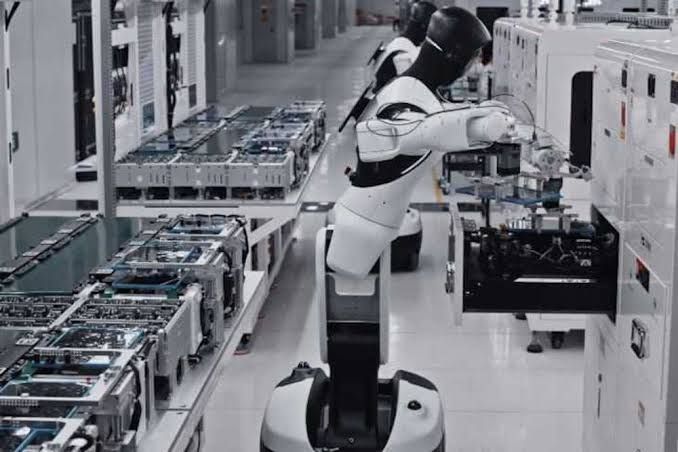
Robots are increasingly being integrated with conveyor networks.

Robotic systems can perform tasks such as:

  • Picking products
  • Placing products
  • Sorting packages
  • Loading containers
  • Unloading containers
  • Pallet handling
  • Inspection

Conveyors provide a predictable movement path, while robots can perform flexible handling operations.

Autonomous Mobile Robots

Autonomous mobile robots, or AMRs, can navigate warehouse environments and move independently.

Unlike fixed conveyor lines, AMRs can change their routes depending on warehouse requirements.

Conveyors and AMRs can therefore complement one another.

For example:

Storage Area → AMR → Conveyor → Sorting → Packing

The appropriate combination depends on warehouse layout, product flow, and automation requirements.

Robotic Picking and Conveyors

Robotic picking systems can work alongside conveyors to move products through fulfillment processes.

A typical workflow may involve:

  1. Product arrives on a conveyor.
  2. Vision technology identifies the product.
  3. A robotic system selects the item.
  4. The item is placed onto another conveyor.
  5. The system routes it toward the next process.

AI-based vision can help robots identify products with different shapes, sizes, and orientations.

Machine Vision

Machine vision is becoming increasingly important in automated conveyor systems.

Cameras and image-processing technologies can identify:

  • Product position
  • Package dimensions
  • Barcodes
  • Labels
  • Orientation
  • Visible defects
  • Package condition

Vision systems can provide information to sorting and robotic systems.

AI-Powered Sorting

Sorting is one of the most important applications for intelligent conveyor networks.

A smart sorting system can combine:

  • Product identification
  • Warehouse data
  • Destination information
  • Conveyor controls
  • Automated diverters

AI can potentially assist with analyzing traffic patterns and determining how products should be routed through complex warehouse networks.

Dynamic Conveyor Routing

Traditional conveyor systems often follow predefined routes.

Future systems may become more dynamic.

For example, if one downstream processing area becomes congested, an intelligent control system may identify the bottleneck and adjust product routing where alternative paths are available.

This requires integration between:

  • Sensors
  • Conveyor controllers
  • Warehouse software
  • Sorting equipment
  • Operational analytics

Real-Time Warehouse Data

Future conveyor systems are expected to generate increasingly detailed operational information.

Data can include:

  • Product movement
  • Conveyor speed
  • System utilization
  • Queue length
  • Motor condition
  • Energy consumption
  • Downtime
  • Sorting performance

This information can be displayed through dashboards or analyzed automatically.

Warehouse Management System Integration

A warehouse management system, or WMS, manages digital information related to inventory and warehouse operations.

Conveyor systems can work alongside WMS platforms to connect physical product movement with digital inventory information.

For example, when a package is scanned, its identity and destination can be communicated to the appropriate sorting or routing system.

Warehouse Control Systems

Warehouse control systems coordinate automation equipment within a facility.

They can manage communication between:

  • Conveyors
  • Sorters
  • Robots
  • Automated storage systems
  • Sensors
  • Scanners

This coordination becomes increasingly important as warehouses adopt multiple automation technologies.

Internet of Things and Smart Conveyors

The Industrial Internet of Things connects physical equipment with digital systems.

Sensors installed throughout a conveyor network can collect information about equipment and product movement.

IoT technologies can support:

  • Equipment monitoring
  • Remote diagnostics
  • Performance tracking
  • Energy monitoring
  • Predictive maintenance

Edge Computing

Edge computing processes data near the equipment that generates it.

For conveyor systems, edge computing can enable rapid analysis of:

  • Sensor signals
  • Motor conditions
  • Product detection
  • Conveyor speed
  • Safety-related events

Processing data locally can reduce the time required to send information to a remote platform and receive a response.

Cloud-Based Warehouse Analytics

Cloud platforms can store and analyze large amounts of warehouse data.

Potential applications include:

  • Long-term performance analysis
  • Multi-site monitoring
  • Historical equipment records
  • AI model development
  • Operational dashboards

Cloud systems can complement local or edge computing.

Digital Twins

A digital twin is a digital representation of a physical system.

For warehouse conveyors, a digital twin can represent:

  • Conveyor layouts
  • Product flows
  • Equipment status
  • Throughput
  • Bottlenecks
  • Energy usage

Simulation through a digital model can help engineers understand how changes to a warehouse layout or process might affect material flow.

Digital Twin Applications

Potential applications include:

  • Layout planning
  • Bottleneck analysis
  • Capacity studies
  • Equipment monitoring
  • Maintenance planning
  • Operator training

Digital twins can be particularly useful when warehouse systems are complex and interconnected.

Automated Storage and Retrieval Systems

Automated storage and retrieval systems, commonly called AS/RS, use automated equipment to store and retrieve products.

Conveyors can connect AS/RS systems with:

  • Picking stations
  • Sorting systems
  • Packing areas
  • Receiving zones

The combination creates an integrated material-flow environment.

Goods-to-Person Systems

Goods-to-person systems bring products to workers instead of requiring workers to travel extensively through storage areas.

Conveyors can transport:

  • Totes
  • Bins
  • Cartons
  • Containers

Robotics and automated storage technologies can work alongside conveyors to coordinate movement.

Smart Conveyor Sensors

Future conveyor systems may use larger numbers of specialized sensors.

Possible sensor categories include:

Temperature Sensors

Monitor motors, bearings, and other components.

Vibration Sensors

Help identify changes in mechanical behavior.

Optical Sensors

Detect products and movement.

Load Sensors

Measure weight or mechanical loading.

Position Sensors

Track component or product location.

Energy Sensors

Measure electrical consumption.

Autonomous Conveyor Operations

One long-term direction is greater autonomous operation.

An intelligent conveyor network could potentially:

  • Monitor itself
  • Detect unusual conditions
  • Adjust speeds
  • Coordinate product movement
  • Request maintenance attention
  • Optimize energy usage

However, the degree of autonomy depends on system design, safety requirements, control architecture, and validation.

Energy Optimization

Conveyors consume energy through motors, drives, sensors, and associated equipment.

Smart systems can monitor energy use and identify operating patterns.

Potential approaches include:

  • Variable-speed control
  • Automatic start-stop operation
  • Reduced idle running
  • Efficient motors
  • Load-based control
  • Energy monitoring

The appropriate approach depends on product flow and operational requirements.

Sustainability and Smart Conveyors

Digital technologies can contribute to more efficient warehouse operations.

Potential areas include:

  • Reduced idle operation
  • Better route planning
  • Lower unnecessary movement
  • Reduced equipment downtime
  • Improved asset utilization
  • Energy monitoring

Technology alone does not guarantee sustainability; system design and operating practices remain important.

Safety Technologies

As conveyors become more automated, safety systems remain essential.

Potential technologies include:

  • Emergency-stop systems
  • Light curtains
  • Safety scanners
  • Interlocks
  • Guarding
  • Presence sensors
  • Safety controllers

Automated equipment should be designed and operated according to applicable workplace safety requirements.

Cybersecurity

Connected conveyors introduce cybersecurity considerations because equipment may communicate with warehouse software and networks.

Security measures can include:

  • Network segmentation
  • Access controls
  • Authentication
  • Secure communications
  • Software updates
  • Monitoring
  • Backup procedures

Cybersecurity planning should consider both information technology and operational technology environments.

Human Role in Smart Warehouses

Increasing automation does not eliminate the need for people.

Human workers remain important for:

  • System supervision
  • Maintenance
  • Exception handling
  • Quality checks
  • Equipment setup
  • Process improvement
  • Safety management

Future warehouse environments are likely to combine human expertise with automated material-handling technologies.

Benefits of Future Warehouse Conveyor Technology

Greater Process Visibility

Sensors and analytics can provide detailed information about equipment and material flow.

More Flexible Automation

Robotics and intelligent controls can support changing product flows.

Predictive Maintenance

Condition monitoring can help identify equipment issues earlier.

Automated Sorting

Intelligent sorting can direct products toward appropriate destinations.

Better Resource Management

Data can help analyze machine utilization and energy consumption.

Connected Operations

Conveyors can communicate with warehouse software and other automated equipment.

Challenges of Smart Conveyor Adoption

Integration Complexity

Connecting conveyors with robots, software, sensors, and existing equipment can be technically complex.

Data Management

Large quantities of sensor data require appropriate storage, processing, and analysis.

Cybersecurity

More connected equipment creates additional cybersecurity requirements.

Workforce Training

Employees may need new skills related to robotics, automation, controls, data analysis, and maintenance.

System Reliability

A failure in a highly interconnected automation network can affect multiple downstream processes.

Cost and Infrastructure

Advanced automation may require significant planning, facility modifications, electrical infrastructure, and technical expertise.

Future Warehouse Conveyor Trends

Several trends are likely to influence warehouse conveyor development.

AI-Assisted Material Flow

AI may increasingly analyze warehouse traffic and identify opportunities for improved routing.

Autonomous Maintenance Monitoring

Sensors and analytics may provide increasingly detailed equipment-condition information.

Robotics-Conveyor Collaboration

Robots and conveyors will increasingly work as interconnected material-handling systems.

Advanced Vision

Machine vision will support identification, inspection, sorting, and robotic handling.

Digital Twins

Digital simulation can become more important for designing and optimizing complex warehouse systems.

Edge AI

AI processing closer to warehouse equipment can support faster responses to machine and product data.

Integrated Smart Warehouses

Conveyors will increasingly operate as one component within larger automated warehouse ecosystems.

Frequently Asked Questions

What is the future of warehouse conveyor systems?

The future of warehouse conveyors is moving toward greater connectivity, AI-assisted monitoring, robotics, automated sorting, predictive maintenance, machine vision, and integration with warehouse software.

How can AI improve conveyor systems?

AI can analyze equipment and material-flow data to support predictive maintenance, anomaly detection, traffic analysis, routing, energy monitoring, and operational decision support.

Will robots replace warehouse conveyors?

Not necessarily. Robots and conveyors serve different purposes and can complement each other. Conveyors provide structured continuous movement, while robots can perform flexible handling and picking tasks.

What is a smart conveyor?

A smart conveyor is a connected conveying system equipped with technologies such as sensors, controllers, analytics, automated sorting, machine vision, and integration with warehouse software.

What role does predictive maintenance play?

Predictive maintenance uses equipment-condition information to identify unusual patterns that may indicate developing mechanical problems, helping maintenance teams plan inspections or interventions.

Are smart conveyors connected to warehouse management systems?

They can be. Conveyor systems can communicate with warehouse management, warehouse control, and warehouse execution systems to coordinate physical product movement with digital inventory and order information.

Conclusion

The future of warehouse conveyors is moving beyond simple mechanical product transportation toward connected, automated, and intelligent material-handling systems. AI, robotics, sensors, machine vision, predictive maintenance, digital twins, and advanced analytics are expanding what conveyor networks can monitor and accomplish.

Smart conveyors can become part of a larger warehouse ecosystem in which physical product movement is coordinated with digital inventory information, automated storage, robotic handling, sorting, and warehouse management software.

AI can help analyze material-flow patterns and equipment conditions, while robotics can provide flexible handling capabilities. Sensors and predictive analytics can improve visibility into equipment performance, and digital twins can support planning and simulation.

However, future conveyor systems also introduce challenges involving integration, cybersecurity, data management, safety, workforce training, and system reliability.

As warehouses become increasingly automated and connected, conveyor systems are likely to remain an important foundation of material handling while becoming more intelligent, adaptive, and integrated with the broader smart warehouse environment.

Disclaimer

This article is intended solely for informational and educational purposes. It does not provide engineering, workplace safety, operational, cybersecurity, or professional technical advice. It does not endorse, recommend, compare, rank, review, market, or promote any specific conveyor manufacturer, robotics company, warehouse automation provider, software platform, or equipment product. Conveyor capabilities, automation features, safety requirements, operating conditions, and integration methods vary according to the facility and application. Organizations should consult appropriately qualified professionals, applicable regulations, safety standards, and equipment documentation before implementing or modifying automated warehouse systems.

author-image

Ravi Shankar Maurya

We create purposeful content that speaks, resonates, and drives action.

August 11, 2026 . 7 min read